

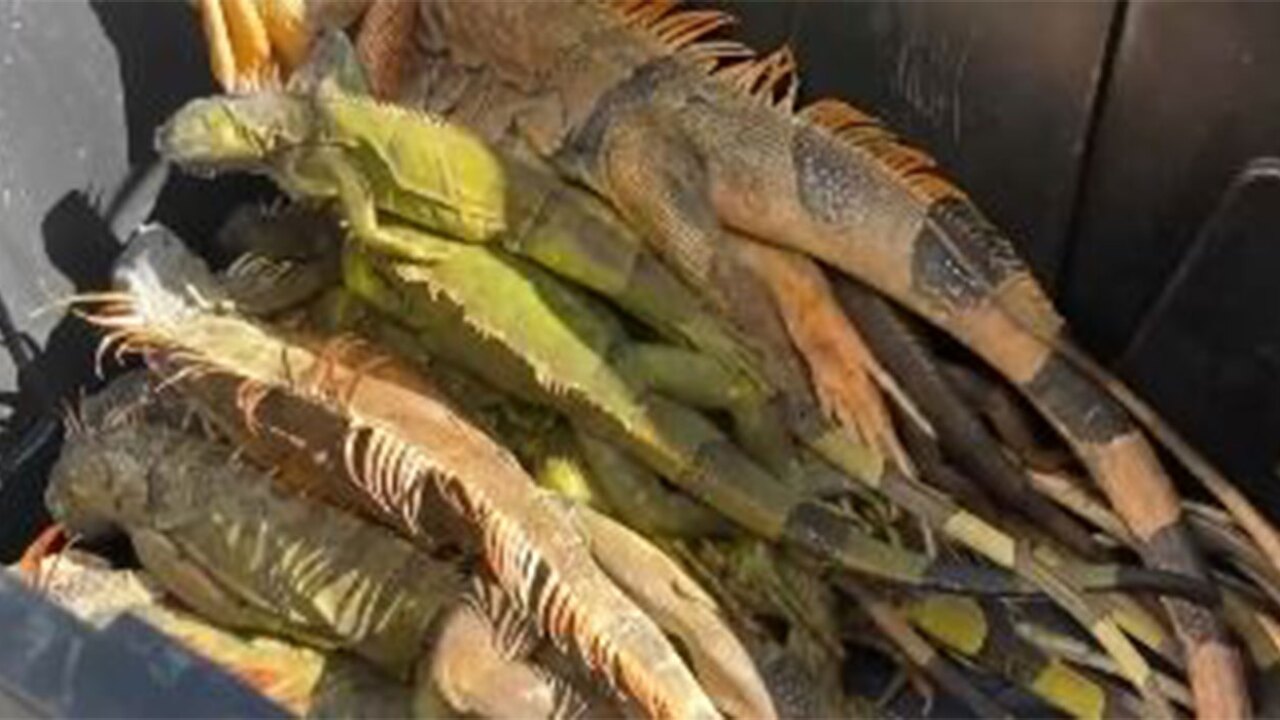

Cold-stunned iguanas falling from trees during South Florida's recent cold snap ended up as an unexpected menu item: iguana pizza.
Local trapper Ryan Izquierdo kept a few of the cold-stunned reptiles and turned them into what he calls the "Florida Man Pizza," topped with freshly harvested iguana meat thanks to his friends at North Palm Beach pizza restaurant Bucks Coal Fired.
WATCH: North Palm Beach pizzeria helps out with iguana pizza
"We were able to do good work and remove the iguanas and educate people, and it was just a great time," Izquierdo said. "The last 48 hours have been one to look back on forever for sure."
The cold snap triggered a well-known phenomenon in South Florida, with iguanas dropping from trees as temperatures plunged. Residents spent Sunday and Monday collecting them from yards and parks, and some handed them over to the Florida Fish and Wildlife Conservation Commission (FWC) during its brief collection period.
While the iguanas provided unexpected entertainment, and even a meal, tourists escaping frigid northern temperatures aren't getting the warm beach days they hoped for.

State
'It's a big deal': Residents help capture invasive iguanas during cold snap
The unusually cold weather kept many visitors out of the water on Hollywood Beach this week.
"Well, I brought my swimsuit with me, but never got it out of the suitcase," said Al Beckman, who is visiting from out of state.
Instead, he and other tourists have turned to nearby bars and restaurants.
"We just have to get up and walk around, maybe get a beverage or two," he said.''
Travelers from Michigan said leaving their zero-degree temperatures only to find Floridians bundled up was a surprise.
"The puffy coat, the gloves, the iguana falling from trees, it's crazy," Jody Dougherty said.
Despite the cold, some visitors had advice for locals waiting for warmer days.
"I think they should come to Michigan and hang out in the real winter and then appreciate Florida weather," Dougherty said.
While beachgoers can wait out the cold, South Florida farmers said the impact has been far more serious.
Kern Carpenter Farms in Homestead lost around 20% of its tomato crop during the Arctic blast. Now, frost is the next concern.
"The wind died and it got cold really fast," said farmer Kern Carpenter. "We did the best we could, but they still got burnt."
Farmers said losses to tomatoes, green beans and other local crops could lead to higher grocery store prices in the coming weeks.
For anyone considering trapping iguanas now, the FWC's official collection period has ended, leaving residents responsible for handling them humanely, or cooking them on their own.


