

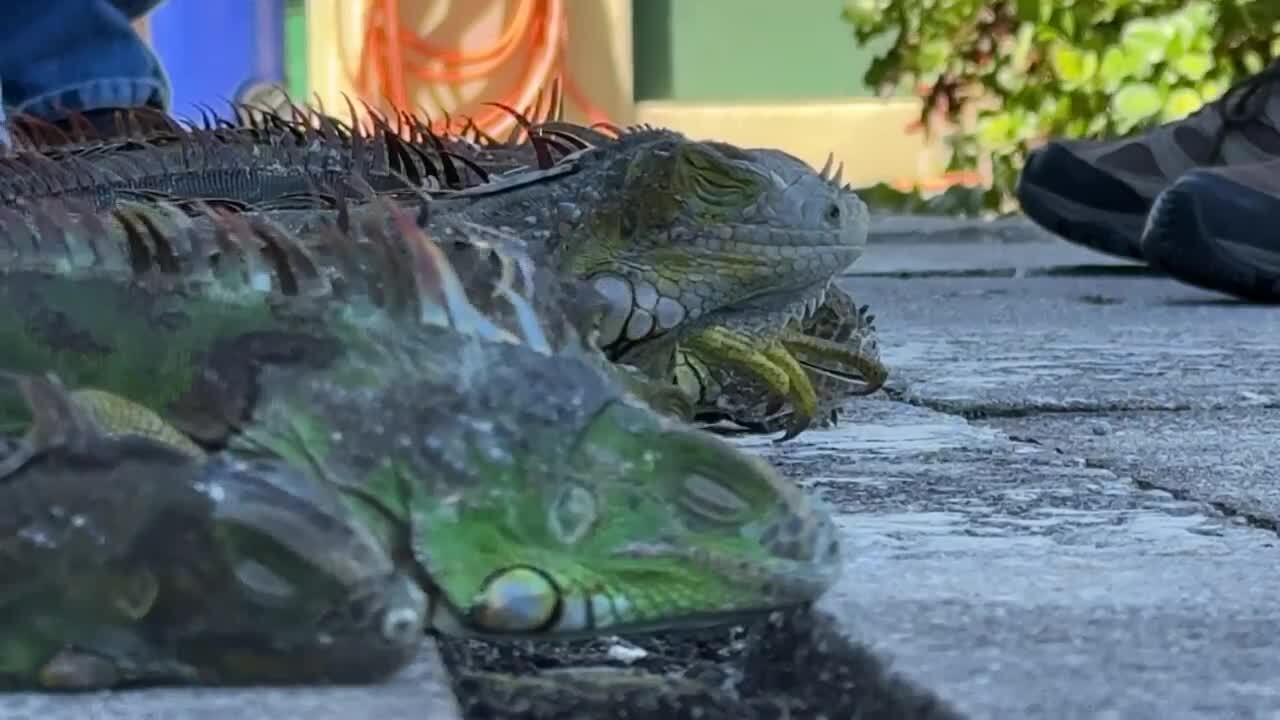


PALM BEACH COUNTY, Fla. — Florida is temporarily allowing residents to capture and transport green iguanas without permits to help reduce the state's invasive reptile population during a cold snap.
WATCH BELOW: 'We just went out and had a little adventure for the day,' Jed Larkin tells WPTV's Ethan Stein
The state considers the species invasive, because they can damage ecosystems and pose health risks to people. An executive order opened five collection points across the state where people can drop off captured iguanas. Over the past two days, officials collected more than 900 iguanas at the Florida Fish and Wildlife Conservation Commission's Tequesta Field Laboratory alone.
Tyson Matthews, a spokesperson for the Florida Fish and Wildlife Conservation Commission, said the cold weather presents a "rare opportunity" to remove an invasive species from Florida. He said every iguana turned in helps reduce the state's population.
"It's a big deal, because iguanas are an invasive species here and we're trying to utilize the cold weather to capture them and have the members of the public help us do that to try and eradicate the species," Matthews said.
Jed Larkin captured about 20 green iguanas and described the opportunity as like a "redneck Easter egg hunt" for him and his family. He said he had his family participate, because he thought it was a great idea to keep his kids playing outside.

Weather News
Cold weather triggers falling iguana alert in Florida
"We live in Palm Beach County, one of the most beautiful places in the world, and to be stuck inside feels like a crime. So, we just went out and had a little adventure for the day," Larkin said.
Larkin also said his kids really enjoyed being able to get close to the animals.
Stephen Kalayjian, who lives near the Tequesta Field Laboratory, said he brought three iguanas to the facility over the last two days. He said the iguanas "just dropped from the trees" and he wanted them out of harm's way from predators.
"You don't want to let them suffer like this…I took time out of my day to do it," Kalayjian said. "You want to see the creature live."
Officials said some of the animals turned into the state will move toward the pet trade in northern states while others will be euthanized and then become consumer goods.
