



PORT ST. LUCIE, Fla. — Florida lawmakers overwhelmingly voted to repeal one of the state's most controversial medical malpractice provisions earlier this year. But despite bipartisan support, the legislation never became law.
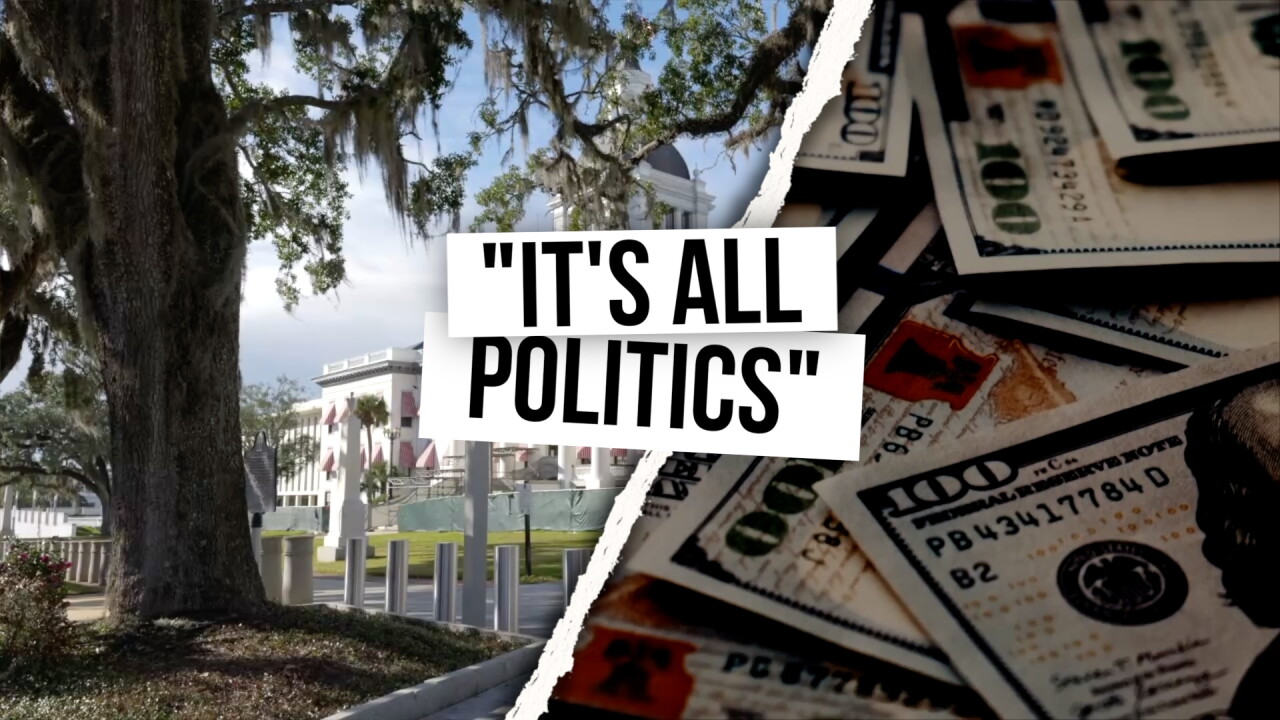
Now, a WPTV investigation is following the money behind the political fight over what critics call Florida's "free kill" law — uncovering more than $15.5 million in campaign contributions from healthcare interests and lobbying groups to political committees tied to lawmakers who opposed the repeal and to Gov. Ron DeSantis, who ultimately vetoed it.
A mother's fight for answers
In a previous investigation, WPTV introduced viewers to Beth Miller, whose only daughter, Dawn, died just hours after being discharged from the hospital following gallbladder surgery.
"It's on your mind, 24/7," Miller said. "We were very close, to say the least. She was my only child, my only living relative."
A medical expert who reviewed Dawn's records told WPTV she should not have been discharged from the hospital. Miller said her request for an autopsy was denied, leaving her with unanswered questions about her daughter's death.
"I don't have an answer to this day," she said.
No court has determined whether medical negligence contributed to Dawn's death.
But when Miller explored her legal options, she encountered another obstacle.
Because Dawn was older than 25, unmarried and had no children, Florida law prevents Miller from recovering certain wrongful-death damages in a medical malpractice lawsuit.
The restriction is part of Florida's Wrongful Death Act. Critics argue it creates a disparity in accountability by limiting the damages available to certain surviving family members based on the deceased person's age and family circumstances.
"It's completely arbitrary," said Jordan Dulcie, a trial attorney with Searcy Denney Scarola Barnhart & Shipley.
Dulce, who previously defended hospitals in medical malpractice cases, is now among the attorneys advocating for repeal.
"Trying to value life from the Legislature's standpoint, I think, is always improper," he said.
Lawmakers voted to repeal it. The governor said no.
State Rep. Dana Trabulsy, a R-Fort Pierce, sponsored House Bill 6017, legislation aimed at removing the controversial restriction from Florida's Wrongful Death Act.
The proposal passed both chambers of the Florida Legislature with overwhelming support, but in May, DeSantis vetoed the bill.
The governor argued that expanding the damages families could recover without additional safeguards, including caps on damages and attorney fees, could increase costs for Floridians.
"That imposes costs, as those costs are put through the system that helps drive the price that people pay for normal products and premiums they pay," DeSantis said.
Critics of the law argue Florida remains the only state with this particular restriction on medical malpractice wrongful-death claims.
Dulcie believes politics, rather than fairness, is standing in the way of reform.
"It's politics. That's all it is, is politics," he said. "When you look at the end of the day, no one thinks this law is fair."
So WPTV examined the campaign contributions flowing to the political figures who opposed the repeal.
Following the money: More than $15.5 million
WPTV reviewed hundreds of campaign finance records, tracking contributions made between 2017 and 2026 to political committees tied to the 10 lawmakers who voted against HB 6017 — four senators and six representatives — and DeSantis, who vetoed it.
The investigation identified more than $15.5 million in contributions from healthcare interests and lobbying organizations with a stake in the debate.
Of that total:
- More than $12 million came from hospitals, healthcare networks, physician groups, insurance companies, nursing homes and other health care interests
- More than $3 million came from lobbying organizations that opposed HB 6017 and efforts to repeal the provision
Among the lawmakers who opposed the bill, WPTV identified several who received substantial contributions from the groups examined.
Sen. Gayle Harrell, a Republican representing part of the Treasure Coast, received more than $700,000 from the tracked groups since 2017, including $28,000 in the weeks leading up to the vote.
Sen. Tom Leek, a Republican from northeast Florida, received more than $400,000 since 2024, including $15,000 in the weeks before the vote.
Rep. James Buchanan, a Republican from Sarasota County, received more than $300,000 since 2018, including $46,000 in the month before the vote.
But the vast majority of the contributions WPTV tracked went to political committees tied to DeSantis.
Those committees, primarily his Political Action Committee Florida Freedom Fund, received approximately $12.7 million since 2017, including $170,000 in the weeks and months preceding his veto.
The contributions were made over multiple election cycles and were not necessarily connected to HB 6017. Campaign finance records do not establish that the money influenced any lawmaker's vote or the governor's veto.
Still, Dulcie argues the financial resources available to groups opposing changes to the law create an imbalance in Tallahassee.
"Unfortunately, the victims of medical negligence don't have hundreds of lobbyists that they can pay millions of dollars to go to Tallahassee year after year to campaign to change this law," he said.
WPTV contacted all 10 lawmakers who voted against the bill, as well as DeSantis, requesting interviews and asking about the contributions and their positions on the legislation.
Despite multiple calls and emails, none responded to WPTV's requests.
Does campaign money buy influence?
Dr. Aubrey Jewett, a political science professor at the University of Central Florida, said campaign contributions are an essential part of modern politics.
"There's an old saying that money is the mother's milk of politics," Jewett said, describing the importance of fundraising to political campaigns.
He said businesses and lobbying organizations frequently contribute to politicians they believe will support their interests.
"I mean, it is 100% crystal clear. Most people that give are trying to get access and influence," Jewett said.
But he emphasized an important distinction: political contributions alone are not evidence that a politician changed a vote or policy decision in exchange for money.
Donors may support a politician because that politician already shares their views.
"The candidates will say, 'Well, you know, they're not like buying my vote. Instead, they support the position that I hold,'" Jewett explained.
And while DeSantis vetoed HB 6017, Jewett pointed out that the governor did not rule out supporting a different version of the legislation.
"Gov. DeSantis did say that he would sign off on a similar bill as long as it had some caps," Jewett said.
That leaves open the possibility of another attempt at repeal.
What does Florida's next governor think?
With DeSantis leaving office, WPTV took the question directly to Gov.-elect Byron Donalds while he was on the campaign trail.
Would he support repealing Florida's so-called "free kill" law?
Donalds stopped short of committing to a position.
"I'm aware of Gov. DeSantis's veto on this measure. Also aware of how many members of the Legislature supported it," Donalds said. "We're just going to sit down, take a look at the issue, and render a decision. I've not made one at this time, but we're going to do what's in the best interest of the people of Florida."
For families like Beth Miller's, the future of the law could determine whether others facing similar circumstances have an opportunity to seek accountability through the courts.
And the debate is far from over.
Since WPTV's first investigation aired, numerous viewers have reached out to share their own experiences involving alleged medical negligence and the legal barriers they encountered afterward.
WPTV is continuing to investigate those cases, examine the law's impact on Florida families and seek answers from the elected