

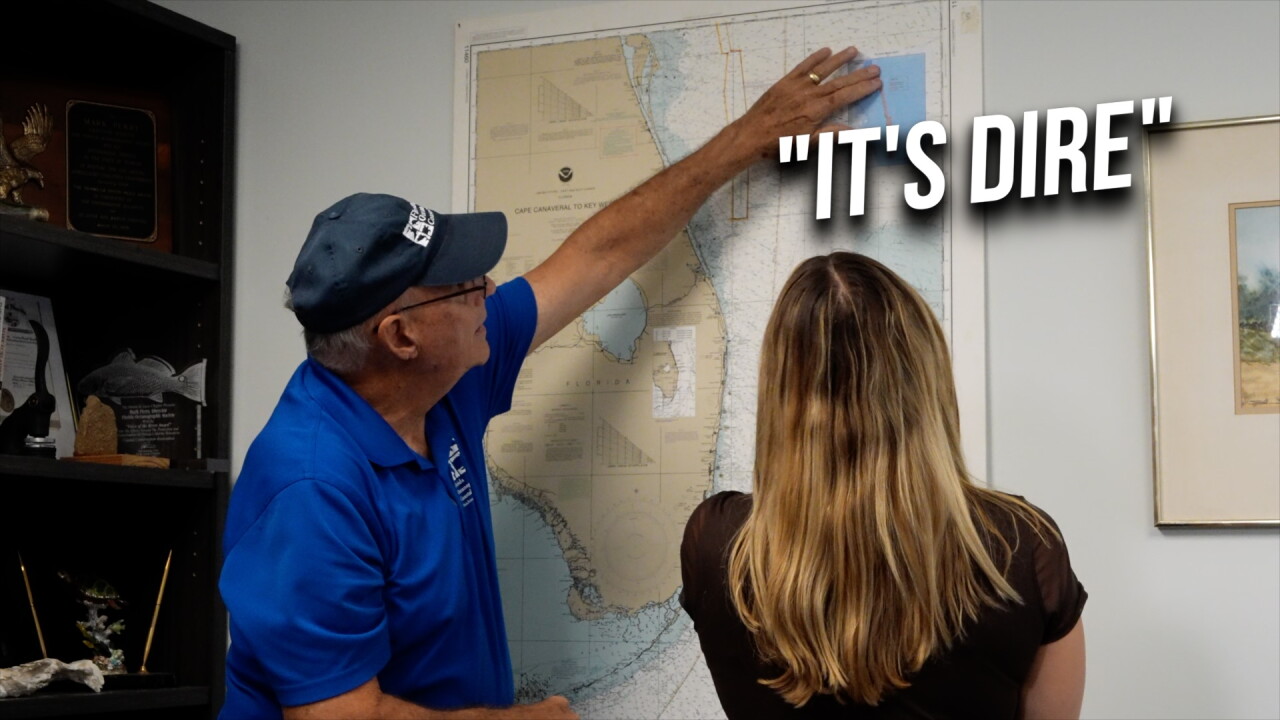


ST. LUCIE COUNTY, Fla. — A years-long fight over one of the world's rarest ecosystems has reached federal officials, as scientists and conservationists push back against a proposal that could reopen part of the protected Oculina Bank to shrimp trawling for the first time in decades.
The Oculina Bank is a deep-water coral reef off Florida's Atlantic coast, with some of its most significant formations off Fort Pierce. Built by the rare Oculina varicosa coral, the reef sits hundreds of feet below the surface and provides habitat for thousands of marine species, including economically important snapper and grouper.
WATCH BELOW: Fight over rare coral reef reaches NOAA as public comment opens
Scientists say decades of shrimp trawling destroyed roughly 90% of the reef before federal protections were put in place. Parts of the Oculina Bank were closed to trawling beginning in the 1990s, with protections later expanded and made permanent.
Now, conservationists fear some of that progress could be reversed.
"I'd say it's dire. It's a dire situation," said Mark Perry, executive director of the Florida Oceanographic Society. "We're desperate to get this protected."
A push to reopen protected waters
The latest battle began after a Trump administration executive order directed the nation's regional fishery councils to look for ways to reduce regulatory burdens, expand fishing opportunities and increase economic profitability.
The South Atlantic Fishery Management Council subsequently considered proposals that would restore commercial shrimping access to portions of the Oculina Bank that have been protected from trawling for decades. Council documents described the areas as historically important fishing grounds and said the changes were intended to help achieve optimum yield in the rock shrimp fishery.
Shrimpers say they need the additional fishing grounds.
"The shrimping industry is teetering on the brink of extinction," Bob Zales, executive director of the Southeastern Fisheries Association, previously told WPTV.
Council data reviewed by WPTV shows the rock shrimp industry has declined dramatically. The number of annual trips fell from more than 700 in the mid-1990s to fewer than 100 annually since 2010. The number of active rock shrimpers also dropped from 144 in 1996 to fewer than 30 in later years.
Zales has blamed the decline on factors including rising costs, imported shrimp and the loss of fishing grounds. Shrimpers have also faced increasing restrictions off Port Canaveral during space launches.
Scientists question the economic tradeoff
Scientists and conservationists argue the potential benefit to the shrimp industry is small compared with the ecological and economic value of protecting the remaining reef.
NOAA data previously reviewed by WPTV showed brown rock shrimp landings nationwide totaled about 600,000 pounds in 2023, worth roughly $1 million.
Florida fishermen, by comparison, landed nearly 100 million pounds of fish worth just under $300 million that year, including species such as snapper and grouper that use the reef as habitat.
"We know how valuable this reef system is," Perry said.
Scientists also warn that recovery from additional damage could take generations.
"It would take centuries to grow back even some semblance of the corals," Perry said.
Supporters of reopening the area point to mapping that found no live coral, standing dead coral or coral rubble within the proposed trawling zones.
But that same research warned sediment kicked up by trawling could drift into nearby living reef and smother coral. Scientists have also raised concerns that snapper and grouper could be caught as bycatch.
A fight WPTV has followed for months
WPTV Investigates has followed the debate as opposition grew locally and nationally.
Earlier public comments to the council overwhelmingly opposed reopening the area. WPTV's review found about 120 of 150 comments opposed both proposals, while 25 supported both and five supported one proposal but not the other.
A similar proposal approved by the council in 2022 ultimately failed to win federal approval, garnering thousands of opposing public comments from across the country.
The latest proposal nevertheless continued moving forward.
WPTV also previously reviewed financial disclosure records for members of the South Atlantic Fishery Management Council and found several disclosed financial interests tied to the fishing or seafood industries. Council officials told WPTV that conflicts of interest are governed by NOAA rules and federal law.
Earlier this year, despite opposition from scientists, conservationists and members of the public, the council voted to recommend reopening as much as 24 square nautical miles to shrimp trawling — an area larger than Manhattan.
The proposal has now reached the National Oceanic and Atmospheric Administration, which will decide whether to approve it.
The Agency has posted the proposals to its Federal Registry, asking the public to weigh in before it votes.
Concern reaches beyond Florida
The fight is also drawing attention from national conservation organizations.
Mike Gravitz, with the Marine Conservation Institute, said the debate comes as coral reefs worldwide already face pressure from warming waters, pollution and overfishing — and as countries around the world work toward protecting more of the planet's oceans.
"For gosh sakes, it's the last 10% of something that occurs nowhere else on Earth," Gravitz said.
He said the United States has close to 25% of its ocean protected in an effective way, while international conservation efforts are moving in the opposite direction.
"It's really ironic to us that people would be talking about weakening protections for these deep-sea corals at a time when the world needs to do even more, not less," Gravitz said. "This administration is rolling back those protections, especially for the very large marine protected areas, some of which have been protected since Teddy Roosevelt was president."
For Perry, the federal review represents the latest — and potentially decisive — stage of a fight that has stretched for years.
"They understood it, and they protected it," Perry said of previous federal protections, "but now it's being attacked again."
Public comment on the proposal is open through Nov. 17 before federal officials make a final decision.
Click here to submit a public comment.
"And we just really need to, you know, stand up and fight for it," Perry said.
Multiple organizations have also launched petitions opposing the proposals.