

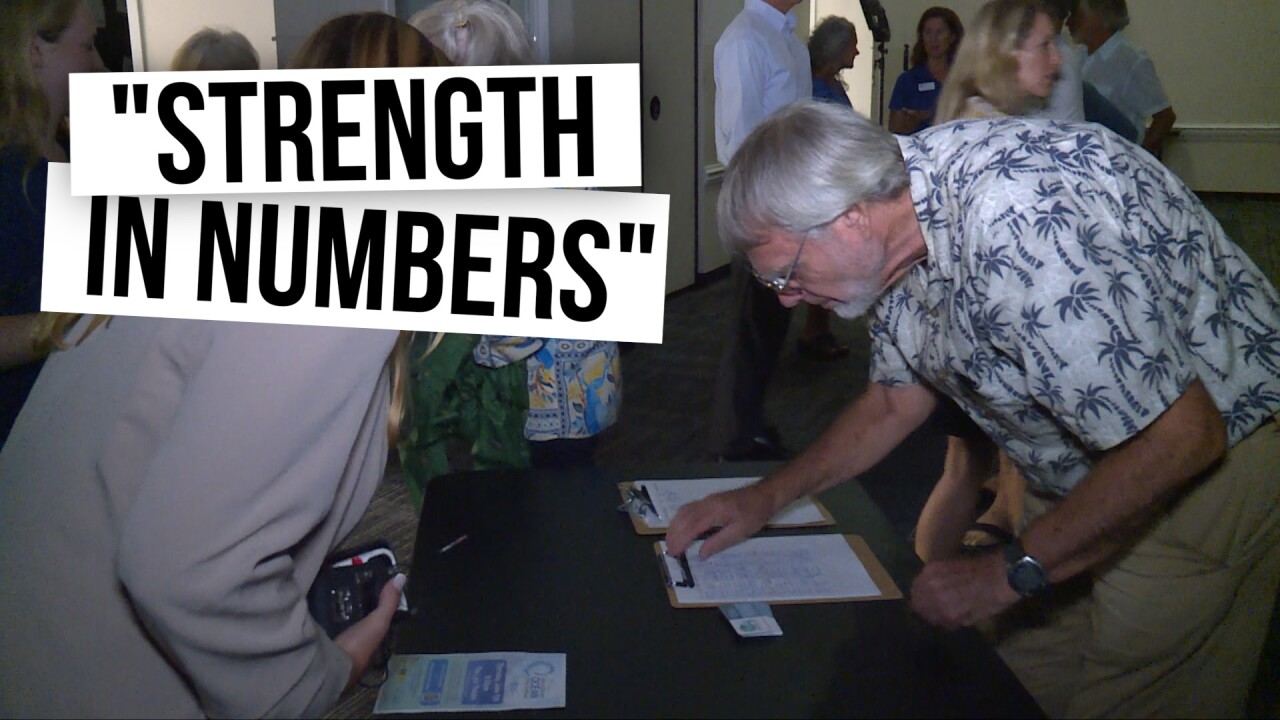


STUART, Fla. — Dozens of community members gathered at the Blake Library in Martin County after a federally appointed council voted to roll back longstanding protections for the Oculina Bank — a rare deep-water coral reef found nowhere else on Earth.
Located just off the coast of Fort Pierce, the reef is hidden hundreds of feet below the surface, and unlike most coral that needs shallow sunlight to survive, the Oculina Bank thrives in deep, dark waters.
WATCH WPTV'S COVERAGE BELOW:
The reef is also home to more than 2,000 marine species.
"Very concerned about an ecosystem point of view, where your fish don't exist in a vacuum, they need a habitat, they need food," said Dr. Grant Gilmore, a scientist who previously dived the rare reef. "The coral reef was giving them habitat and food. You take that away, you don't have the fish."
For months, WPTV has been reporting on two proposals that would reopen parts of the reef to shrimp trawling — even though scientists say trawling destroyed as much as 90% of the reef before federal protections were put in place decades ago.

WPTV Investigates
Federal council to decide fate of rare coral reef amid shrimp trawling debate
"They grow very, very slowly, and they've been there for a long time," said Mark Perry, Executive Director of the Florida Oceanographic Society.
"And you just wish that everybody else could see that," Gilmore said.
Perry and Gilmore were two scientists who urged the public to help save the reef at the gathering.
"Corals are in trouble worldwide. We shouldn't be destroying anymore," Gilmore said.
The proposals followed a Trump Executive order issued in April of 2025 that tasked the eight regional councils nationwide to find ways to reinvigorate the fishing industries.
WATCH BELOW: 'That's an overwhelming majority of people who are absolutely opposed to this,' Jim Moir tells WPTV
Bob Zales, executive director of the Southeastern Fishing Association and a generational shrimper, previously told WPTV he believes reopening shrimping access to the Oculina Bank is essential for the struggling rock shrimp industry.
"The shrimping industry is teetering on the brink of extinction," Zales said.
Council data WPTV previously reported on shows the rock shrimp industry, which is the type of shrimp that would be harvested in that area, has plummeted from over 700 trips per year in the mid-1990s to under 100 since 2010.

WPTV Investigates
Rare coral reef closer to reopening to shrimp trawling after vote
The number of active rock shrimpers dropped from 144 in 1996 to less than 30, with just 12 active boats in 2018.
Zales attributes the decline to high costs, competition from imported shrimp and closures of previously open fishing areas.
But scientists warned reopening the reef could irreparably damage what little remains. WPTV's reporting found that snapper and grouper that thrive on the bank generate nearly $300 million a year for Florida's economy — compared to about $1 million generated by the type of shrimp targeted by the proposal.
WATCH: Council votes 12-1 to allow shrimp trawling on Oculina Bank
"There's probably 2,000 different species we're trying to save," Perry said.
Gilmore echoed that concern.
"Your fish don't exist in a vacuum, they need a habitat, they need food, you take that away, you don't have the fish," Gilmore said.

WPTV Investigates
Council members with financial ties to vote on coral reef shrimp trawling
In January, scientists on the council's own Coral Advisory Panel told WPTV they were not consulted on the amendment despite requesting input. Documents we uncovered show at least 7 members of the federally appointed council who voted on the plan reported financial ties to the fishing or shrimping industry.
Still, later that month, the council voted to move forward with reopening more than 24 square nautical miles of the reef — an area larger than Manhattan — despite thousands of petition signatures urging them to keep protections in place.
"It felt very disappointing," Gilmore said.
WATCH BELOW: 'We're down to the last 10% of them,' senior policy advisor Mike Gravitz tells WPTV
"I was just devastated," Perry added. "Here's the same council that years ago, decades ago, approved protecting it, and that they now want to amend that protection and open it up to this destructive fishing effort."
In April, the proposal landed on the desk of NOAA — the federal agency that will make the final call.
"I was just devastated," Perry said.
Perry said public awareness remains critical to stopping the amendments.

Protecting Paradise
Scientists warn rare reef found only in Florida could be destroyed again
"We're trying to stop those amendments from happening. So, people have to first know about them," Perry said. "All of our voices saying don't approve these amendments. We've got to protect these reefs."
"We're hoping that people will write letters to their congressman and to those who might be able to influence the decisions on what to do in saving the coral, which is, we want that coral to be protected," added Gilmore.
That urgency is what drew community members to the library meeting, where they signed petitions and picked up informational pamphlets.
"That stuff's important to me," one petition signer said.
WATCH: Protected ecosystem could be destroyed due to executive order
Perry said the turnout gave him reason for hope.
"We got letters, petitions… all these groups of people that came tonight are all on board to say, let's just not approve those amendments, let's keep it protected," Perry said.
Gilmore said the reef's greatest obstacle may be its invisibility.
"Out of sight, out of mind," Gilmore said.
The proposal is now with NOAA, who will make the final decision on the proposal. The agency is expected to release draft rules within the coming months, giving the public one more opportunity to weigh in before officials decide whether to move forward.
This story was reported on-air by a journalist and has been converted to this platform with the assistance of AI. Our editorial team verifies all reporting on all platforms for fairness and accuracy.