



STUART, Fla. — A Martin County homeowner on disability finally received approval for a state hurricane protection grant after being initially denied — but only after bringing her case to a WPTV Let's Hear It event.
Kimberly Caldwell-Blazie was nearly denied by the My Safe Florida Home program, which provides grants to help homeowners harden their properties before hurricanes. The program initially told her she "may not qualify" despite meeting the eligibility requirements.
WATCH BELOW: Disabled resident gets grant approved after WPTV brings case to state officials
"I would like to protect my home, and if I can protect it, I can feel safe in it," Caldwell-Blazie said.
She lives on a fixed income from Social Security and desperately needed impact windows after her home stood directly in the path of an EF-2 tornado that damaged her neighbor's house ahead of Hurricane Milton.
"Yeah, we had a neighbor who lost basically their roof with the tornado," said Cadwell-Blazie. "It's required by my insurance company to put [impact windows] on, to photograph that they're on my home."
The 62-year-old homeowner applied for a grant on the first day the program reopened in August. Based on the rules, she should have been near the front of the line because she's over 60 and low income —everything which the state prioritizes. She even completed her inspection in September.
"This is the actual inspection report that says my house is 86% protected with the shutters, but without the shutters, it's not protected," Caldwell-Blazie said.
She submitted estimates to My Safe Florida Home showing impact windows would cost nearly $20,000. She also sent the program documentation of her Social Security income, which is just over $20,000 annually, and a doctor's note confirming she's unable to install hurricane shutters on her own due to her disability.
But last month, the program emailed her saying she "may not qualify." The email gave her two choices: accept a formal denial that she could later dispute, or request an exemption — a process that could take up to three months.
"How did that feel to get that letter?" WPTV investigative reporter Kate Hussey asked.
"Horrible, horrible. I mean, you feel like you've lost hope. ... It's like a gut punch," Caldwell-Blazie replied.
Time was her biggest fear. Last year, the program's $280 million dried up in just two weeks. Even with lawmakers more than doubling the budget this year, she worried it still wouldn't last long.
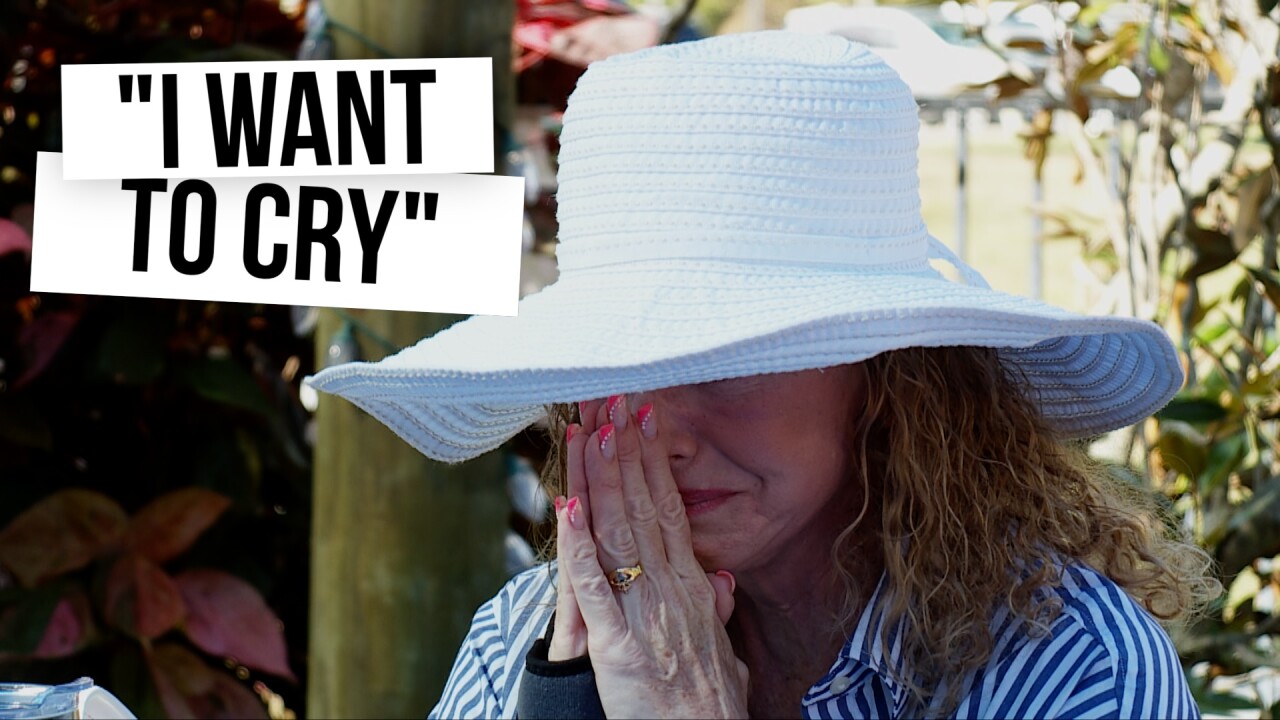
"I want to cry right now," said Caldwell-Blazie, blinking back tears. "I just keep praying that God will answer my prayers and that I can get hurricane windows and doors."
After WPTV listened to her at a Let's Hear It event in Jensen Beach, Hussey reached out to Florida's chief financial officer — the person responsible for this program.
Caldwell-Blazie said she got a call the very next day from the director of My Safe Florida Home, who told her he was moving her grant forward.
"When this gentleman from the state financial services department, Mr. Fielder, reached out to me and made this call, it was such a relief that, oh my goodness, I possibly am going to qualify now for this grant and be able to secure what is my safe place, what is my home, from a hurricane," Caldwell-Blazie said.
Now, for the first time in a long time, Caldwell-Blazie has hope she might finally feel safe again.
"Because when you come up against all these challenges all the time, and you're constantly denied, to have the hope of something from the state that is going to help me not have to worry is such a relief, such an incredible feeling of joy," Caldwell-Blazie said. "This will be my merry Christmas gift."
Caldwell-Blazie is far from the only one struggling with the program. Previous reporting from WPTV reporter Matt Sczesny has documented homeowners being denied and delayed, with lawmakers questioning whether the program is even lowering insurance premiums as promised.
Caldwell-Blazie hopes her story reminds the state that people living with disabilities are too often left behind, and they can't afford to be overlooked.
This story was reported on-air by a journalist and has been converted to this platform with the assistance of AI. Our editorial team verifies all reporting on all platforms for fairness and accuracy.