



MARTIN COUNTY, Fla. — After two of the largest animal hoarding cases in recent Martin County history, the Humane Society of the Treasure Coast says many of the rescued animals are already beginning to heal.
The Humane Society of the Treasure Coast in Palm City is now caring for over 100 animals connected to two separate hoarding investigations in Stuart and Palm City.
One case involved 108 cats and dogs rescued from a Stuart home owned by 77-year-old Gail Giustino. WPTV previously reported that deputies found horrific conditions at Giustino's home on Southwest Meadowlark Circle in July, with no working air conditioning, little ventilation and up to a foot of animal feces covering the floor.
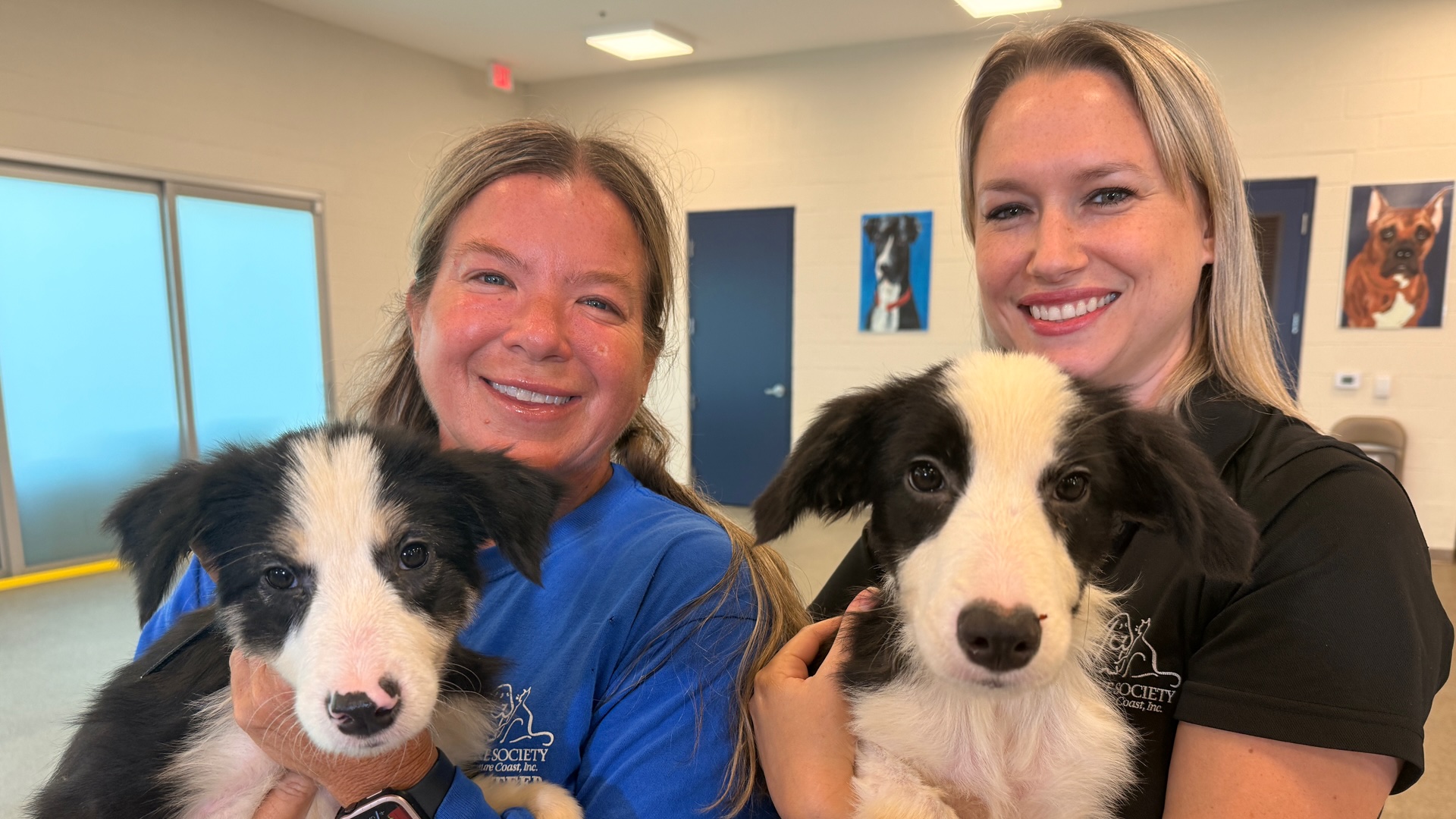
The second case involved 36 Border Collies rescued from a Palm City home after deputies described severe neglect conditions. Paige O'Donnell was arrested and faces 72 criminal charges after WPTV's investigation helped renew the sheriff's office probe. Deputies found the dogs living in deplorable conditions, with fur matted with feces and debris.
Cesar Perea, associate vice president of rescue for American Humane Society, said the emotional and physical recovery process for animals often begins quickly once they are removed from dangerous conditions.
"As soon as you start providing care, you immediately start to see the animal's personality come out," Perea said. "When they were in that situation, they were completely shut down."
Perea said American Humane has been assisting the Humane Society of the Treasure Coast with shelter operations and veterinary support following the rescues.
The Border Collies rescued from the Palm City home are undergoing what shelter staff call "medical grooming," a process that involves carefully shaving severely matted fur while checking for injuries and infections underneath.
"We shaved 9 pounds off of one dog filled with feces and urine," Sarah Fisher, spokesperson for the Humane Society of the Treasure Coast, said.
Fisher previously told WPTV that some dogs arrived with metal and glass fragments trapped in their fur. During the initial rescue, she said staff found "lots of pieces of metal — rusted metal, sharp metal — that have been stuck in their fur, along with shards of glass."
Perea said trauma in rescued animals can appear as emotional shutdown, inactivity and fear, but he has seen dramatic turnarounds in many hoarding cases across the country.
"Within two weeks, you wouldn't even recognize that animal," Perea said. "They start getting a little more active and joyful. They start behaving like the pets that they're meant to be."
He said even small signs — including a tail wag or playful behavior — can signal major progress.
"The first little tail wag," Perea said, "is an indication that something's going right."
Martin County Sheriff John Budensiek said in the Stuart case that investigators believed Giustino thought she was helping animals, despite the dangerous conditions inside the home. In the Palm City case, O'Donnell exhibited deceptive behavior during the investigation, blaming strong odors on "missed trash collection" and "old seafood," according to court documents.
"It becomes overwhelming very quickly when people feel that compassion to want to help animals, but then they don't have the resources or the ability to continue to manage and provide a level of care that's acceptable," he said.
Perea said animal hoarding can still qualify as criminal neglect under the law when animals are denied proper veterinary care, food or safe living conditions. He said there are several warning signs communities should recognize when animal hoarding may be occurring nearby.
"The smell will probably be your first indicator," Perea said. "If you see a lot of animals, more animals than you usually see people having as pets, that's also a big indicator."
The Humane Society of the Treasure Coast has received an outpouring of support from the community following both cases.
"The community really comes together when it comes to animals," Perea said.
However, monetary donations are often more helpful than physical supplies because shelters may already have enough blankets, towels or pet food while urgently needing medications and veterinary resources.
The organization told WPTV investigative reporter Jamie Ostroff that as of Friday afternoon, they have received over $44,000 through Facebook donations. Additionally, over 1,000 people have donated through other channels.
"To put the need in context, under normal conditions, it costs our Humane Society nearly $12,000 per day to operate the shelter and its programs," said Sarah Fisher, spokesperson for the Humane Society of the Treasure Coast. "We do not yet have an estimate for the additional cost of treating and caring for the 36 border collies because assessments are still underway. We are deeply grateful for the donations already made to our Emergency Medical Fund, and continued support will help us provide the care these animals need during this difficult time.”
The cases have prompted legislative action from State Rep. Meg Weinberger, R-Palm Beach Gardens, who is pushing for a mandatory dog breeder registry in Florida following the Palm City rescue.
The Humane Society of the Treasure Coast is currently encouraging the public to adopt or foster available animals while the rescued Border Collies continue receiving treatment and rehabilitation. The shelter is also asking for donations to its emergency medical fund or through its Amazon Wish List.
This story was reported on-air by a journalist and has been converted to this platform with the assistance of AI. Our editorial team verifies all reporting on all platforms for fairness and accuracy.
What do you want me to Shine A Light on? What are you most proud of where you live? Email me at tawalker@wptv.com.
