

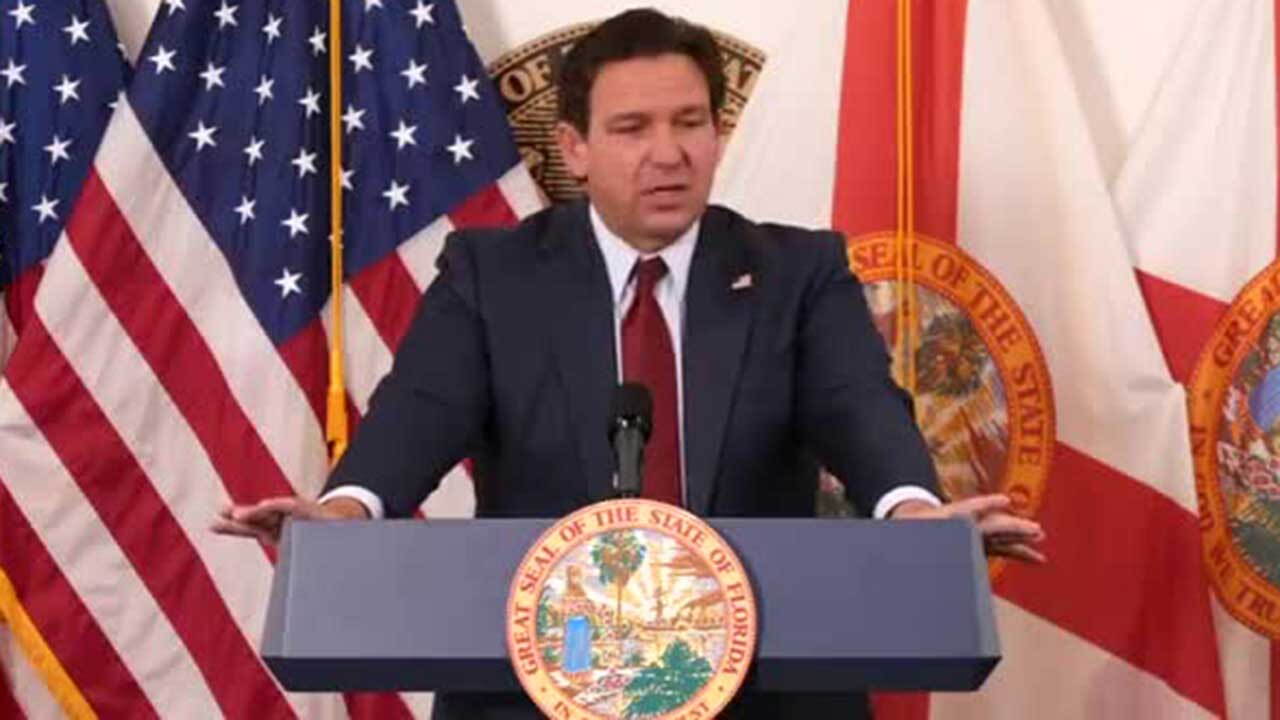


TALLAHASSEE, Fla. — Gov. Ron DeSantis said Wednesday that the passage of Amendment 3 helped drive Republican turnout in Florida, arguing the property tax measure played a significant role in allowing the GOP to hold its ground in the state despite major Democratic gains elsewhere in the country.
Speaking the day after the Nov. 3 midterm elections, DeSantis called the national results "close to an extinction-level event" for Republicans but said Florida demonstrated the durability of the political coalition Republicans have built during his two terms as governor.
WATCH BELOW: Republicans nationally suffer 'close to an extinction-level event,' DeSantis says
"In the state of Florida, it got a resounding yes vote," DeSantis said of Amendment 3. "I'm very proud of everyone that had been a part of that."
DeSantis said he believes putting the measure on the ballot also benefited Republican candidates further down the ticket.
"Had Amendment 3 not been on the ballot, I don't know that we turn out the voters that we ended up turning out," DeSantis said. "People wanted to vote yes on that, and then many of them ended up voting Republican later on down the ballot."
DeSantis said Florida Republicans benefited from a record of delivering on promises to voters, even as political conditions shifted significantly toward Democrats nationally.
"We've built up a record of achievement," DeSantis said. "We've earned trust from a number of our voters that even in the worst situation that you can imagine politically, we were able to hold the line."
Special session planned for Amendment 3
DeSantis said the next step will be implementing Amendment 3, with a special legislative session expected before he leaves office in January.
The governor said he would work with legislative leaders on the timing rather than dictate when lawmakers should return to Tallahassee.
"We knew this would be something we needed to do," DeSantis said. "There's a lot of ideas that we've been tossing around for the last six months."
DeSantis said the legislation would set a schedule for further expansion of homestead tax relief while also seeking to prevent local governments from offsetting the savings with other taxes or fees.
He said he wants lawmakers to establish what he described as a "taxpayer bill of rights" and is considering state grants to help local governments, particularly rural communities, cover funding needs for essential services.
"It's not going to be a tax shift," DeSantis said. "It's going to be a reduction."
According to DeSantis, implementing the amendment could involve tens of millions of dollars in state grants for local governments facing shortfalls in funding core services such as sheriff's departments.
Amendment 3 must be implemented by Jan. 1.
Schools excluded from Amendment 3
DeSantis also addressed questions about school funding because Amendment 3 does not apply to school districts.
He said the implementing legislation will not change that exemption. Instead, he suggested lawmakers could eventually revisit Florida's education funding formula as they consider whether additional property tax relief could be provided to homeowners without reducing support for public schools.
DeSantis said his ultimate goal is to move Florida closer to making homesteaded property tax-free, although reaching that point would require additional action after he leaves office.
"The more we can get the homestead to just be tax free, I think that's the better," DeSantis said.
DeSantis calls national results a warning to Republicans
Much of the governor's news conference focused on what he described as disastrous results for Republicans outside Florida.
DeSantis argued the election amounted more to a rejection of Republicans in Washington than an endorsement of the Democratic Party.
"This is probably the political worst-case scenario for a midterm election," he said.
He said Republicans need to pay greater attention to voters' economic concerns, including inflation, mortgage rates, gas and grocery prices.
DeSantis also criticized Republicans nationally for focusing their campaigns on issues that he believes were more effective in previous elections but did not match voters' concerns this year.
"The ground shifts and the emphasis then is on different things," DeSantis said. "Republicans, it seemed like in some of the ads I was seeing with how much money they were spending, they really were fighting yesterday's battle."
Despite narrower Republican victories in Florida than in recent elections, DeSantis rejected the idea that the results represented a failure for the state GOP. He said he had warned Republican candidates for months that the political environment had moved substantially toward Democrats.
DeSantis said strong Democratic turnout and increased participation among no-party-affiliation voters made the election particularly difficult for Republicans.
Still, he argued Florida's results showed Republicans could survive an unfavorable national environment if they remain responsive to voters and deliver on policy.
"Florida is the last main anchor standing," DeSantis said.
DeSantis, who is term-limited and will leave office in January, declined to discuss whether he might run for another office in 2028.
"I still got more work to do," DeSantis said. "We'll work till the lights are out and cross that bridge when we get to it."
