



The tropics remain quiet close to home, with no immediate tropical threat to Florida, the Gulf, or the Caribbean.
However, farther out in the Atlantic there are several areas worth watching.
Invest 95L, a broad area of low pressure several hundred miles southeast of Bermuda, continues to produce disorganized showers and thunderstorms. The National Hurricane Center gives the system a 50% chance of development over the next 48 hours and a 50% chance over the next seven days. The disturbance is expected to accelerate northward early this week.
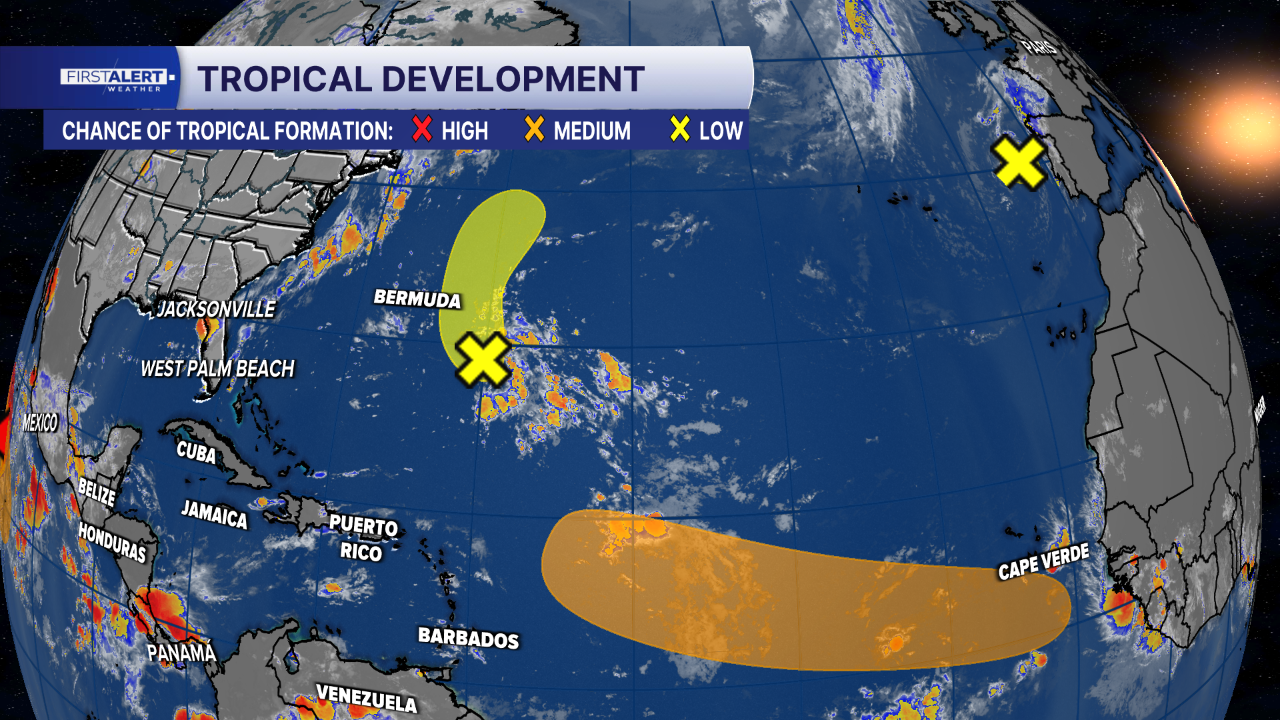
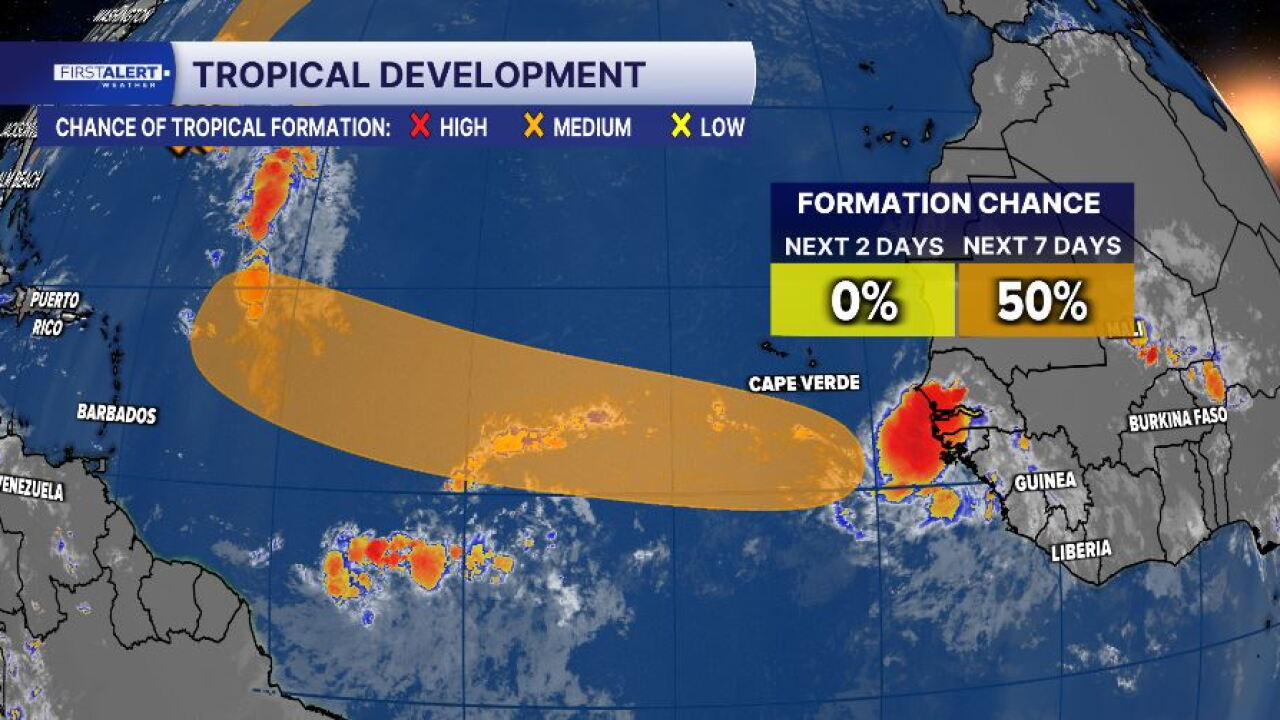
Another area is much farther east. A tropical wave is expected to emerge from the west coast of Africa Monday, and an area of low pressure could develop with it.
Environmental conditions are expected to be marginally favorable for development, and a tropical depression could form during the middle or latter part of the week as the system moves westward across the eastern and central tropical Atlantic.
The National Hurricane Center gives that system a 50% chance of development over the next seven days.
For South Florida, none of these systems poses an immediate concern, but we'll continue watching the eastern Atlantic disturbance closely as it begins its journey westward.
Moke remains one to watch near Hawai'i
Meanwhile, the Central Pacific remains active.
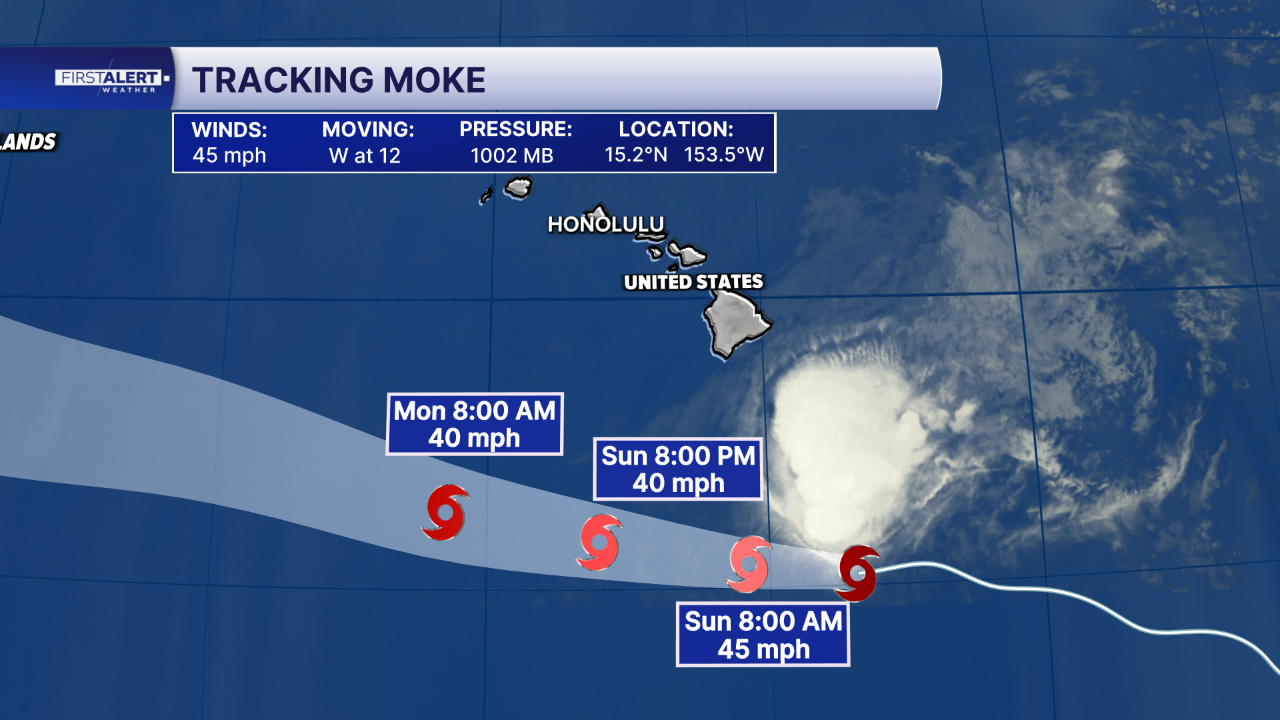
Tropical Storm Moke is located several hundred miles south-southeast of Hilo, Hawai'i, while Tropical Storm Lala is now much farther northwest, north of the Papahānaumokuākea Marine National Monument.
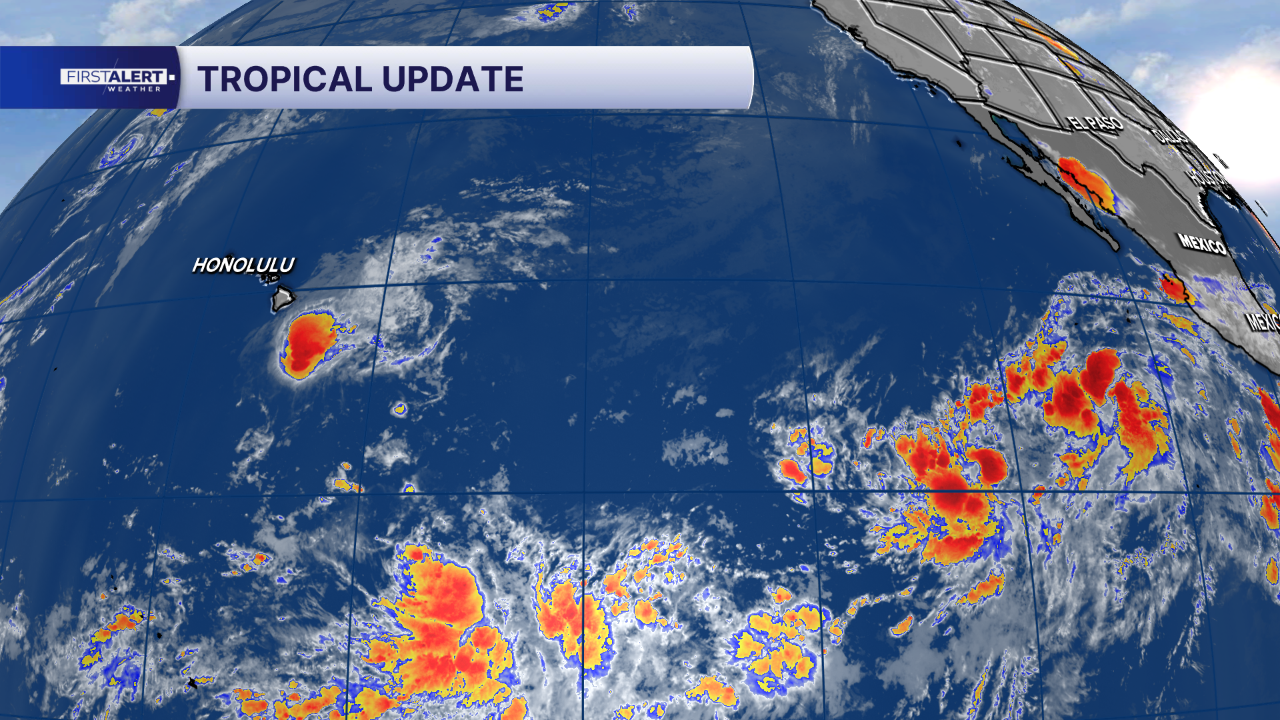
Moke is particularly important for Hawaii because impacts can extend well away from the storm's center. Even with the center tracking south of the main Hawaiian Islands, tropical moisture associated with the system can increase the potential for heavy rainfall, gusty winds and rough ocean conditions, particularly around the Big Island.
This comes shortly after Lala brought significant weather to portions of Hawaii, making additional heavy rainfall especially important to monitor.
TRACKING THE TROPICS: Hurricane Center | Hurricane Guide


