



OKEECHOBEE COUNTY, Fla. — Nearly 1.8 million chickens will be depopulated after highly pathogenic avian influenza, commonly known as bird flu, was detected at a Cal-Maine Foods facility in Okeechobee County.
Cal-Maine Foods announced Nov. 18 that the facility tested positive for highly pathogenic avian influenza, or HPAI. The company said the outbreak will lead to the depopulation of approximately 1.4 million laying hens and 360,000 pullets, representing about 2.7% of the company's total flock.
Production at the Okeechobee County facility has temporarily stopped while Cal-Maine follows protocols established by the U.S. Department of Agriculture.
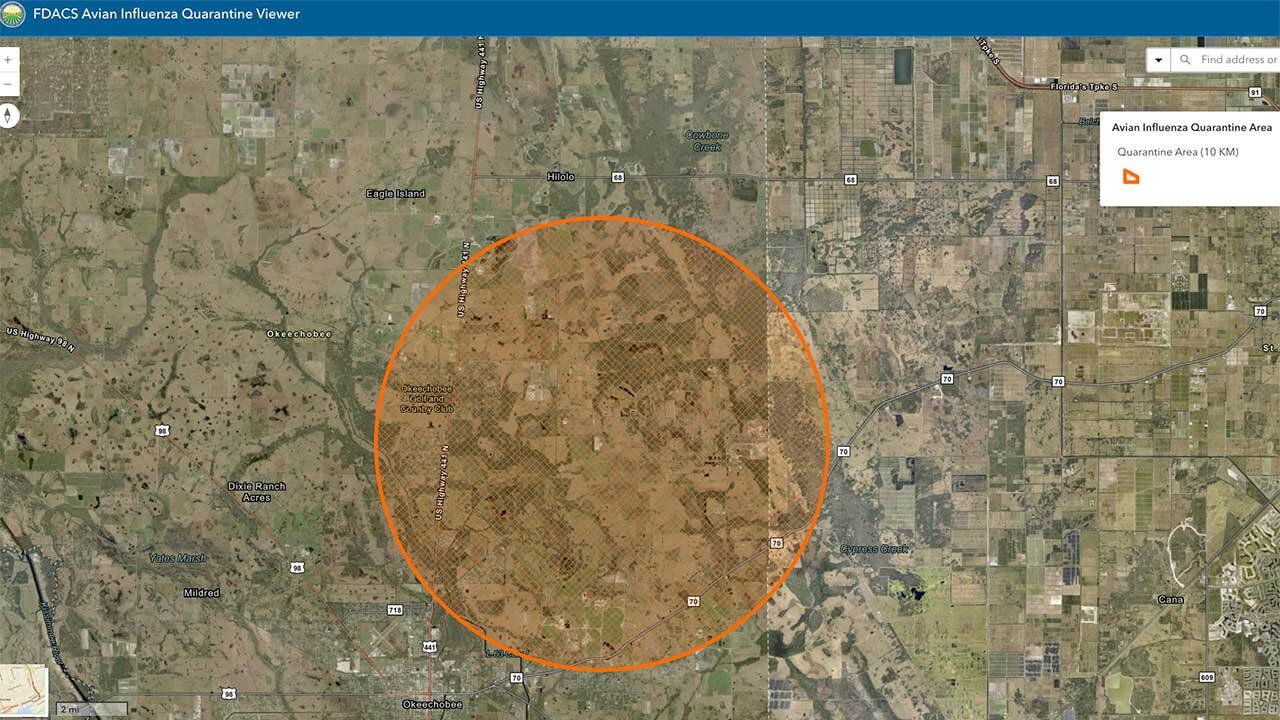
The Florida Department of Agriculture and Consumer Services has established a quarantine area following the detection, according to St. Lucie County government.
The poultry quarantine extends from Okeechobee County into a rural portion of western St. Lucie County north of State Road 70 near the county line.
People who own or care for poultry within the affected area are being advised to review the state's quarantine restrictions, which include limits on moving poultry and poultry products without FDACS authorization. Residents can check whether they are within the affected area using the state's interactive quarantine map.
Cal-Maine said it is coordinating production and distribution among its other facilities in an effort to maintain its egg supply and minimize disruptions for customers.
The company also said it maintains biosecurity programs at its facilities but noted that no farm is immune to HPAI. The virus remains present among wild birds, and the risk of outbreaks can increase during bird migration seasons.
Health officials say the detection does not mean consumers should stop eating eggs. According to information provided by the company, the Centers for Disease Control and Prevention considers the health risk from HPAI viruses to the general U.S. public to be low.
The USDA also says HPAI is not transmitted through properly handled and cooked eggs. Cal-Maine said there is no known HPAI risk associated with eggs currently on the market and that no eggs have been recalled because of the outbreak.
Cal-Maine said it is working with federal, state and local officials as it responds to the outbreak and works to reduce the risk of additional infections.
The company said it expects to provide more information in its next quarterly report filed with the Securities and Exchange Commission and does not anticipate providing interim updates unless information is considered material.
Anyone with questions about the quarantine can contact FDACS at 850-410-0900 or find additional information through its Division of Animal Industry.
