

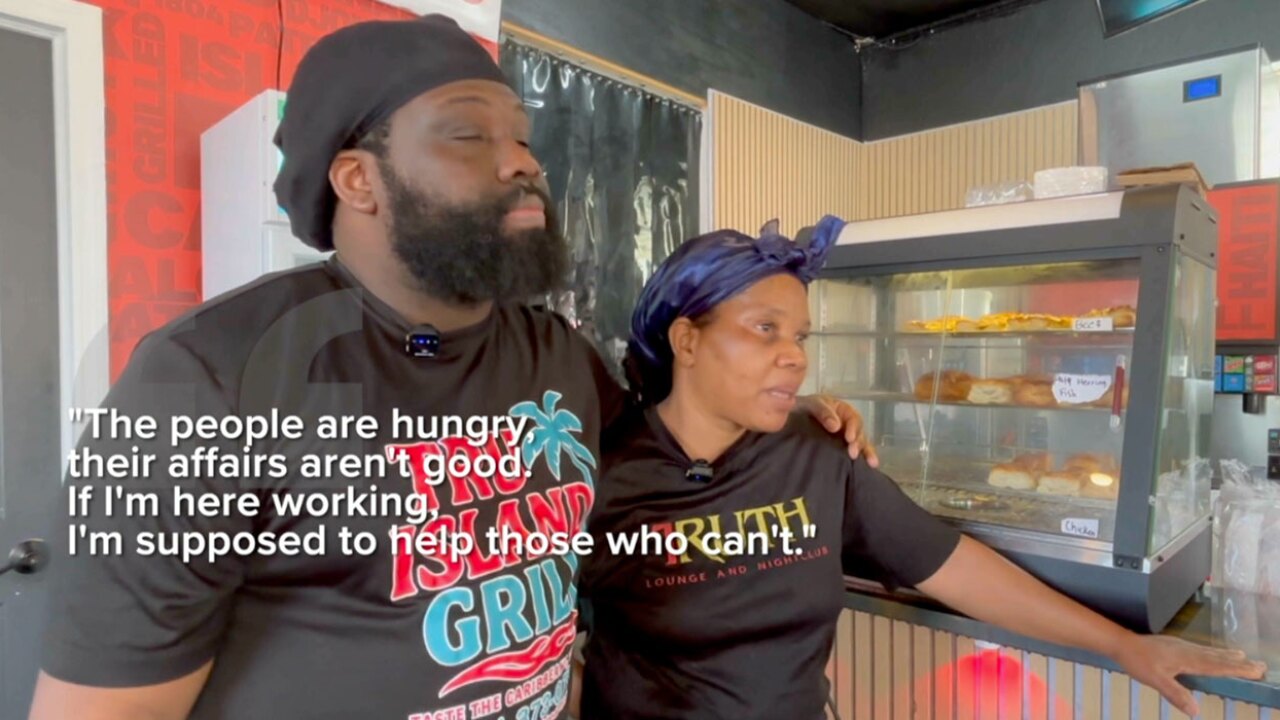


DELRAY BEACH, Fla. — In the busy kitchen of Tru Island Grill in Delray Beach, Elana Dixon moves quickly between orders, plating food and calling out dishes during a busy shift.
But like many Haitian immigrants in South Florida, Dixon says her work supports more than just herself.
It helps keep her family in Haiti afloat.
"The people are hungry, their affairs aren't good," Dixon said in Creole, translated to English. "If I'm here working, I'm supposed to help those who can't."
Dixon has lived in the United States since 1996. For decades, she says sending money back home has been a regular part of her life — helping relatives pay for food, school and other basic needs.
"If we don't help our country, they won't fix it for us," she said.
Her concerns come after a March 2 social media post from the U.S. Department of Homeland Security suggesting the federal government may pursue restrictions on remittances sent from the United States to Haiti.
In the post, DHS wrote that "American dollars should NOT be used to subsidize foreign economies," claiming that billions of dollars sent overseas — including about $6.1 billion to Haiti — divert funds away from the U.S. economy.
The post also stated that remittances sent by Haitians living in the United States make up roughly 20% of Haiti's economy.
Advocates say that statistic is true — but argue the implication behind the message ignores the reality many families face.
Jennifer Jones, a Haitian community advocate in South Florida, says Haiti's fragile economy offers few opportunities for people to support themselves.
"It's really difficult. The economy does not make a lot of room for economic growth," Jones said. "There aren't industries that are growing like tourism, hotels or restaurants. Even if you go to school to learn a trade, there isn't infrastructure that exists in order for you to be able to use that for a living."
According to international economic data, remittances account for roughly one-fifth of Haiti's national economy. Many families rely on the money to cover basic living expenses, including education and healthcare.
"I know $350 covers my cousin's tuition for the year," Jones said.
However, despite DHS highlighting Haiti in its messaging, available remittance data shows Haiti is not among the top ten countries receiving the largest amounts of money sent from the United States. Countries like Mexico receive significantly more each year.

Palm Beach County
Haitian TPS holders face new challenge as FL denies driver's license renewals
Still, the possibility of new restrictions has raised alarm in South Florida, home to one of the largest Haitian communities in the country.
For people like Dixon, the money she sends home isn't about economics or politics — it's about responsibility.
"If I'm able to work, I have to help them," she said.
The announcement also comes after the Trump administration's earlier attempt this year to end Temporary Protected Status, or TPS, for Haitians living in the United States. A federal judge blocked that effort in early 2026, allowing the program to continue for now.
While no formal policy restricting remittances to Haiti has been finalized, advocates say they are closely watching the administration's next steps — worried about what even the possibility could mean for families already struggling to survive.
