

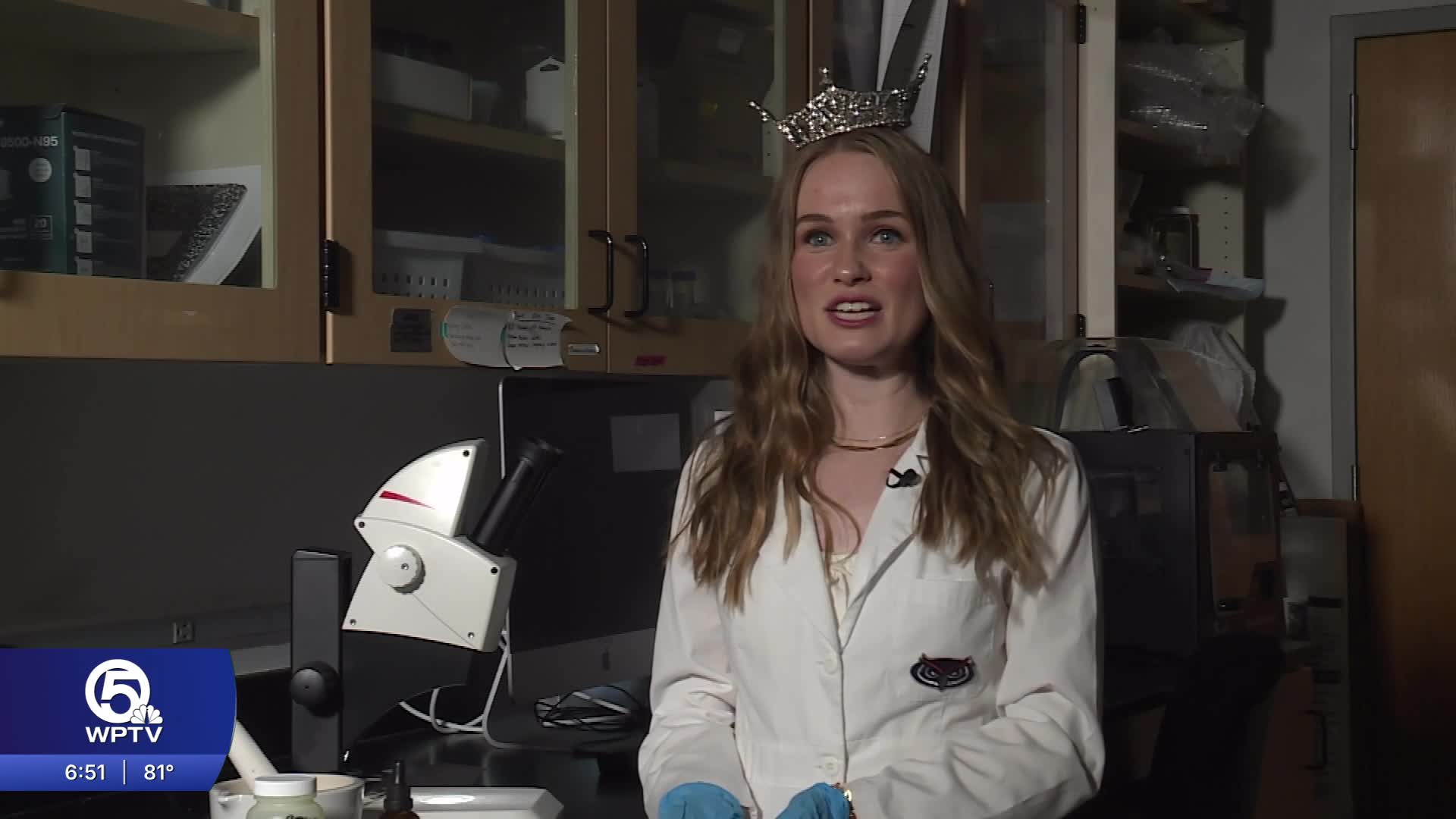


FORT PIERCE, Fla. — A crown and a lab coat may seem like they belong in two very different worlds, but for Florida Atlantic University graduate student Paige Aldred, they serve the same purpose: getting people to care about the environment around them.
Aldred is a biological science master's student at FAU studying water quality, harmful algal blooms, and Sargassum in and around the Indian River Lagoon. She is also Miss Fort Lauderdale, a title she is using to take the science she studies in the lab out into the community.
At FAU, Aldred's research examines water quality at locations stretching from Sebastian Inlet south to Jupiter Inlet, including Fort Pierce and the St. Lucie Inlet.
“The work that I'm doing at FAU is I'm studying the Indian River Lagoon,” Aldred said. “I'm not only studying the water quality of the Indian River Lagoon, but as well as what the Sargassum is bringing into the Indian River.”
Looking at what we can't see
For Aldred, much of the work begins with something Floridians know all too well: Sargassum.
She collects samples in the field before drying and grinding the seaweed into a fine powder that can be sent for isotope testing. Water associated with the Sargassum is also preserved and analyzed to determine what microscopic organisms may be present.
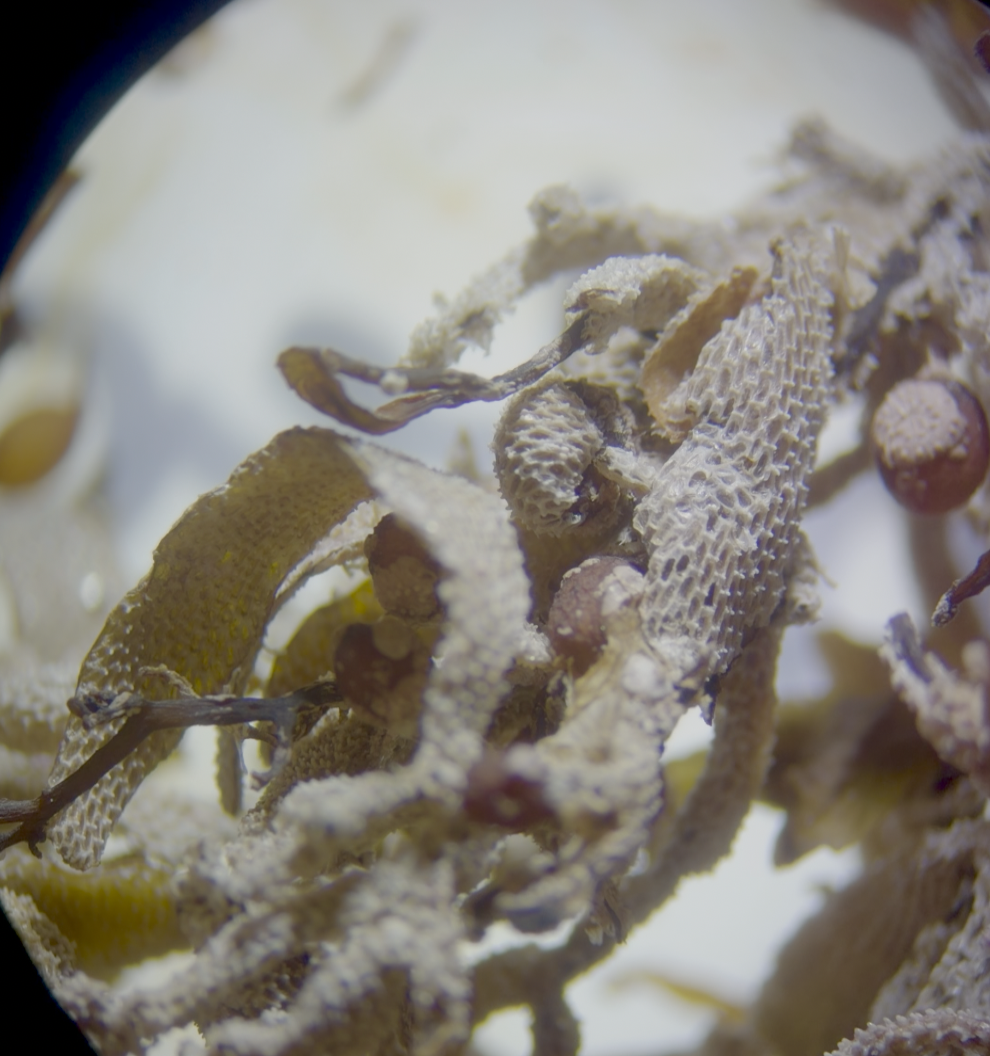
One organism she's investigating is a type of dinoflagellate that has also been detected during research into the unusual spinning behavior observed in fish in the Florida Keys.
Aldred is examining whether the organism can travel on Sargassum and make its way into the Indian River Lagoon.
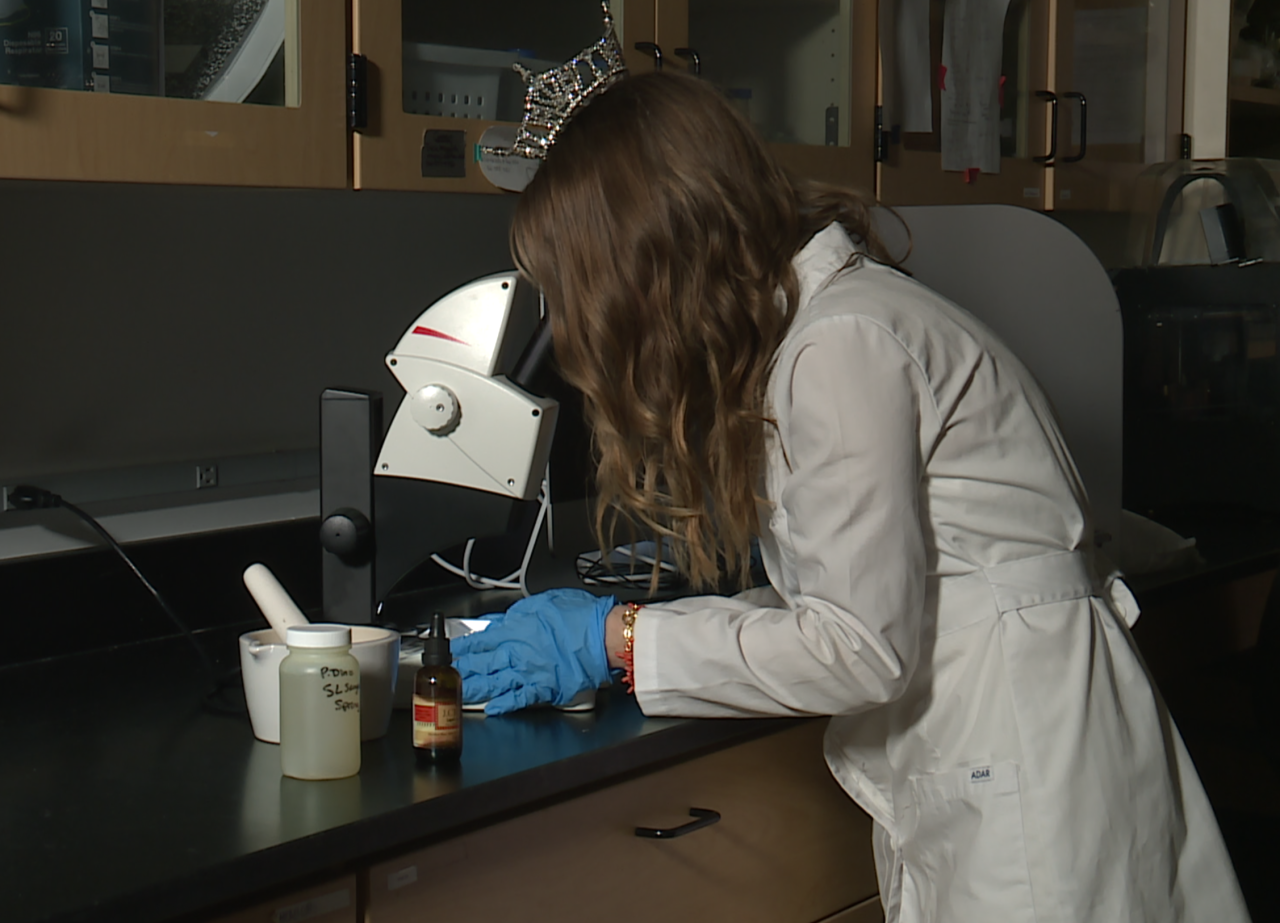
“I'm looking to see if that dinoflagellate ... is traveling on Sargassum and finding its way into the Indian River Lagoon,” Aldred said. “And so far I have found traces of that dinoflagellate in my samples.”
Researchers are continuing to investigate the cause of the abnormal fish behavior in the Florida Keys, and the presence of a dinoflagellate does not by itself establish that it caused the spinning behavior.
Taking science beyond the lab
Aldred's work doesn't stop when she leaves FAU.
As Miss Fort Lauderdale, she uses public appearances and community events to advocate for clean drinking water, healthy ecosystems and more sustainable choices.
Aldred said participating in the Miss America organization has also helped her develop another skill she considers important for scientists: communicating complicated research to people outside the scientific community.
“Now I have opportunities where I can speak in front of people, but not just speak in front of scientists, speak in front of the community,” Aldred said. “And be able to communicate and translate my science into ways that the community can understand how it impacts them and what they can do to make that difference.”
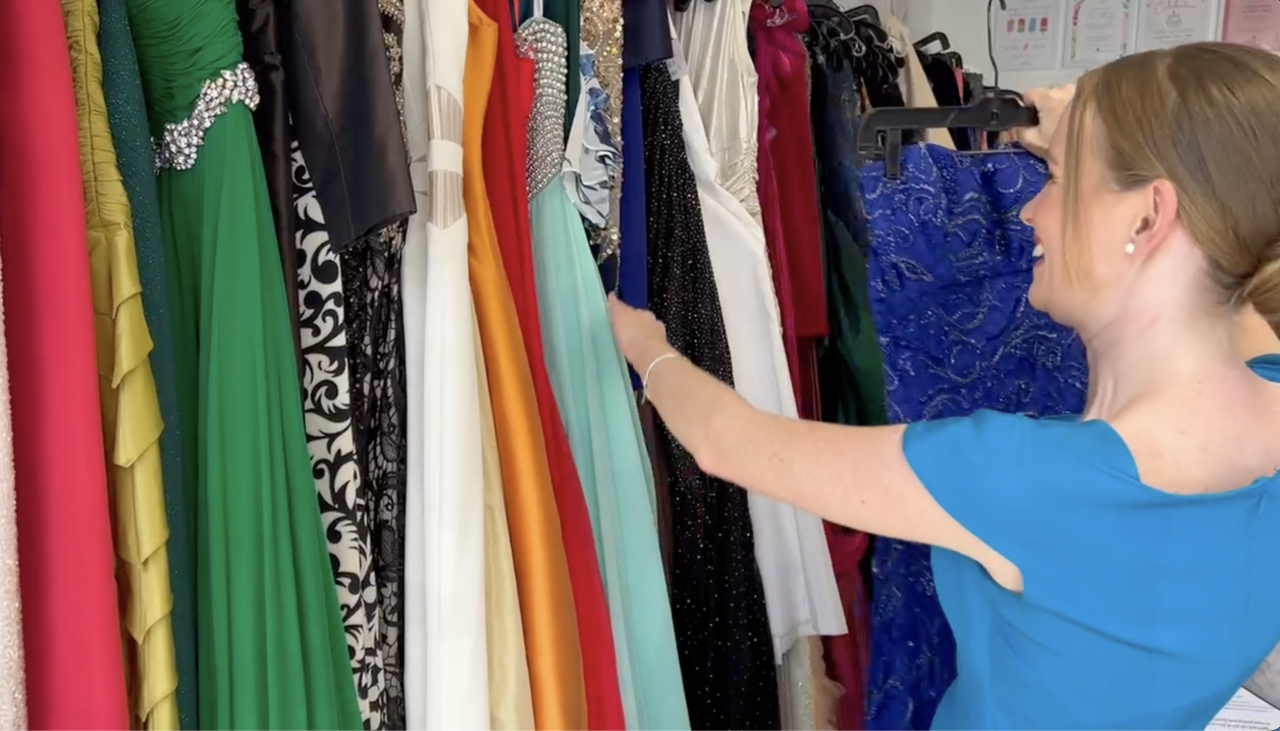
Her environmental message even extends to her pageant wardrobe.
Aldred says the clothing she wears for appearances is thrifted, upcycled or purchased secondhand. Rather than continually buying new outfits, she reworks pieces she already owns with different accessories, jackets and styling.
The choice is intended to call attention to fast fashion, textile waste and synthetic fibers that can shed from clothing.
“We have to understand that we are wearing clothes each day that are shedding,” Aldred said.
She encourages people to consider natural fibers, secondhand clothing, upcycled materials and simply asking whether they need to purchase another new item.
Inspiring the next generation of scientists
Aldred also works with children, including through environmental education materials for students in kindergarten through 12th grade.
During some classroom visits, she brings trash collected from beaches and places it around the classroom before students enter.
When the children question why garbage is in their space, Aldred turns the reaction into a lesson: marine animals are experiencing the same thing when human trash enters their environment.
But there's another message she hopes young girls take away when Miss Fort Lauderdale walks into their classroom wearing a crown.
“I absolutely love when I go out in the community and, you know, the little girls see a princess,” Aldred said. “But I want them to not only see a princess but a girl who's in science, a girl who can get her hands dirty ... as well as a girl who wants to create that change.”
For Aldred, the crown and the science aren't competing identities. One helps her study what's happening in Florida's waters. The other gives her a platform to make sure people understand why it matters.
