



PALM BEACH COUNTY, Fla. — A licensed Florida contractor says a recent construction fraud case uncovered by the Palm Beach County Sheriff’s Office should be a wake-up call for the state, warning that similar schemes are “common” and are warping the market for homeowners and honest builders.
WATCH OUR REPORT:
Anthony Gizze, a contractor licensed through the Florida Department of Business and Professional Regulation (DBPR), said what investigators found in the latest case is part of a wider pattern enabled by rapid growth and limited oversight.
“I think this is a common situation that's taken place throughout the state,” Gizze said. “The growth has made a situation where this is able to take place without the oversight that's needed right now, and I think that there's going to be a lot more cases like this found coming up.”
Insurance applications manipulated
Gizze said one of the biggest pressure points in the industry is workers’ compensation insurance — and how some contractors misrepresent their business on applications to slash their premiums.
“You need to be asked how many workers you have, how many full-time employees you have, what type of work specifically that you do, and the price is adjusted based on the specifics of that,” he said.
Because those answers drive the cost, he said some companies are tempted to lie.

West Palm Beach
5 family members charged in West Palm Beach construction fraud ring
“If you know that the quote's going to be $3,000 a month if you tell them the truth, a lot of guys will cut back and say, ‘Oh, we only have two workers, and we don't do commercial roofing,’ even if they are doing commercial roofing, for instance, and it could save thousands per month,” Gizze said.
He argued there is currently little real-time verification of what contractors report when they buy coverage.
“There's no oversight right now directly over contractors that is verifying all this information unless something comes up where they go back and look into the people,” he said. “Nobody is actively on a large scale setting up sting operations to catch these.”
Layers of companies and illegal check-cashing
In the case discussed, investigators say the fraud went beyond misrepresenting payroll and headcounts. Gizze said some operators set up different entities and move money through check-cashing operations to hide what is really happening.
“I think that people are playing games with the different entities and using them as shields and barriers for people to sue when they know that unlicensed and illegal activity is going on with that business,” he said.
Gizze said schemes involving “skimming off the top” through checks and cash businesses can look lucrative on the surface.
“It sounds beautiful, but again, I don't believe it's legal,” he said, noting that in this case investigators described them as “illegal check cashing” operations.
“That's not allowed," he said.
Real contractors still on the hook
Even when a contractor thinks they are hiring covered workers, they may not be as protected as they believe, Gizze warned.
He said on large jobs, it’s possible to bring in crews that have their own company paperwork but no real insurance behind it.
“You can show up to pour concrete on a $50,000 concrete job with people that have their own LLC that might not have insurance, and you're just saying you're covering them,” he said. “But realistically, if something were to happen, the insurance can come around and say that's not our problem because you lied … and now nobody's actually covered.”
He said that can leave injured workers and property owners in limbo — and the hiring contractor facing the fallout.
“I'd be legally responsible. I'd have to take care of it,” Gizze said. “If the concrete cracked or something like that, we'd have to go in there, handle it, fix it. That would be on me. It would still go on me as the contractor. That's why it's up to us to really look into them.”
Gizze said he tries to vet anyone he brings on by checking their licenses and demanding certificates of insurance, but he acknowledged that in trades that don’t require licenses, the safeguards are thin.
‘People don’t really know’ what a real price is
Gizze said homeowners should care about cases like this because illegal operators don’t just create legal and safety risks — they also distort what customers think a legitimate job should cost.
“I think that these situations are manipulating the pricing of the market, and people don't really know how much they're supposed to be paying for things,” he said. “If someone's doing things illegally, they're able to charge significantly less, and then they're comparing quotes to a good contractor. But his price is higher, and they think that they're paying for a luxury price here, but it's not really a luxury price. It's the real price to be operating legally and lawfully in state.”
Cheaper doesn’t always mean better, he added, especially when the low price is only possible because someone is ignoring the rules.
“They might even get like a spotty job done,” Gizze said, adding that honest contractors who “do everything by the books” can’t match prices built on fraud.
“You can't beat these cheap prices from illegal activity," he said.
Calls for new rules and a construction watchdog
To curb fraud, Gizze said the state should require escrow accounts for large sums in construction and build a system to verify coverage in real time — similar to how auto insurance is monitored.
“I believe that we need to do mandatory escrowing of money, large amounts of money in the industry,” he said. “With the insurance, I think it should be real-time verifiable, the same way as car insurance. If you don't pay your car insurance, they immediately get a notification, and you get a suspended license within 30 days. I think they need to do that with the DBPR.”
Because the Florida Department of Business and Professional Regulation regulates many different kinds of licenses, Gizze argued that construction needs its own dedicated oversight unit that can move quickly when red flags appear.
“The construction industry, because of how unique it is, needs its own type of oversight beyond just the DBPR,” he said. “A simple five-minute research on a business could have pulled up this guy having all these businesses at the address… you can find these answers quick. But nobody is actively trying to clean the industry up, unfortunately.”
He said he hopes cases like the one just exposed will build momentum for change.
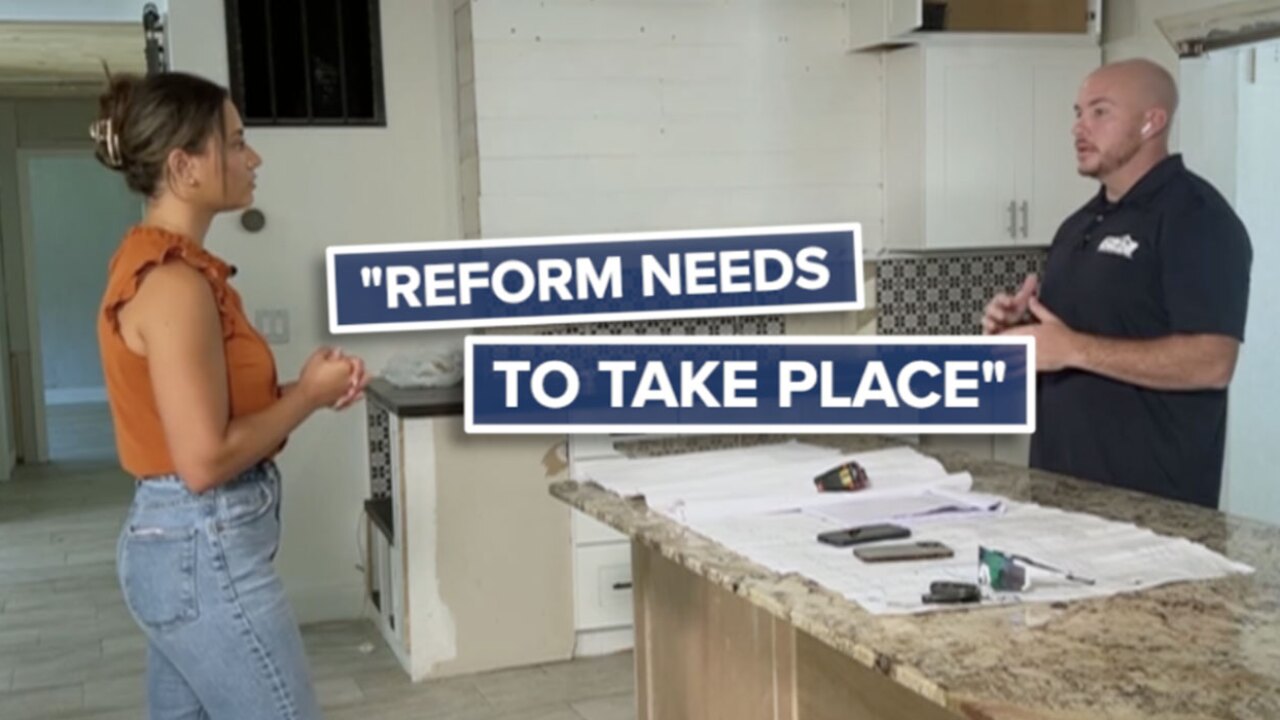
“This needs to be an important topic, and reforms need to take place throughout the industry,” Gizze said. “Major reforms.”
This story was reported on-air by a journalist and has been converted to this platform with the assistance of AI. Our editorial team verifies all reporting on all platforms for fairness and accuracy.

