

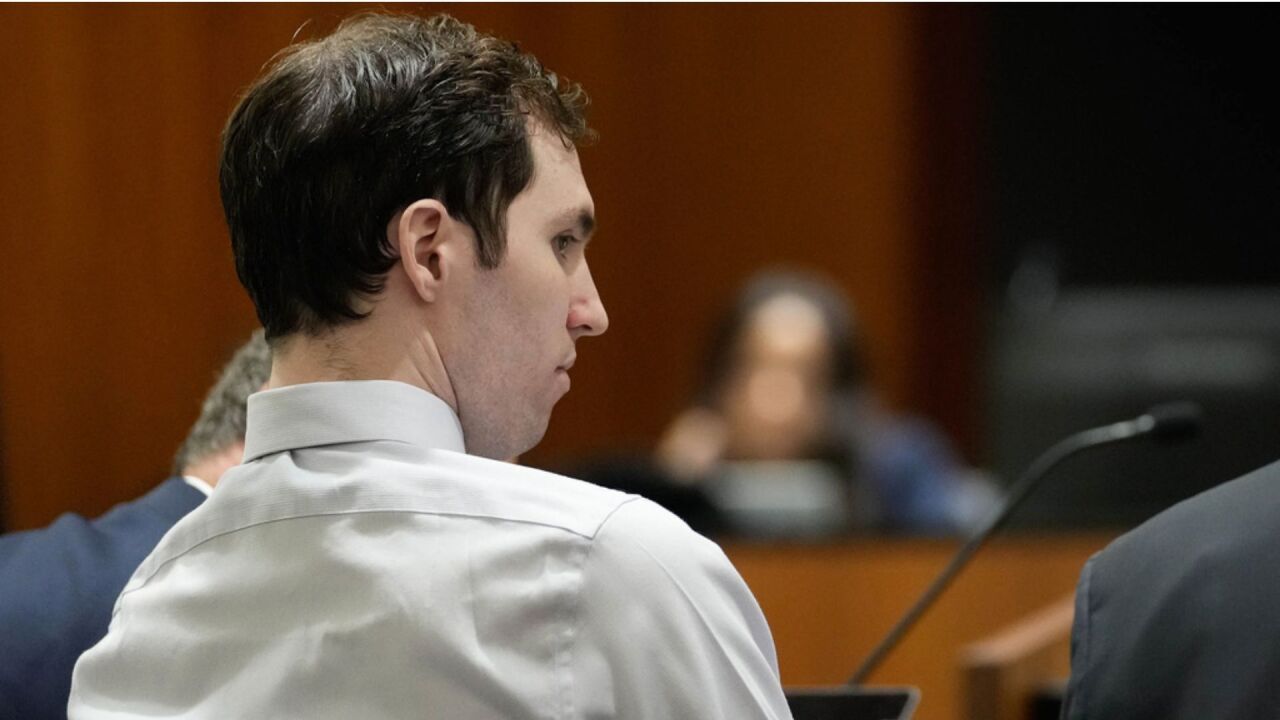


Nearly one year after conservative activist Charlie Kirk was gunned down during a college event in front of thousands of people, a judge ruled Tuesday night the suspected killer should stand trial.
Kirk died in September 2025 in a shooting at Utah Valley University during an event for his political organization, Turning Point USA. Prosecutors said Tyler Robinson, a 23-year-old who lived hours away and did not attend the university, fired the fatal shot from an on-campus rooftop.
Prosecutors laid out evidence during a five-day preliminary hearing held in July intended to determine whether there was probable cause to proceed to trial. In the weeks since, the defense and prosecution have traded written arguments, and both sides returned to court Tuesday to argue again before Judge Tony Graf Jr. made his decision.
“Tyler James Robinson shot and killed Charlie Kirk because he disagreed with him,” prosecutor Ryan McBride told the judge Tuesday. “And he did it by firing a high-powered rifle into a crowd of over 3,000 people.”
The suspect’s defense team spent much of its time Tuesday arguing against an aggravating factor that made the murder case eligible for the death penalty: the allegation that bystanders were also at risk of being killed during the shooting. The defense said there was no proof anyone besides Kirk was in danger of dying, but Graf’s ruling left the death penalty on the table as the case moves forward.
Robinson pleaded not guilty to all counts during arraignment on Tuesday.
An attorney for the Kirk family said Tuesday they would request a speedy trial. Erika Kirk also released a statement, which read in part:
"As the next phase of the judicial process begins, our family remains united in our love for Charlie, our commitment to the pursuit of justice, and our prayer for a transparent and timely process."
Prosecution details “a mountain of evidence”
Prosecutor Ryan McBride laid out four reasons Tuesday why the state knows Robinson is the killer: video evidence, DNA evidence, admissions by the suspect, and circumstantial evidence.
First, McBride said, surveillance video from the university showed Robinson arriving at the campus in his car the morning of the murder and walking around to gather information. More videos showed him leaving, returning, and leaving again. Prosecutors said Robinson changed his clothes before returning to campus one final time.
“This time, dressed to kill,” McBride said.
Surveillance video showed the shooter running across the rooftop of a campus building after Kirk was shot. Prosecutors said the autopsy showed Kirk was struck at an angle consistent with the bullet being fired from the rooftop, and Robinson’s DNA was found on a screwdriver left on that roof.
The prosecution said Robinson told friends in a Discord chat he committed the crime, and also admitted it in text messages to his romantic partner.
The prosecution said that relationship itself suggested Robinson’s motive: the suspect was in a gay relationship with someone who was considering gender transition, while Kirk was an “outspoken” critic of trans issues.
“It doesn’t take a lot to connect the dots,” McBride said.
The defense said the arguments that Robinson’s relationship motivated him to target Kirk were mere speculation.
“There’s no evidence as to really what was in Mr. Robinson’s mind, if in fact he was the shooter, about Charlie Kirk,” defense attorney Richard Novak said.
RELATED STORY | Prosecutors argue bullet engravings show Charlie Kirk was targeted for his political views
Robinson could potentially face a harsher sentence if a jury finds he targeted Kirk because of his political views.
Defense sought to remove cameras from court citing Polymarket wagering on case
Tuesday’s hearing began with a closed proceeding to hear arguments about whether cameras would be allowed in the courtroom. Robinson’s defense has argued throughout the proceedings that such publicity is hindering his ability to receive a fair trial.
A recent filing by the defense redacted a portion of its argument opposing the presence of cameras. When the livestreamed portion of Tuesday’s hearing began, Judge Graf revealed the redacted argument involved online gambling about the case.
“In support of his claims, defendant pointed to Polymarket, a popular online prediction and betting website which hosted an active betting pool titled ‘Tyler Robinson convicted of homicide,’” Graf said. “Defendant argues that the pervasiveness of online betting represents a morally dubious enterprise that commodifies capital litigation.”
The judge said Robinson’s team argued that the betting odds and market volume fluctuated during the July evidentiary portion of the preliminary hearing. The redacted filing referred to “evidence of bias” in the public that “can be tracked in real time.”
Despite those objections, Graf allowed cameras to remain in the hearing.
Expert: another year may pass before trial begins
Although the lengthy preliminary hearing process has concluded, legal expert and defense attorney Seth Zuckerman told Scripps News he doesn’t expect the trial to happen anytime soon.
“I would say it’s probably at least a year away from a trial, without knowing the judge’s docket and how quickly he intends to put this on for trial,” Zuckerman said. “I’ve got cases with similar amounts of electronic data and these cases take a long time to proceed.”
A defense filing this week indicated the team has only been able to thoroughly review a small percentage of the voluminous discovery files turned over to them so far.
In court Tuesday, with Kirk’s parents and widow in attendance, prosecutors said it was time to move forward with the case.
“The state would take this case to trial tomorrow if we could,” prosecutor Chad Grunander said.
