

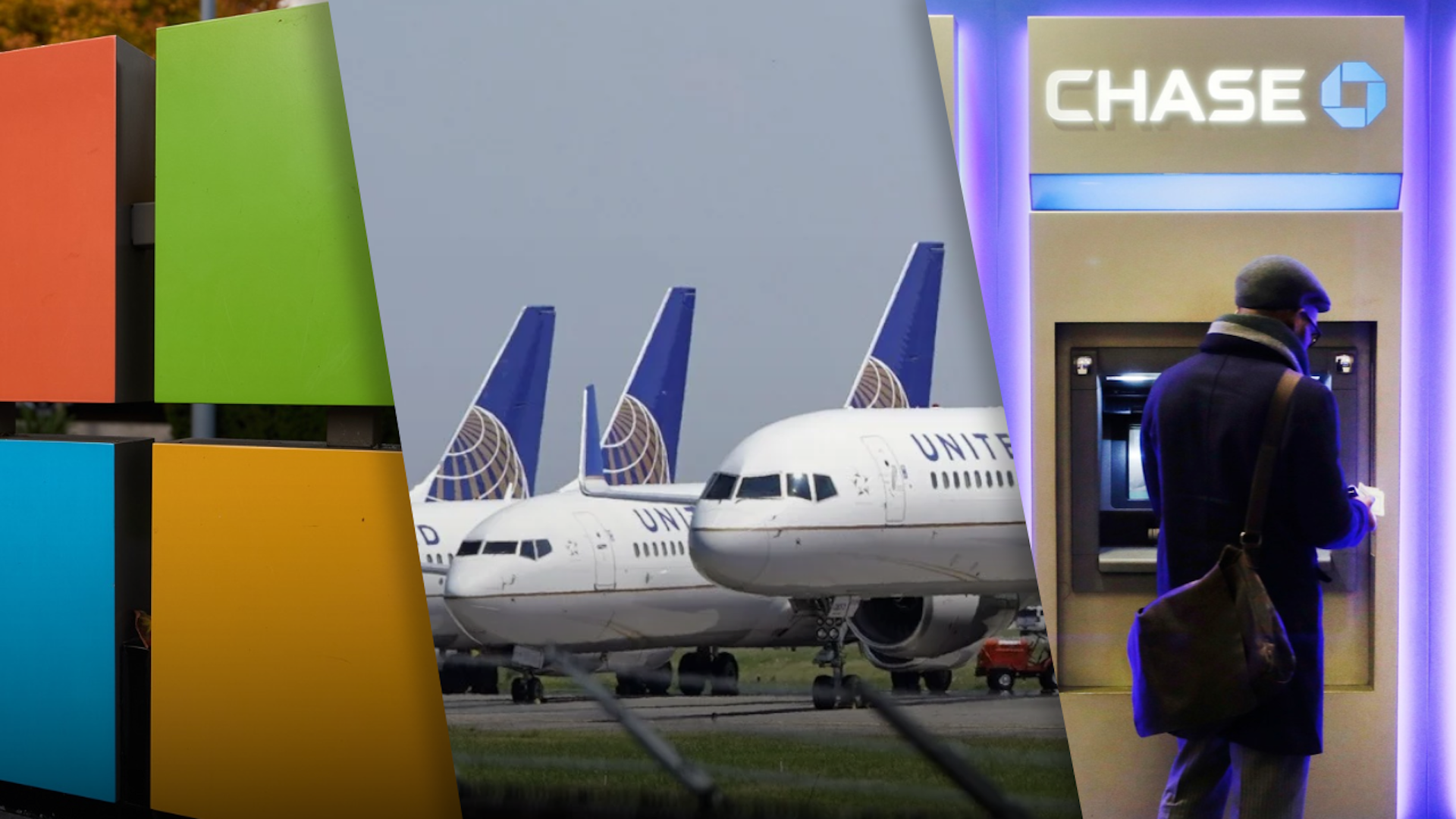


For a few extraordinary days, it felt like all the critical technology across the U.S. was breaking at once.
First, Microsoft: Outlook, Teams and other services were disrupted around the world. Then the FAA: The nationwide ground stop froze national air travel for more than 4 hours. Then on Monday, customers said they were having trouble with their money. JP Morgan Chase said a software bug in its own systems delayed transactions. Chase declared there was no evidence of a cyberattack.
Hours later, United Airlines suffered its own technology problem. Departing flights were put on hold, once again briefly stranding thousands of travelers.
Even a highly classified communication system inside the National Security Agency briefly went offline, leaving millions wondering if the failures were connected, or due to an attack against critical infrastructure.
MORE ON THE FAA'S GROUND STOP | What caused the FAA ground stop? Officials point to router failure during update
Now, experts, companies and lawmakers are laying out causes. Software bugs, old equipment and hasty execution all played a part in the failures, and there is still no evidence that any of the problems were due to malicious interference.
So what comes next? How are agencies and companies learning from the failures, and what can the American public expect?
