

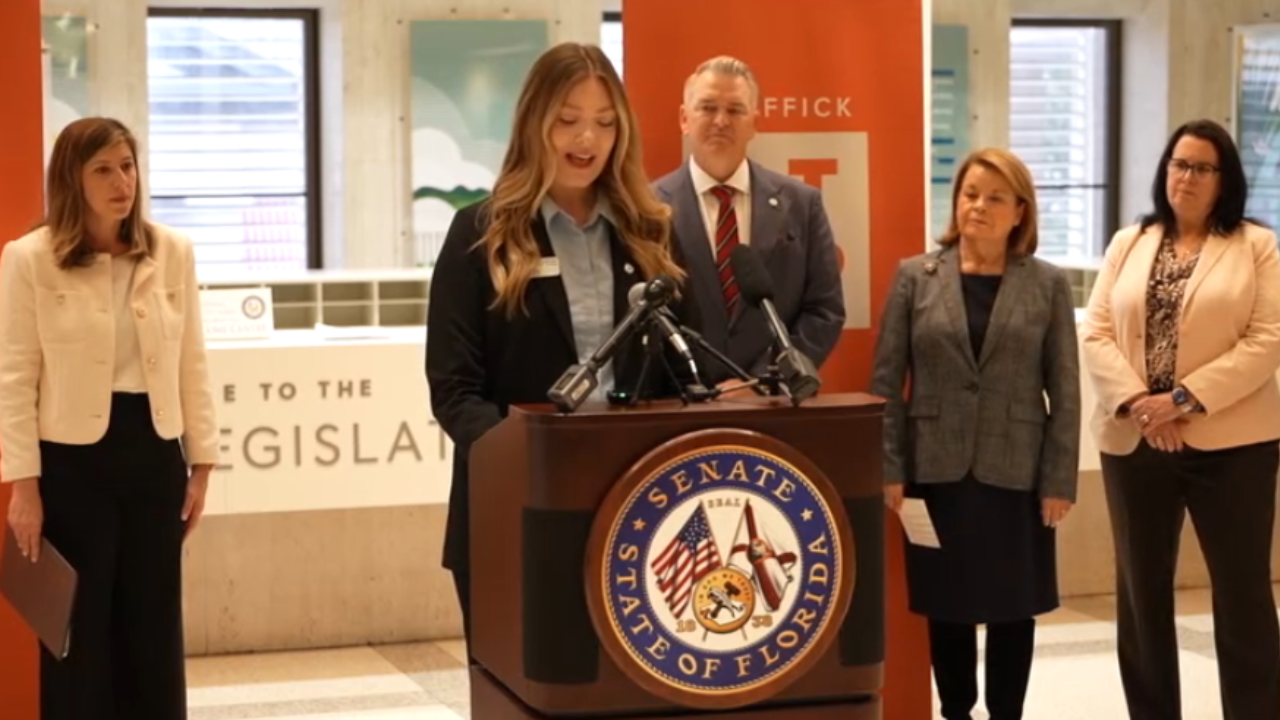


TALLAHASSEE, Fla. — Florida lawmakers have spent years passing legislation and approving funding aimed at cracking down on human trafficking, but advocates say the work is far from finished.
Florida continues to rank third in the nation for the number of reported human trafficking cases, according to national data. It’s a reality that brought survivors and advocates to the Capitol this week with a renewed plea for action.
WATCH: Florida still ranks third for human trafficking as survivors press lawmakers for action
Among them was survivor Olivia Littleton, who shared her story with lawmakers on Wednesday, describing how early childhood trauma made her vulnerable to exploitation.
“I had a childhood of lots of experiences that made me really susceptible to somebody, particularly a trafficker, coming in and identifying those vulnerabilities and then using those to exploit me,” Littleton said.
Now an advocate herself, Littleton urged legislators not only to keep strengthening state laws, but to protect funding for the support networks survivors rely on after escaping trafficking. That includes therapy, rehabilitation and long-term recovery services.
“Without the funds for us to be able to do what we do, that means that the thousands of survivors that we serve in Florida would not receive direct care services, and we won’t let that happen,” she said.
Littleton works with One More Child, a nonprofit that provides services to trafficking survivors and at-risk children. The group is among several organizations pressing lawmakers to prioritize human trafficking as budget negotiations unfold later this session.
“We must fight this evil with the same tenacity we would fight any other threat to our freedom,” said Jodi Domangue, the organization’s chief operating officer.
While funding levels will not be finalized until late in the 2026 legislative session, several bills filed this year could impact trafficking prevention and victim support. One proposal would require nursing students to receive training on how to identify signs of human trafficking. Another would streamline access to U-visas for trafficking victims who assist law enforcement investigations.
The push builds on legislation signed last year by Gov. Ron DeSantis, which expanded felony penalties for luring children, strengthened sex-offender tracking and registration requirements, and enhanced tools for prosecutors.
“The only thing that really, really guarantees the safety of the children is to find every last, daggum predator and put ’em in jail,” DeSantis said at the time.
Whether this year’s proposals gain traction remains uncertain, but advocates say the early days of session are critical for keeping attention on the issue. That’s especially as lawmakers juggle a crowded agenda and a months-long budget process.
For survivors like Littleton, the goal is simple: make sure others recognize trafficking before it’s too late.
“We didn’t initially recognize that our story was human trafficking,” she said. “And that’s one of the reasons why I think it’s so important that we raise awareness of this issue.”
Share Your Story with Forrest
Capitol Reporter Forrest Saunders is dedicated to sharing your voice with political leaders throughout the state. He works to hold our elected leaders accountable and amplify your concerns. Let Forrest know about the issues you want state leaders to focus on.
.

Saudi flight from Tampa, secret FBI probe reveal possible Saudi support network for 9/11 hijackers
Twenty years after the Sept. 11 attacks, more than 80,000 records compiled by the Tampa FBI Field Office remain classified. Newly declassified documents are pointing to a possible secret Saudi support network for the hijackers. Soon after the attacks, the FBI uncovered that 15 of the 19 hijackers were from Saudi Arabia.
