



TALLAHASSEE, Fla. — After failing to reach a deal during the regular legislative session, Florida lawmakers are advancing a patchwork of proposals to cut — or even eliminate — property taxes, with no clear agreement on what, if anything, will reach voters before the November midterms.
The debate in Tallahassee has fractured along multiple lines. Some Republicans are now offering competing visions and Democrats are warning of potential consequences for funding essential services.
WATCH FORREST SAUNDERS' COVERAGE BELOW:
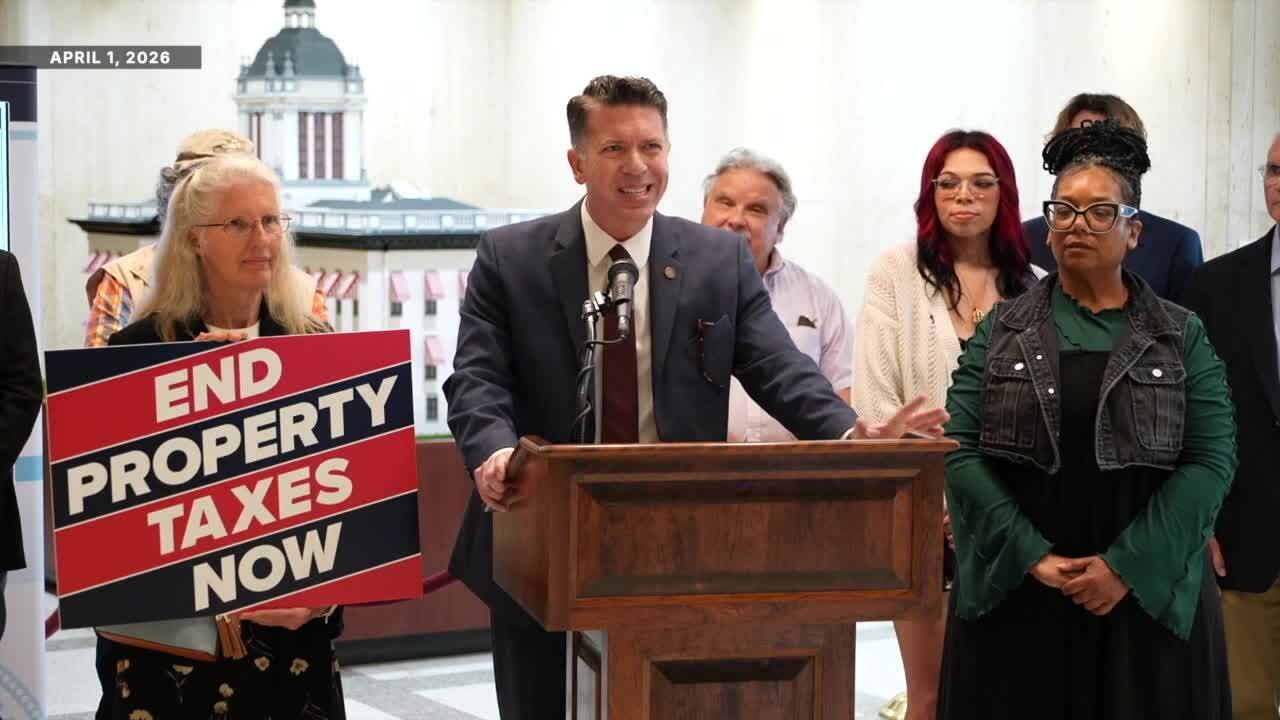
State Rep. Ryan Chamberlin, a Republican from Marion County, is taking the most aggressive approach. Frustrated by the lack of progress in the Legislature, he announced plans on April 1 to pursue a citizen-led constitutional amendment that would eliminate property taxes entirely.
“Our promise of property tax relief feels like the biggest April Fool’s joke of the century,” Chamberlin said.
His proposal would require roughly 900,000 petition signatures to make the 2028 ballot. If successful, voters would be asked to replace property taxes with alternative revenue sources, such as increased tourism taxes, a state-managed fund, or even a one-time fee on new Florida residents.
“It’s just time to figure out a better way to pay for it than letting government continue to be the owner of all property while imposing a complicated and burdensome tax system on our people,” Chamberlin said.
Meanwhile, many House Republicans continue backing a narrower plan that passed during the session. That proposal would eliminate non-school property taxes on homesteaded properties, contingent on 60% voter approval in 2026.
“The House has led the way on property tax relief… unlike the Florida Senate, unlike the governor, who has not released a plan at the moment,” said Rep. Juan Porras, R-Miami.
Gov. Ron DeSantis has also called for eliminating taxes on homesteaded property — but without carving out school funding. He recently suggested a phase-out was the best approach, though he has yet to release detailed language. Speaking Monday, the governor said a proposal is in the works and could soon be positioned for the ballot.
“We’re working to, you know, kind of get with the key people, to get that off and running on the ballot,” said DeSantis while speaking in Tampa. “It’s going to be a lot of excitement for people to be able to vote to protect their homestead from tax.”
In the upper chamber, where the Senate President Ben Albritton (R-Bartow) been leery of major cuts that could disproportionately impact small local governments, some lawmakers are now considering a different approach altogether. Sen. Tom Leek, R-Ormond Beach, is proposing a Colorado-style cap on local government spending, which would limit budget growth based on population increases and inflation — a change that could be enacted without voter approval.
“It puts a limit on a local government's budget that— at whatever the line is— and it can only grow beyond that as a function of population growth and inflation,” said Leek.
Democrats, meanwhile, have sharply criticized the Republican-led proposals, arguing they would shift — not eliminate — the tax burden.
“Eradicating property taxes is dangerous and dishonest. It is a tax shift,” said Rep.-elect Emily Gregory, a Democrat. “You’d have to still pay for municipal services through another revenue source.”
They are instead calling for lawmakers to focus on lowering property insurance costs and addressing broader affordability issues.
Lawmakers are expected to return for a special session on property taxes as soon as this month. But with competing plans and no consensus, it remains uncertain whether any proposal will make it to voters in the near term.
