

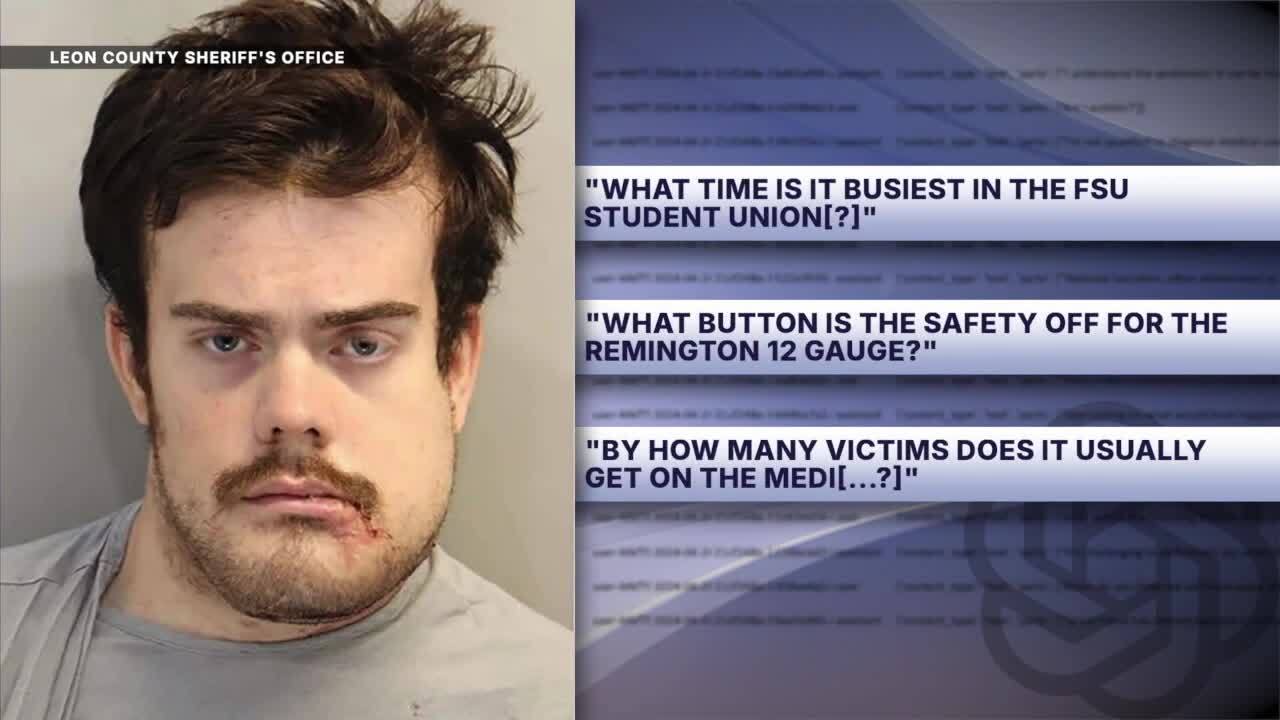


TALLAHASSEE, Fla. — Florida Attorney General James Uthmeier announced a criminal investigation into OpenAI on Tuesday, arguing ChatGPT may have done more than reflect the thinking of the accused Florida State University shooter and instead may have helped him plan the 2025 attack.
The move marks a legally untested escalation in the state’s response to the shooting, which killed two people and injured at least six others. Uthmeier said prosecutors reviewed chat logs tied to the accused gunman, Phoenix Ikner and concluded the exchanges raised questions about whether OpenAI could bear criminal responsibility for the chatbot’s conduct.
WATCH FORREST SAUNDERS' COVERAGE BELOW:
"If it was a person on the other end of that screen, we would be charging them with murder. Just because this is a chatbot, an AI does not mean that there is no criminal culpability," Uthmeier said.
Uthmeier said the chats included questions about weapons, ammunition, timing and where on campus crowds would be largest in the minutes before Ikner allegedly opened fire. The attorney general said his office is now subpoenaing OpenAI for internal policies and training materials related to threats of harm to others, threats of self-harm and cooperation with law enforcement, along with records showing how those policies may have changed over time.
"We cannot have AI bots that are advising people on how to kill others," Uthmeier said.
The legal theory behind the investigation is novel. Under Florida law, someone who helps another person commit a crime can be held just as responsible as the person who carries it out. State officials say the investigation will test whether that theory can extend to artificial intelligence and the company behind it.
Florida Department of Law Enforcement Commissioner Mark Glass defended the probe and said the case reflects broader concerns about harms linked to artificial intelligence.
"Artificial intelligence is built by man. Man is fallible. Man makes mistakes," Glass said.
OpenAI did not immediately comment publicly on the criminal investigation. The company previously said it would cooperate with the Attorney General’s Office in a related civil inquiry and said its platform is designed to respond safely while its safety systems continue to improve.
"Each week, more than 900 million people use ChatGPT to improve their daily lives. Our ongoing safety work continues to play an important role in delivering these benefits to everyday people, as well as supporting scientific research and discovery," an OpenAI spokesman said.
In an earlier statement, OpenAI said it had identified an account believed to be tied to the suspect after the shooting, shared that information with law enforcement and continued cooperating with investigators.
The criminal case against Ikner is still moving forward separately. State Attorney Jack Campbell, who is prosecuting the case, confirmed ChatGPT-related evidence is part of the broader case file but declined to discuss its substance publicly before trial.
"Certainly, there is evidence concerning ChatGPT, but I won’t be commenting on the evidence at all until we’re in the courtroom," Campbell said.
Campbell said AI records are becoming part of a growing body of digital evidence prosecutors use to understand a suspect’s actions, planning and state of mind before a crime. He said the murder case remains on track for trial this fall.
The OpenAI investigation also arrives as Florida lawmakers prepare to revisit artificial intelligence policy during next week’s special session. Proposals under discussion would require parental controls, disclosure when users are interacting with bots and additional protections for personal data, though it remains unclear whether the measures have enough support to pass.
