

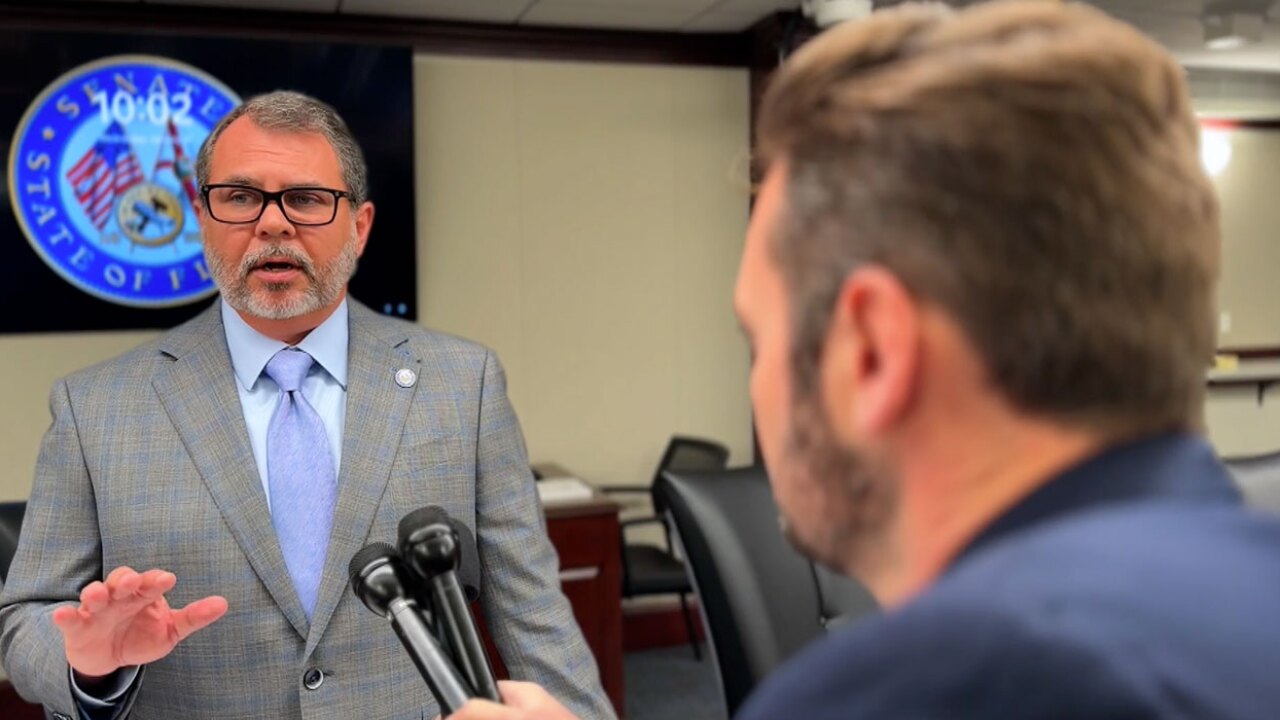


TALLAHASSEE, Fla. — Florida’s effort to create sweeping new protections around artificial intelligence, a top priority for Gov. Ron DeSantis, appears increasingly unlikely to pass this legislative session, as the House signals it does not plan to consider the measure.
The proposal, dubbed an “Artificial Intelligence Bill of Rights,” would require companies to disclose when users are interacting with AI, strengthen personal data privacy protections, give parents more control over children’s use of AI tools, and require consent before generating someone’s likeness.
WATCH: Is Florida's AI bill dead?
But despite backing from the governor and progress in the Senate, the legislation appears to have stalled in the House.
“My AI bill is not going to be heard…” said Rep. Alex Rizo, R-Hialeah, the House sponsor.
Rizo said House Speaker Danny Perez believes the proposal needs more refinement before moving forward.
“The Speaker said that he feels that we just really don't need anything with it, that there are some tweaks that could be made, there are some provisions that could be made, especially with regard to students in K-12 and possibly in college and universities. But right now it's, it's not in a position to be heard,” Rizo said.
Gov. Ron DeSantis had highlighted AI regulation as a priority earlier this year, warning in his State of the State Address of the risks posed by rapidly advancing technology.

WPTV Investigates
Florida AI bill gets first hearing after WPTV investigation highlights dangers
“We have a responsibility to ensure that new technologies develop in ways that are moral and ethical, in ways that reinforce our American values, not in ways that erode them,” DeSantis said.
Still, the measure has faced growing resistance in the Legislature, particularly from House leadership, which has raised concerns about regulating a fast-moving technology at the state level — a position shared by President Donald Trump as well.
“I've been very clear that I think AI is an issue that should be dealt with by the federal government. I think it’s— I have massive concerns with the state's ability to deal with anything in tech,” said House Speaker Danny Perez, R-Miami, last week.
Some Democrats have echoed those concerns, warning that a patchwork of state-by-state regulations could create confusion and slow innovation.

Loxahatchee Acreage
WPTV brings Project Tango concerns directly to DeSantis
“If each state starts regulating AI individually, we're going to wind up with a patchwork nationally. That could stifle the potential growth and impact— transformative impact — of this technology,” said House Minority Leader Fentrice Driskell, D-Tampa.
However, Senate sponsor Sen. Tom Leek, R-Ormond Beach, has argued the state should act now to protect vulnerable users, especially as AI becomes more sophisticated.
“The folks that this bill is trying to protect are too vulnerable to the suggestions of a computer that is pretending to be a human. You just — you can't wait to protect those folks,” Leek said.
The Senate has delayed floor votes on the bill twice but is expected to revisit the proposal before the end of session. Still, without House support, the legislation faces steep odds of becoming law this year.
Even as the broader AI “Bill of Rights” struggles, other AI-related proposals are advancing. Lawmakers in both chambers continue to move forward with bills regulating the construction and operation of AI data centers.
