



ORLANDO, Fla. — Florida Gov. Ron DeSantis is pitching a $117 billion state budget for the next fiscal year, about two billion more than the current, $114.8 billion.
Speaking in Orlando on Wednesday, he said his final spending blueprint has record reserves, new investments in education, transportation and public safety — plus a plan to support rural areas impacted by property tax cuts.
WATCH: Backfill or backfire? DeSantis' plan to replace local tax dollars draws debate
DeSantis is calling for a single 2026 ballot amendment that would eliminate all local property taxes for homesteaded homeowners. To shield small and rural counties that rely heavily on those revenues, he confirmed he wants the state to “backfill” their budgets.
“You know, it's not a Republican, Democrat thing,” said DeSantis. “It's just about a taxpayer thing. You know, we want you to own your own home that are homesteaded Floridians.”
DeSantis added that his budget sets aside enough to “completely 100% reimburse any homestead property tax reduction for those fiscally constrained counties.”
The governor offered few specifics — including how long the state support would last, how it would work, or which communities would qualify. That uncertainty drew sharp criticism from Democrats.
“Basically what he would be doing, because it would be the small and rural counties who would need this backfilling, is leave these counties in a welfare state, and that's not fair to them,” said House Minority Leader Fentrice Driskell (D-Tampa). “That's not fair to the local elected officials who are trying to serve their communities,”
Rep. Bruce Antone (D-Orlando) was more direct.
“I see it as a Trojan horse,” he said. “And so it looks pretty, looks nice. But once those gates open, once those doors are open, when we're all asleep, then all hell is going to break loose.”
Some Republicans have also expressed hesitation. Senate President Ben Albritton said earlier this week the backfill approach could force small governments into an annual fight for survival.
“The idea that fiscally-constrained counties would have to come up every year and essentially argue for their existence,” Albritton said, Monday. “Yeah, that that's certainly be a change. Do I love the idea that, of course not.”
Albritton also said he was seeking a “balance” in the battle between DeSantis and House Republicans, whom continue to advance their own, more limited property tax proposals. They include one that would eliminate only non-education homestead taxes.
Several members criticized the governor for offering broad ideas without details.
“It’s been 300 days since the governor said he wanted to deal with property taxes. We’re still waiting on his proposal,” said Rep. Toby Overdorf (R-Palm City) who chairs the House Select Committee on Property Taxes.
Still, DeSantis has his backers. Former House Speaker Paul Renner, now running for governor, supports the idea of backfilling rural governments but argues lawmakers need to take more immediate action in a special session.
“There's got to be some relief,” he said. “But unfortunately, during the time of all that talking, in 2025 our taxes have gone up. They're going to go back up again in 2026. The only way, constitutionally, to fix that is through a legislative rollback, which was done 20 years ago, and that's what I'm calling for.”
Any constitutional amendment would need approval from both chambers of the Legislature and then 60% voter support in 2026 before taking effect the following year. With session approaching, the debate over how — or whether — to pursue the governor’s sweeping overhaul is just beginning.
Lawmakers will take up the budget in the coming weeks, and while DeSantis carries political weight — his recommendations are only that.
Share Your Story with Forrest
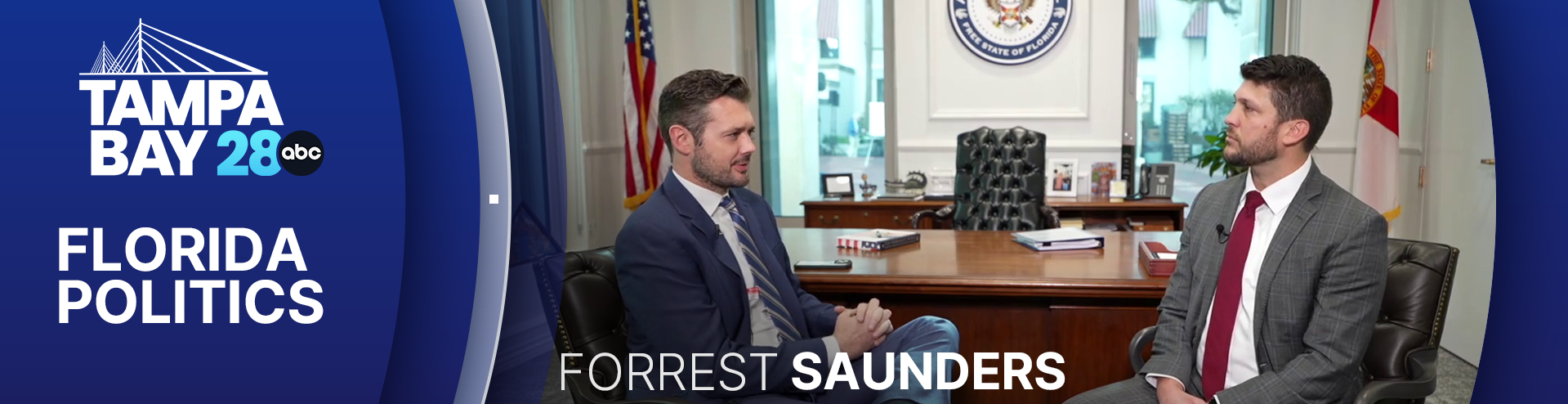
Capitol Reporter Forrest Saunders is dedicated to sharing your voice with political leaders throughout the state. He works to hold our elected leaders accountable and amplify your concerns. Let Forrest know about the issues you want state leaders to focus on.
.

Bradenton community responds after 20-year-old volleyball star dies from disease that affects 2 in a million
The 20-year-old IMG Academy volleyball star and Under Armour All-American died Sept. 16 after a three-month battle with the rare blood disorder — even though doctors had found her a 100% bone marrow match, her mother, Tanya Mack tells Tampa Bay 28 reporter Haley Zarcone.
