

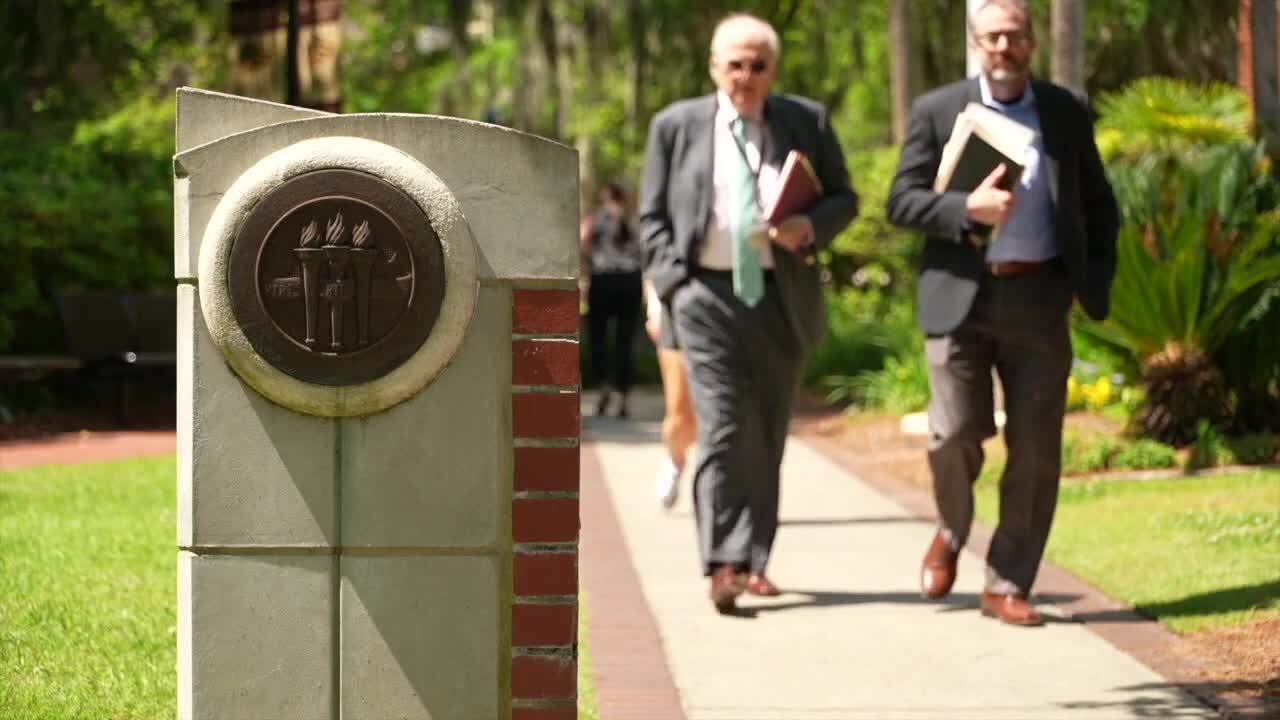


TALLAHASSEE, Fla. — Florida lawmakers might be moving toward a major expansion of the state’s controversial Guardian Program, extending it to public colleges and universities. That’s in the wake of April’s deadly shooting at Florida State University.
WATCH FORREST SAUNDERS' COVERAGE BELOW:
The proposal, HB 757, comes months after a gunman killed two people and wounded at least six others on FSU’s campus, prompting student protests and renewed calls for changes to campus safety.
One of the lawmakers now leading that effort is Rep. Michelle Salzman, R-Pensacola, who says she was personally impacted by the violence. Salzman, who attended FSU, told us she was in contact with students as the shooting unfolded.
“I’m in a group text with a lot of the students as they're sending videos showing the shooter walking by or texting, ‘Hey, I'm in this room and I'm okay. Where are you?’ I'm literally sitting here, and I felt so helpless, I couldn’t go on campus and help, obviously,” Salzman said.
If approved during the 2026 legislative session, HB 757 would establish Florida’s first uniform higher-education safety framework. The bill would require public colleges and universities to adopt emergency response plans, create threat-assessment teams, and install upgraded classroom door locks.
It would also allow specially trained faculty and staff to carry concealed firearms as campus “guardians.”
“This bill isn't about the Second Amendment. This bill is about providing a safer environment for the campus,” Salzman said.
Florida’s Guardian Program was created after the 2018 mass shooting at Marjory Stoneman Douglas High School in Parkland. Today, 53 school districts allow staff — including teachers — to carry firearms on K-12 campuses after undergoing extensive law-enforcement training.
While the program has expanded in recent years with bipartisan support, it faced strong opposition when it was first approved in 2019. During that debate, Democrats warned against adding more guns to school environments.
“I don’t believe that having more weapons in classrooms gets it right,” Rep. Cindy Polo, D-Miramar, said at the time.
“Our teachers did not go to schools to become cops,” added Rep. Susan Valdés, D-Tampa. Valdés has since changed her party affiliation to Republican.
The Guardian Program drew national and international attention and has been praised by law enforcement as a deterrent to violence. Gun-violence prevention groups, however, continue to push for tighter background checks and limits on what they describe as “weapons of war.”
Some students remain deeply concerned about expanding gun access on campus. FSU student Madalyn Propst told us in September she fears lawmakers could go even further next year by loosening gun restrictions, including allowing open carry on campus.
“It will solve nothing,” Propst said. “If there had been multiple students who were armed during the shooting back in April, then I wouldn't have been able to run and turn a corner and get away. I would have run and tried to get away and then met with another scared student with a firearm who doesn't know who's the actual perpetrator.”
Despite the criticism, the proposal appears to have strong backing. Gov. Ron DeSantis’ latest budget includes funding specifically earmarked for expanding the Guardian Program. Salzman also says the bill was crafted alongside university leaders, state colleges, and the Florida Board of Governors.
“I've talked to everybody you can think of trying to really get a big picture,” Salzman said. “Because what we create, I want it to be meaningful and I want it to save lives.”
The bill includes an additional provision that would apply to all schools statewide, creating a 1,000-foot safety buffer around education facilities. Under that measure, discharging a weapon near a campus during school hours or school events would be a felony offense with no bond.
Lawmakers will consider taking up the proposal when the legislative session begins on January 13.
