




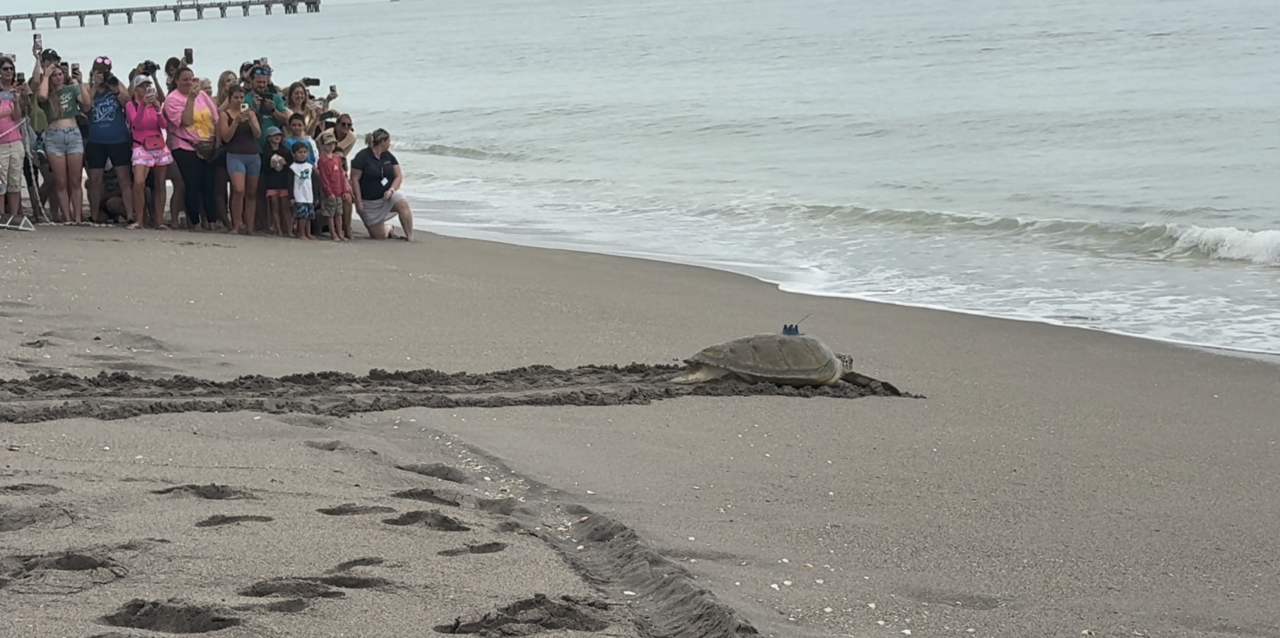
JUNO BEACH, Fla. — Loggerhead Marinelife Center celebrated another successful rehabilitation Tuesday morning as they released Jurassic, a 215-pound adult male green sea turtle, back into the Atlantic Ocean.
Dr. Heather Barron, Chief Science Officer and Director of Conservation Medicine at Loggerhead Marinelife Center, expressed excitement about this particular release, noting that Jurassic represents a milestone for the facility as the first adult green male tagged by the facility.
"It's so exciting, and I think this one, Jurassic, is particularly exciting. He's a full-grown adult breeding male, and he has a satellite tag on, so we'll actually be able to see how he's doing," Dr. Barron said.
The satellite tag, provided by the U.S. Navy, will allow researchers to track Jurassic's movements and behavior patterns once he returns to his natural habitat. Unlike the center's typical satellite tags, which are usually posted publicly on their website, this Navy tag operates differently.
"This one is a little bit different, and so they'll provide us with updates, and then we'll share those with the public when it's appropriate," Dr. Barron explained.
The release drew a crowd of spectators who gathered to witness Jurassic's return to the ocean, including Emily Engberg of Palm Beach Gardens, who attended with friends after years of wanting to experience a turtle release.
"I am so excited. I have lived here for almost six years, and I wanted to do this every year, and I always seem to miss it," Engberg said. "So as soon as we found out about it, we were on it. We called each other. We said, 'Girls, little outing,' and we are just thrilled."
For Engberg and her friends, the experience highlighted the unique opportunity to witness marine conservation efforts in their own backyard.
"It's so special. We're tourists in our own town, we feel like, and everybody that comes from afar to see it, the fact that we go in our own backyard—it's amazing," she said.

Watching Jurassic make his way back to the ocean proved to be a speical moment for Dr. Barron and the rehabilitation team.
"Sometimes you get down here and you're like, oh wow, you know, they're just not as strong as we want them to be. But he was moving very well towards the water, particularly in that soft sand out there this morning," Dr. Barron observed.
Jurassic's rehabilitation journey began when he likely suffered from toxin exposure that caused brain swelling and neurological deficits. Engberg is moved by the rehabilitation process and the center's mission to help injured marine life.
"I think that we would agree that the neatest thing about this is that they're getting these turtles. You know, they've been injured, or they come in, or a boater finds them, and the fact that you can donate and see them and rehabilitate, and then they go back to their home—it's quite amazing," Engberg said.
Dr. Barron hopes these public releases serve a greater purpose in ocean conservation education, inspiring visitors to care more deeply about marine ecosystems.
"Sea turtles are such a charismatic species, but they're really emblematic of a lot of the problems that we're still having, particularly in our nearshore waters here with pollution," Barron said.
Dr. Barron emphasized how partnerships between facilities like Loggerhead Marinelife Center and Zoo Miami, who originally had Jurassic, create successful outcomes for marine wildlife.
"That's the kind of collaboration and teamwork that I think really makes ocean rehabilitation and wildlife rehabilitation so successful and so satisfying," Barron said.
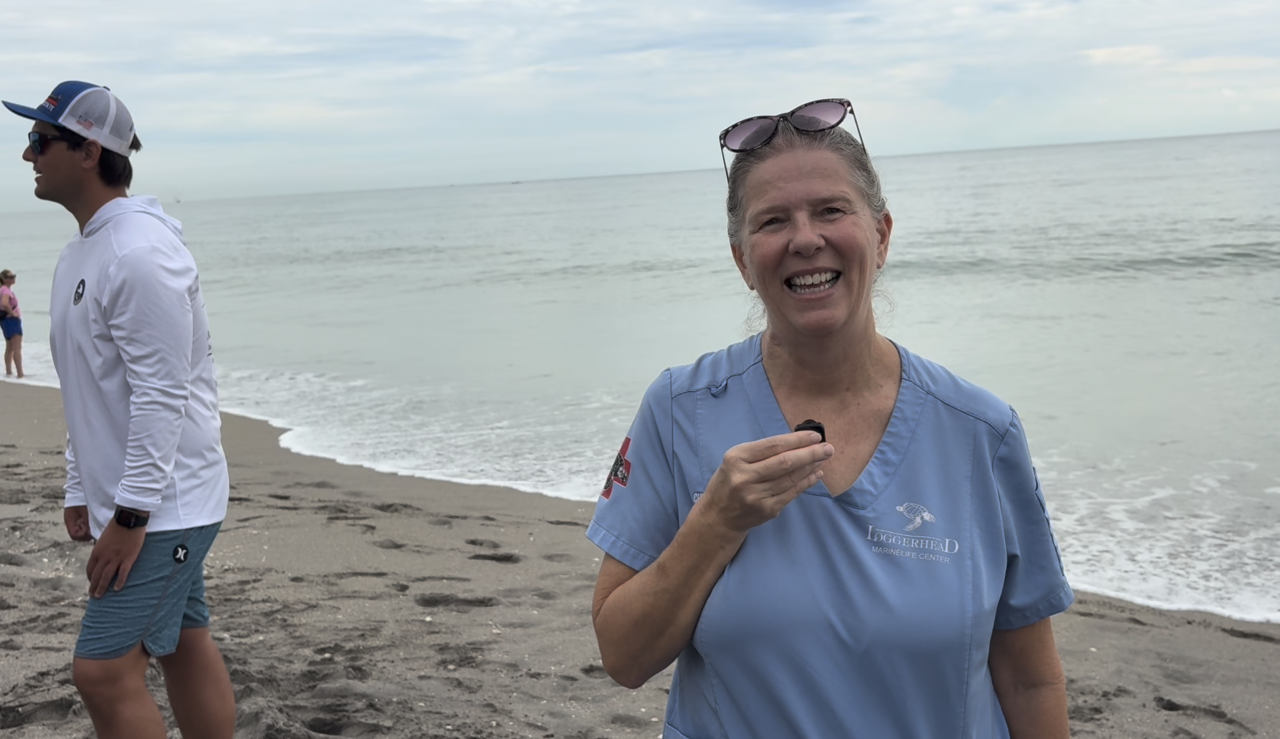
For those inspired by Jurassic's story, Dr. Barron encourages the public to visit the Loggerhead Marinelife Center to learn more about sea turtle conservation and rehabilitation efforts.
"We have so many new and cool things that are going on all the time," Barron said. "We have a great gift store, amazing educational programs, and there's something going on in research or in the hospital that you're welcome to see all the time."
