

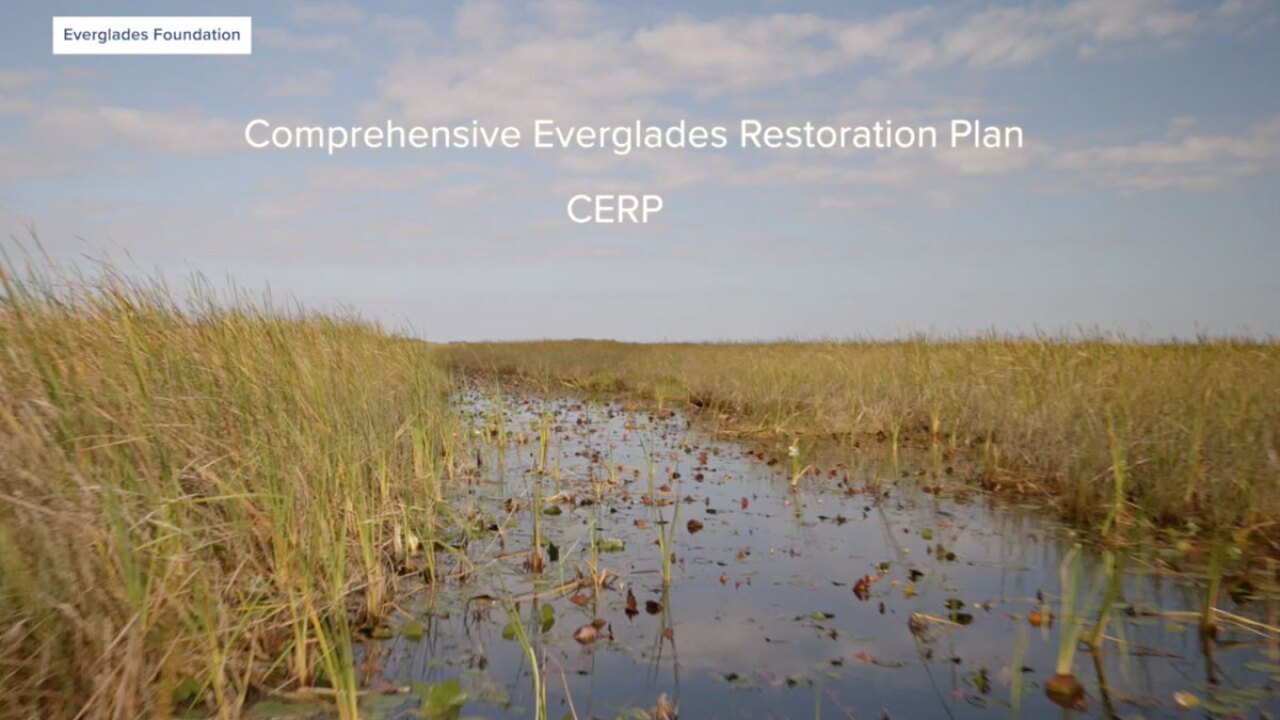


For decades, it's been seen as the ultimate solution to save the Everglades, protect our estuaries, and safeguard Lake Okeechobee. Now, it's hitting a major milestone.
It's been just over 25 years since the Comprehensive Everglades Restoration Plan — CERP — was signed into law. The sweeping blueprint of more than 60 projects was designed to restore Florida's natural flow of water south through our state.
WATCH: WPTV visits Everglades to see CERP's progress
I visited the Everglades to see CERP's progress, what remains undone, and why efforts to finish the job are gaining new urgency.
In the year 2000, Florida was in the national spotlight, embroiled in a contested presidential election. At the same time the U.S. Supreme Court was deciding the race, President Bill Clinton was signing another historic document — one that would shape Florida's future for generations: the Comprehensive Everglades Restoration Plan, or CERP.
"Once it passed, it was like the dog catching the car. Then it became — what do we do next?" said Eric Eikenberg, CEO of the Everglades Foundation.
Eikenberg says the crisis was undeniable.
"The Everglades was dying in the '90s... You saw ecological collapse. You were seeing it on the ground. Fish kills. Seagrass die-offs. Thank goodness people stood up 25 years ago and said we have to save this national treasure," Eikenberg said.
The goal was to protect coastal estuaries, stabilize Lake Okeechobee, secure water supply, support agriculture — and deliver clean, fresh water back to the Everglades.
But progress came slowly.
"From 2000 to 2010, projects were authorized, but funding wasn't there to get those projects out of the ground," Eikenberg said.
Priorities started to change around 2013 and what became known as the Lost Summer — from toxic algae blooms fueled by the imbalance in Florida's plumbing system. Too much Lake Okeechobee water flooded coastal estuaries instead of flowing south.
"Families were told to stay out of the water on the St. Lucie, the Caloosahatchee. This was right around the Fourth of July. Fish were dying. Seagrass was dying," Eikenberg said.
The crisis hit again in 2016 and 2018 — forcing action and unlocking new state and federal funding.
"Over the last decade, there's been significant progress," Eikenberg said.
Major projects followed — including the C-44 Reservoir east of Lake Okeechobee, protecting the St. Lucie Estuary; the C-43 Reservoir to the west, benefiting the Caloosahatchee; and the removal of portions of the Tamiami Trail, finally allowing water to flow south.

State
DeSantis lauds Everglades project as legal battle brews over detention site
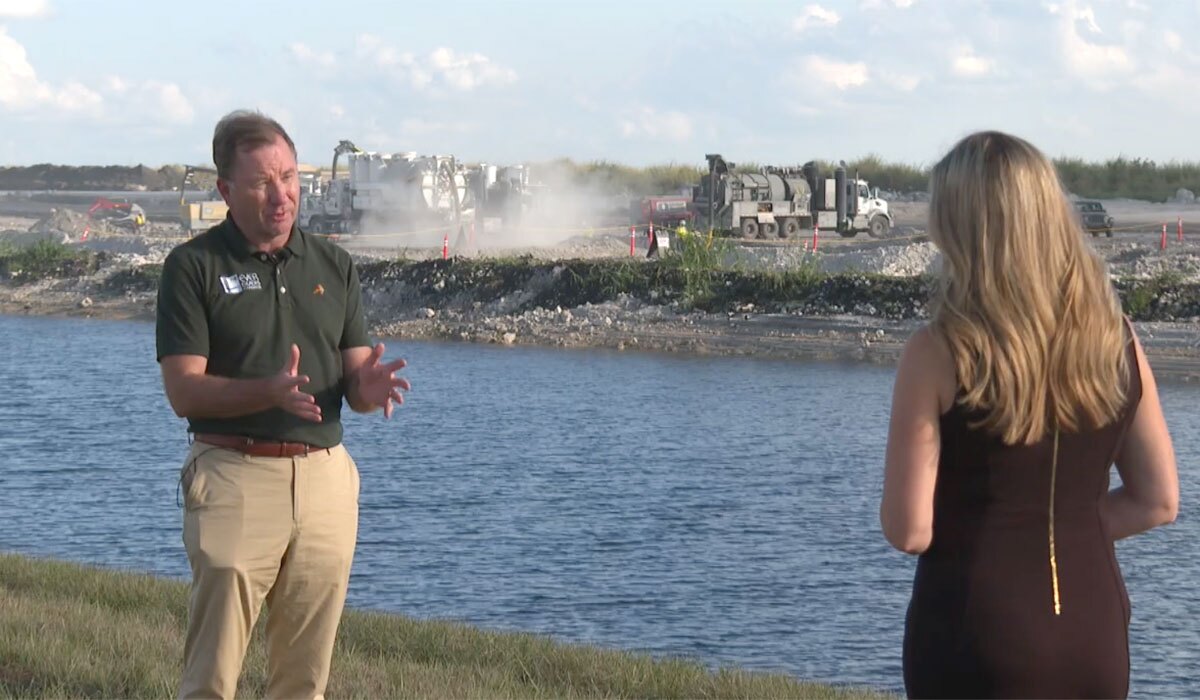
South Florida Water Management Director Drew Bartlett gave me a look at the construction underway on the largest CERP project yet — the EAA Reservoir.
"This is a massive infrastructure investment — more than $20 billion — designed to move water where it was always meant to go, clean," Bartlett said.
Heavy machinery is reshaping the land to build a dam of historic scale.
"It will be the second or third largest dam in the country," Bartlett said.
"So where we're standing right now will be underwater?" I asked Bartlett.
"Yes it will. We will be under 15 feet of water. Basically you could put Manhattan in the reservoir it's that big," Bartlett said.
Once complete, the reservoir will help Florida store water, instead of dumping it into the ocean.
"It's getting the water where it used to be, protecting all these estuaries and restoring the Everglades at the same time," Bartlett said.
WATCH: DeSantis signs agreement with U.S. Army to expedite EAA reservoir construction
Bartlett says the momentum is picking up to reach the finish line. CERP overall is far behind initial completion dates, but state and federal partnerships are aiming to speed up the EAA Reservoir's completion from 2034 to 2029.
"The momentum is palpable right now," Bartlett said.
Storage projects north of the lake could be another 15 years. The price tag includes billions already spent, with billions more to go.
But is it working?
"It's absolutely working," said Steve Davis, chief science officer at the Everglades Foundation.
Davis says improvements in water quality are already measurable.
"We've built a lot of infrastructure to help manage phosphorus concentrations across the Everglades," Davis said.
"This ecosystem is extremely sensitive. We're seeing progress in managing phosphorus and restoring natural conditions."
The EAA Reservoir, he says, will magnify those gains.
"Anywhere in South Florida is going to benefit," Davis said.
Born in political chaos, CERP has become rare common ground, uniting both parties around a shared goal — fixing past mistakes and protecting Florida's future.
"We are the generation that is going to save America's Everglades," Eikenberg said.
