



TALLAHASSEE, Fla. — Gov. Ron DeSantis'new congressional map is now law — and already headed to court.
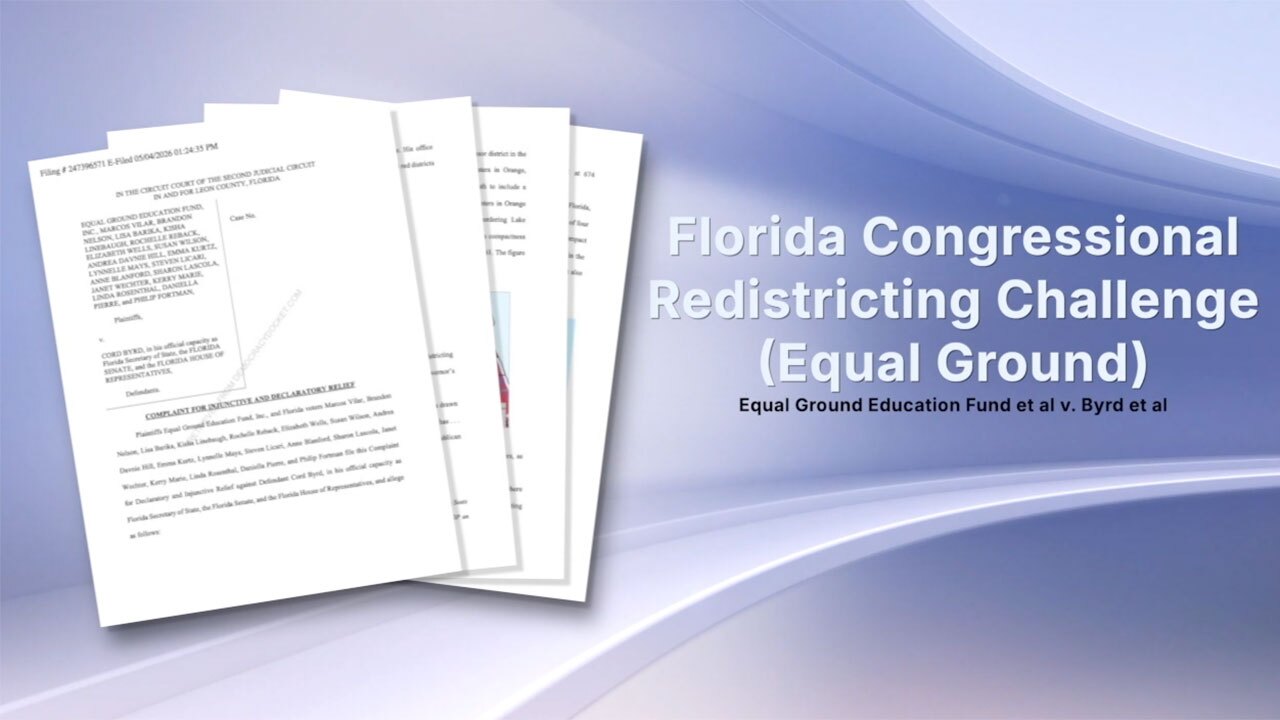
Just hours after DeSantis signed off on the mid-decade redraw on Monday, Equal Ground Florida and a group of voters filed what could be the first of multiple legal challenges against the new districts. The map could help Republicans pick up as many as four additional seats in Congress, potentially creating a 24-to-4 GOP advantage in Florida's delegation.
WATCH BELOW: New congressional map signed into law, then sued within hours
"When you have a governor rolling out and showing a map on Fox News in red and blue, taking a victory lap, talking about how he has delivered for his base — in our opinion, that is a direct violation of the Constitution,” said Genesis Robinson, who leads Equal Ground Florida.
The lawsuit argues the new map is an unconstitutional partisan gerrymander that violates Florida's Fair Districts Amendment, which bans maps drawn to favor or disfavor a political party or incumbent. Robinson said the group is asking the courts to step in quickly.
"We're asking the courts to intervene and stop this map from going into effect," Robinson said.
DeSantis and his office have defended the redraw, arguing the state needed to move away from districts they say were shaped around race-based voting blocs in violation of the U.S. Constitution.
"I said last year that we were going to have to redo this because of the racial gerrymandering that was done in southern Florida," DeSantis said last week.
The governor's legal team has also argued that because race-related protections are included in the Fair Districts Amendment, the rest of the amendment should not control the new map if those provisions cannot stand.
"What happens when you take a tier out from this architecture? The structure falls," Mo Jazil, an attorney for the governor's office, told a House committee last week.
Republican lawmakers have defended the map as legally sound. Rep. Tom Fabricio, R-Miami Lakes, said after last week's vote that he felt no pressure from the White House, even as Democrats argued Florida was following a broader national Republican push sparked by President Donald Trump's redistricting efforts in Texas.
"I felt no pressure from the White House," Fabricio said. "They didn't contact me. I had nothing to do with that."
Democrats, however, say the process was rushed, partisan and lacking transparency.
"Everything about this process just reeks with a lack of transparency, and it’s all done in service of Donald Trump, not in service to the people of Florida," House Minority Leader Fentrice Driskell said.
The court fight could move quickly, but timing may be one of the biggest challenges for opponents. Florida's primary is in August, and the new lines will determine who runs where in the 2026 midterms.
The Florida Supreme Court could ultimately have the final say. Six of the court's seven justices were appointed by DeSantis. Equal Ground's lawsuit appears to be the first challenge filed, but opponents have signaled more could be coming.
