


WEST PALM BEACH, Fla. — More than 20 miles west of downtown West Palm Beach, thousands of acres of land make up part of Florida's Wildlife Corridor — a network connecting the state's critical ecosystems from north to south.
J.W. Corbett Wildlife Management Area sits within that corridor, and it is open to anyone who wants to explore it.
WATCH BELOW: How wildlife experts are tracking local fauna
"Anybody can come here, anybody can come in for hikes, anybody can do the little trails," Amy Celestina with the Palm Beach Zoo said.
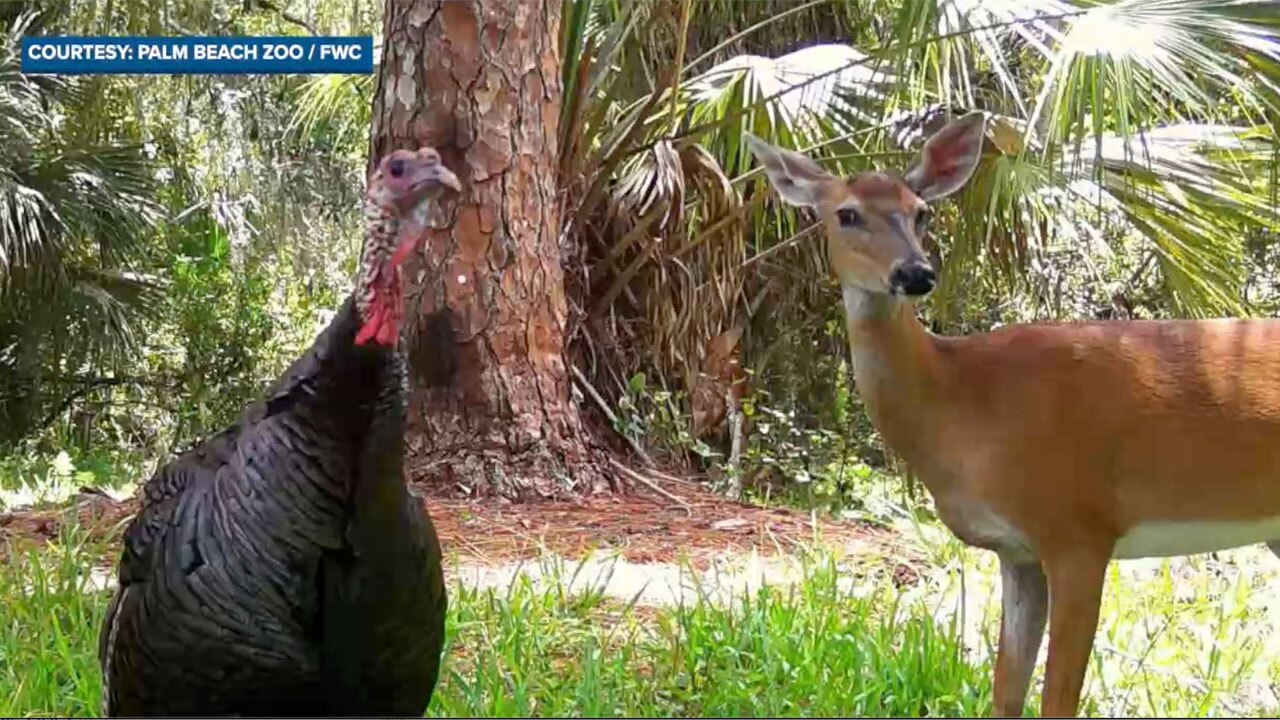
Celestina has been hiking these trails for years. She helps maintain and collect images from camera traps placed throughout the area — tools used to monitor the wildlife that calls this land home.
"We just pulled up to the camera trap," Celestina said. "We have a nice little sign here that says wildlife monitoring in progress."
The corridor is thriving with native species. Celestina said the cameras have documented a wide range of animals.
"We have seen so many different animals out here," Celestina said. "We have seen bobcat, coyote, turkey, deer."
Each camera tells its own story.
"It has 3,000 pictures, and the batteries are still green," Celestina said. "Every camera shows such a different population of things, and I think that is what I love about coming out here, because not every area is the same."
Those images are then shared with Graysen Boehning, with the Florida Fish and Wildlife Conservation Commission and the Everglades Wildlife Watch program.
"We love being able to connect the public to the wildlife here in Florida," Boehning said.
The program relies on the public to help analyze the data collected in the field.
"All of the pictures that you saw us collect today are going online, and the way that we're able to tell how wildlife is using these areas is by the public viewing those images and saying, 'Hey, I see a bobcat here, I see a deer here,'" Boehning said. "So all of the analysis of the data that we collected today is done by the public."
For biologists, identifying these images provides more than just a snapshot of the area.
"We're able to get inventories of what species are here on the wildlife management areas so that we can better conserve them," Boehning said. "These are hotspots for some of our endangered and state-threatened species, and so knowing where they are and how they're using the areas is incredibly important."
And while WPTV didn't spot a panther during our visit, Celestina said that doesn't mean they aren't out there.
"It doesn't mean that they don't exist," Celestina said. "They are called the ghost of the forest for a reason. But it's never out of the question that they could be wandering around; we just haven't seen them."
Click here to help document Florida's wildlife throughout the Greater Everglades and surrounding ecosystems.
This story was reported on-air by a journalist and has been converted to this platform with the assistance of AI. Our editorial team verifies all reporting on all platforms for fairness and accuracy.
