

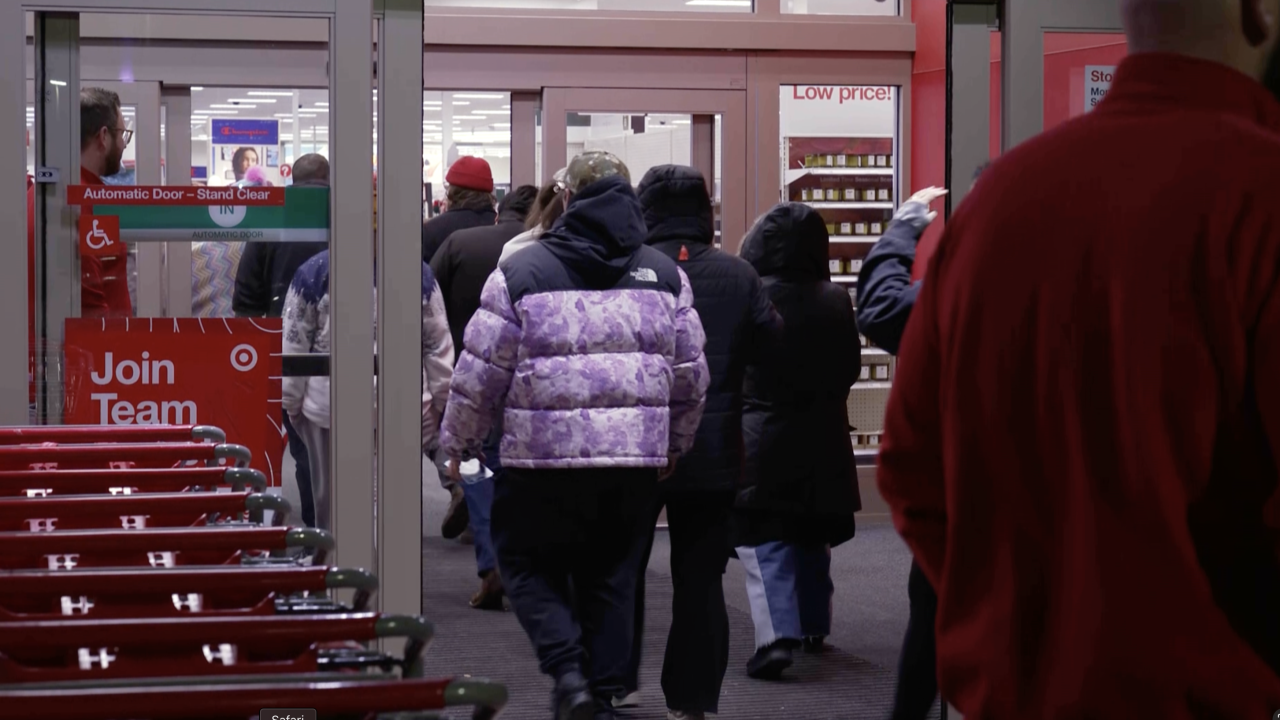


The doors opened early, the sale signs went up, and some of the most eager shoppers at a Target in Glendale, Colorado on Black Friday were the ones who grew up shopping on their phones.
"There's no time like the present, and we're here to get our presents!" said Mya Rose, who was shopping her very first Black Friday well into her twenties.
She has plenty of company. Deloitte's Black Friday survey found 87% of shoppers plan to buy during Black Friday and Cyber Monday sales, the highest participation since 2016 and up from 82% last year. The National Retail Federation expects November and December sales to grow 4.2% to a record $1.013 trillion.
For years, Black Friday drifted from store aisles to smartphones. This year, 93% of U.S. adults expect to visit a physical store during the holiday season, including 97% of Gen Z, according to ICSC's 2026 Holiday Shopping Forecast.
For many younger shoppers, the trip is about more than the purchase. Nearly half of Gen Z store shoppers (48%) describe their trips as "social outings," compared with about a third of all shoppers, ICSC found.
"They want to go back to the store. They're like the mall rat regeneration generation," Brian McCarthy, retail strategy leader at Deloitte, told Scripps News.
Emily Foley, a shopping expert with RetailMeNot, said Gen Z isn't abandoning online shopping. It is blending the two.
"The discovery is happening on social media, but then they're doing research online," Foley said. "But then they're going in store for that hands-on tactile experience. Gen Z also loves an experience, right? They're all about a vibe."
Gen Z's share of spending rose to 16% from 10% last year, and 35% of Gen Z respondents said their household finances are better than a year ago.
McCarthy said many Gen Z shoppers are "starting to hit that inflection point where they're getting a bit older, they're starting to have some discretionary spending dollars that they can put to work."
The spending numbers look strong on paper. The Conference Board estimates planned holiday spending at $1,049 per person, up 5.9% from last year. Adjusted for inflation, the increase shrinks to 3.2%. In other words, shoppers are buying a little more and paying more for it.
Prices remain a pressure point. The consumer price index rose 0.4% in October, more than economists expected. The personal consumption expenditures price index, the Federal Reserve's preferred inflation gauge, rose 3.8% from a year earlier in October. In Deloitte's survey, 79% of shoppers said they expect holiday prices to be higher than last year.
"At an individual level, we're seeing for Black Friday, Cyber Monday, spending is gonna be relatively flat year over year," McCarthy said. "But at a macro level, we're seeing participation rate, the highest we've seen in over a decade. So the overall spending during Black Friday, Cyber Monday should increase with overall volume increasing as well."
Toys offer a clear example of where higher prices show up. Most toys sold in the U.S. are made in China, and tariffs plus higher oil prices, which raise the cost of plastic, have pushed toy prices up 6.6% from a year earlier as of September, according to federal inflation data.
There is some good news for bargain hunters. Retailers are offering bigger markdowns than last year, with U.S. discount rates up 8% in November, according to Salesforce data. And the sales are no longer packed into a single day.
That gives shoppers time to compare prices before they buy. Foley recommends watching big-ticket items for a few days.
"Tracking prices over several days is a really good way to see if what you're getting is the best possible deal," she said. "If you're stretching your shopping over several paychecks, that can really help with budgeting."
Nearly 4 in 10 shoppers (38%) qualify as "holiday value seekers" in Deloitte's survey, meaning they wait for deals, switch brands when prices rise or cash in rewards points. Those shoppers still plan to spend 12% more than everyone else.
"We do not see value seeking as people who are looking to spend less. Value seeking is really more about engagement," McCarthy said.
Some holiday spending is also being pushed into the future. Deloitte found 40% of Gen Z shoppers plan to use buy now, pay later this season. Adobe Analytics expects buy now, pay later to drive $21.3 billion in online holiday sales.
This is also the first holiday season where artificial intelligence is a real part of how many people shop. McCarthy described AI shopping agents as a new shopping channel, alongside stores, websites, apps and social media.
Nearly 4 in 10 shoppers (39%) say generative AI is their main tool for at least one holiday shopping task, such as finding gift ideas or comparing prices, according to Deloitte. That rises to 49% for Gen Z. But only 16% would let AI complete a purchase for them, and 66% worry about how AI shopping assistants use their data. Adobe Analytics expects AI-driven traffic to U.S. retail sites to jump 130% from last year.
