



Florida's Amendment 3 is a proposed property tax measure on the ballot this November.
If approved, it will reshape local government funding and property taxes starting Jan. 1, 2027. It requires 60% voter approval to pass.
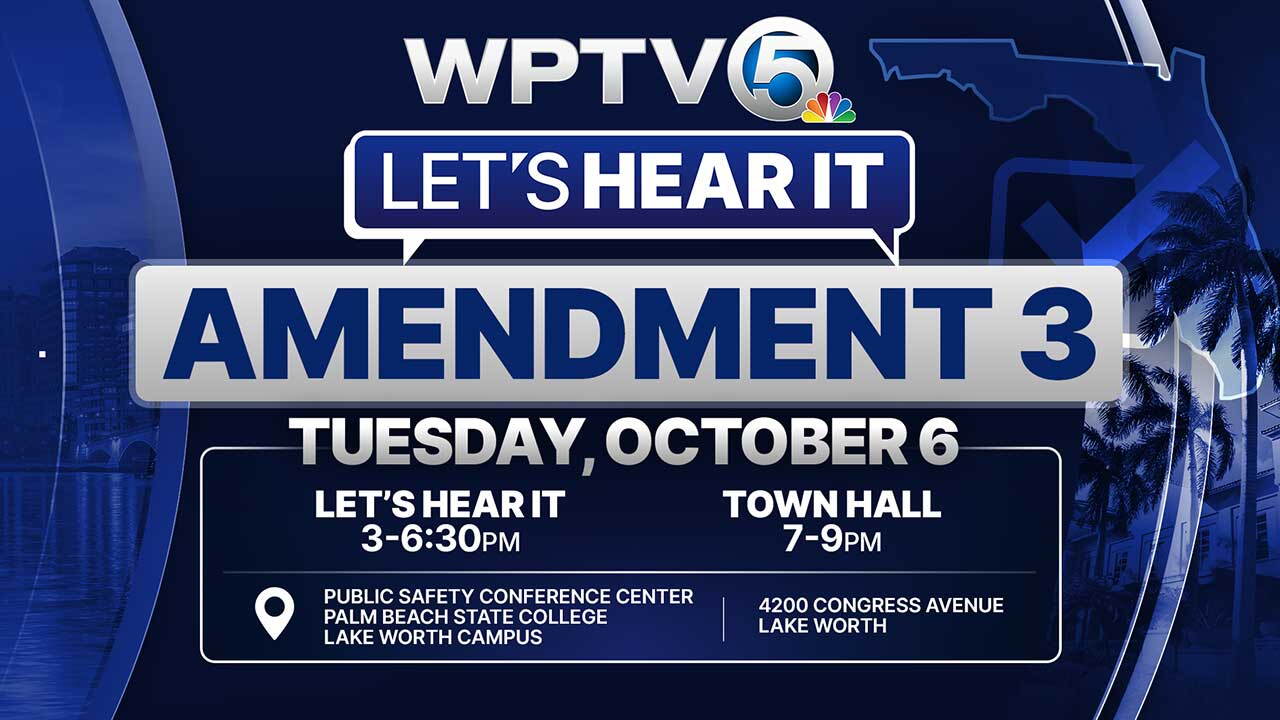
WPTV is hosting a Property Tax Town Hall on Tuesday, Oct. 6 focused on Amendment 3.
It will be held at the Public Safety Conference Center at Palm Beach State College's Lake Worth Campus. It is located at 4200 Congress Ave. in Lake Worth.
We will be holding a Let's Hear It community event from 3 p.m. to 6:30 p.m. The town hall will then take place from 7 p.m. to 9 p.m.
WPTV reporter Matt Sczesny and WPTV anchor Hollani Davis will host the event, taking your questions and concerns, while also talking with experts about this amendment referendum.
The panel will include:
- Tina Polsky - (D) Florida State Senator
- Toby Overdorf - (R) Florida State Representative
- Keith James - West Palm Beach mayor
- Joseph Abruzzo - Palm Beach County Administrator
If you would like to attend, please fill out the form below:
What Amendment 3 would do
The Legislature approved Amendment 3 during a June special session called by Gov. Ron DeSantis.
For people who establish permanent Florida residency by Dec. 31, the proposal would increase the non-school homestead exemption to $150,000 in 2027 and $250,000 in 2028. School district property taxes would remain unaffected. Florida Tax Watch estimates the losses to local governments in the next five years will be $48 billion.
The measure would also reduce the assessment-growth cap for non-homestead property from 10% to 5%, establish a waiting period for newer residents and place constitutional language around how cities and counties spend property-tax revenue.
