



MILAN — Around every corner in Milan, there are cafés, pizzerias and pasticceria. Food is everywhere.
But you won't see people rushing, walking and eating — except maybe with a gelato in hand. Because here, food isn't fast. It's meant to be savored. Sit down. Slow down. Stay a while.
WATCH BELOW: Learn how to make authentic Italian cuisine
SPECIAL COVERAGE: Panthers in Milan
WPTV anchor Meghan McRoberts stepped inside an Italian home with a "nonna" who opens her kitchen to the world. What we learned is that in Italy, food isn't just a meal. It's love.
At a table filled with strangers from around the world, we began cooking like Italian families have for generations — with our hands.
Dessert comes first. Fresh eggs and sugar, mixed by hand.
"My arm hurts already," McRoberts said to her instructor, Laura Loulai.
"It's like going to the gym — it's good," responded Loulai.
Laughter echoed through the kitchen as we made gelato and tiramisù — Italy's most famous sweets.
"Tiramisu was invented in 1972," Loulai explains.
Layer by layer — cream, ladyfingers, cocoa. Then another group worked on gelato, but the real lesson began with pasta.
"We have a rule — you have to stand up. The strength is in the arms," Loulai said. "Only working with your hands can you feel the consistency… and know if it's right."
She rolled the dough paper-thin.
"So thin you must see the church through it," Loulai said.
In a city filled with churches, that's a high standard.
There's a little help from modern tools to stretch out the pasta dough, but tradition leads the way.
"Pasta needs to be a little bit dry before you cook," she said.
Loulai learned from her grandmother.
"We all learn from grandmoms," she said.
And so did Bruna Evangelisti, whose home is where our cooking classes are hosted.
Inside her home, guests are surrounded by photos of the women who taught her. Now, she and her family teach others.
"My home is upstairs," Evangelisti said.
This isn't just a business.
"It's extra special because you're bringing people into your home," McRoberts stated.
"Absolutely," said Evangelisti, who is 72, a nonna and a teacher for nearly a decade.
She's taught thousands of people and teared up during our conversation.
"You get emotional talking about this, why?" McRoberts asked.
"Because I am old. A grandma cries always," she replied.
We laughed, but it's also because she is seeing people learn her passion.
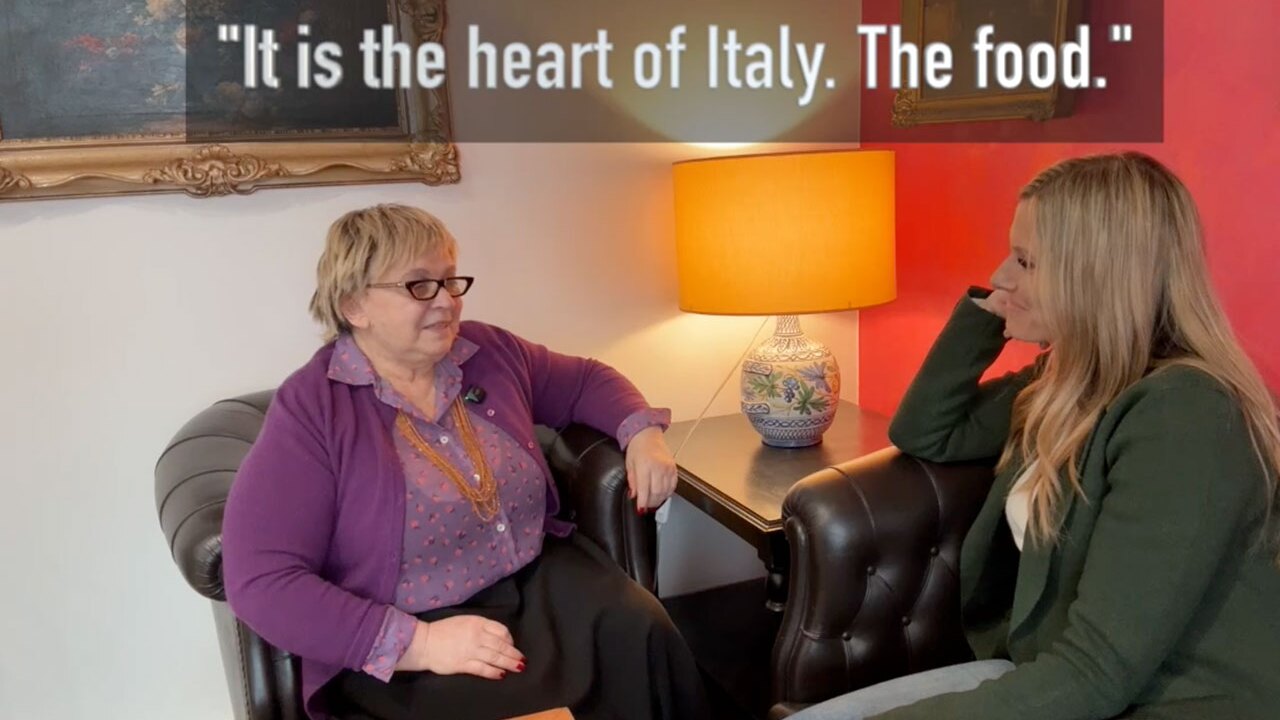
"It is the heart of Italy—the food," Evangelisti said.
Once all of the food was ready, plated and served, the reward is digging in.
"You did very well," Loulai told the group.
This was one more class added to the list of guests to Evangelisti. home, who she hopes will leave with a new appreciation for the cuisine, the culture and the focus on family.
"They can [return home] with Italy in their heart. Italy is love. ... It's essential that all the world know it," Evangelisti said.
Before we left, we also learned the unwritten rules of Italian food: Never cut your pasta. No pineapple on pizza. No cheese on seafood pasta. And cappuccino — only before noon.
This story was reported on-air by a journalist and has been converted to this platform with the assistance of AI. Our editorial team verifies all reporting on all platforms for fairness and accuracy.
