



WEST PALM BEACH, Fla. — Learning to navigate without relying on sight requires skills many people may never have considered, from using a white cane to technology that reads or magnifies what's on a computer screen.
At Lighthouse for the Blind of the Palm Beaches, Treasure Coast & Okeechobee in West Palm Beach, those tools are helping people who are blind or visually impaired build greater independence.
The organization serves people ranging from babies to seniors across five counties, Executive Director Lisa Stella told WPTV.
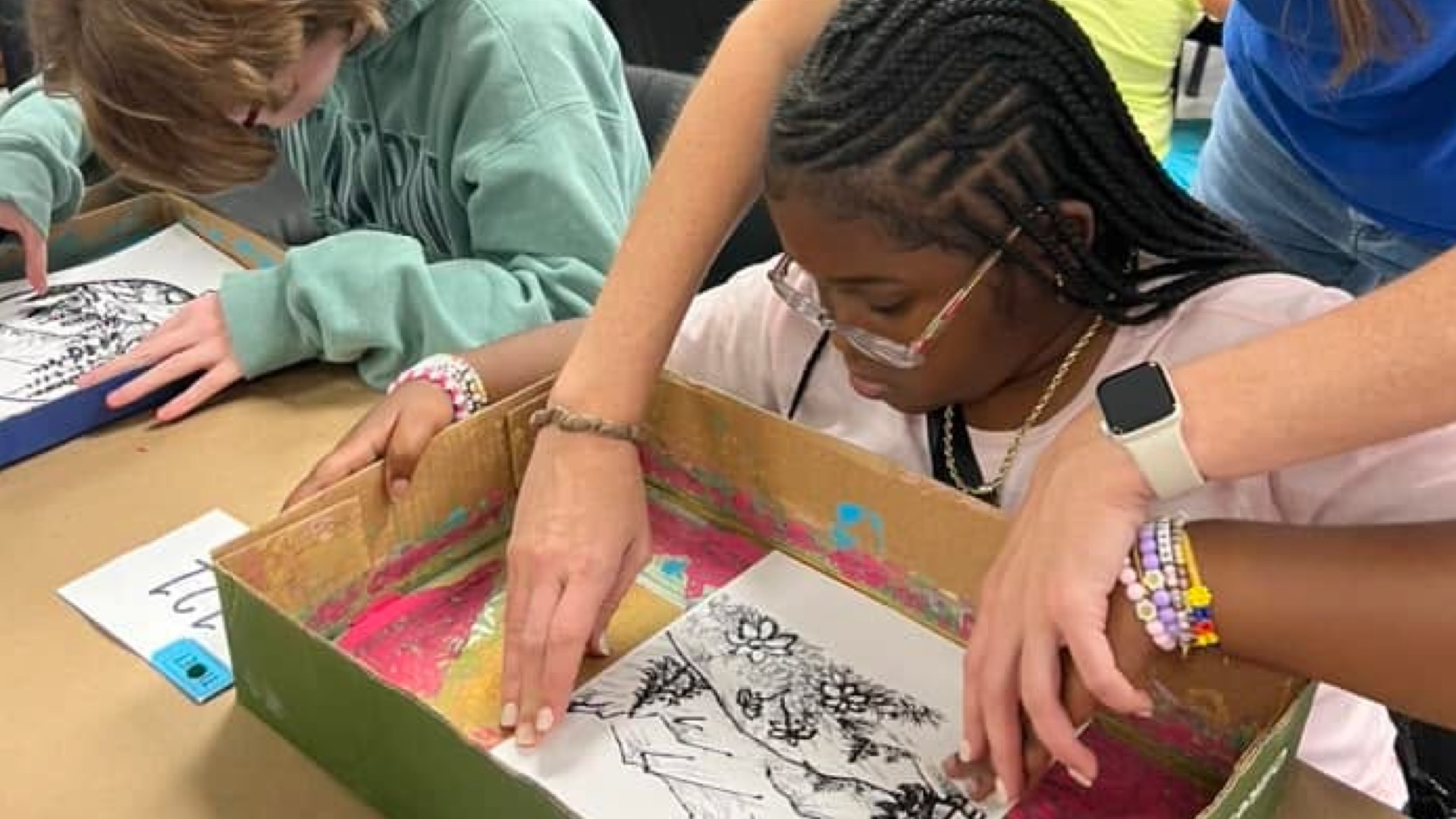
For children, that can include activities designed to be sensory-oriented and inclusive in the community.
Learning to navigate with a white cane
One of the skills taught at the Lighthouse is how to use a white cane to navigate an environment.
During WPTV's visit, Shining A Light reporter T.A. Walker put on a blindfold and attempted a mobility exercise with Elizabeth Prus, Lighthouse for the Blind's youth services director.
Prus instructed Walker to sweep the cane back and forth roughly the width of his shoulders as he walked. The cane provided information about objects in his path, including a chair and a kitchen island.
"This is a tool that people who are visually impaired use to navigate environments," Prus said.
The training can begin at a young age.
"We start with little kids, teaching them how to use a cane so that way they can travel independently," Prus said.
For Walker, temporarily navigating without sight offered a firsthand look at how a white cane can provide information about the environment around him.
Technology provides another tool for independence
The Lighthouse also helps clients use technology designed to make computers more accessible to people who are blind or have low vision.
Brandon Butzberger demonstrated ZoomText Fusion, software he uses on a computer.
"It's called ZoomText Fusion," Butzberger said. "It's a software that has the screen reading (narration) capabilities that Tekesha is showing, as well as magnification."
Tekesha Saffold also demonstrated audio software she uses to navigate her computer.
Both Butzberger and Saffold are former Lighthouse clients who later became employees, turning their own experiences with the organization into an opportunity to help others.
From clients to employees
That full-circle journey provides another example of what independence can look like.
Butzberger is now an adjustment to blindness counselor at the Lighthouse, while Saffold works as an intake specialist.
Their experiences show how skills and resources designed to increase independence can carry beyond a classroom or training session and into education, employment and everyday life.
Building skills from childhood through adulthood
The Lighthouse's work spans generations. Stella said the organization serves people from babies through seniors across Palm Beach, Martin, St. Lucie, Indian River and Okeechobee counties.
Mobility training is one piece of that work. Assistive technology provides another.
Together, the demonstrations at the West Palm Beach Lighthouse offered a look at how people who are blind or visually impaired can use training, technology and practical tools to navigate their surroundings and perform everyday tasks independently.
For some former clients, the journey has come full circle. After receiving services themselves, they're now working at the Lighthouse and helping others develop skills of their own.
This story was reported on-air by a journalist and has been converted to this platform with the assistance of AI. Our editorial team verifies all reporting on all platforms for fairness and accuracy.
