

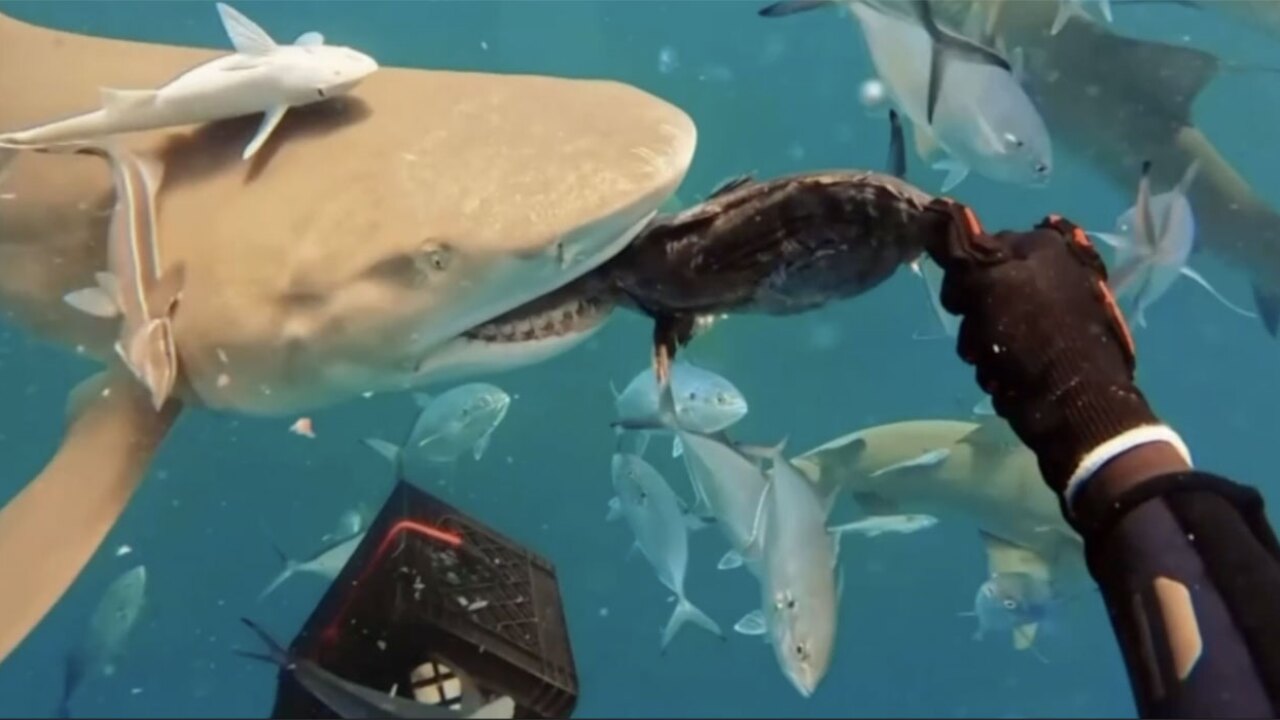


PALM BEACH COUNTY, Fla. — A newly passed bill in the U.S. House of Representatives, aimed at banning shark feeding in federal waters off Florida, has drawn fierce backlash from shark tourism operators, who say the measure is scientifically unfounded and threatens a multimillion-dollar ecotourism industry.
Their argument is backed by marine scientists.
WATCH OUR REPORT:
The Florida Safe Seas Act, sponsored by Rep. Daniel Webster (R-Clermont), would extend Florida's existing state ban on shark feeding — within three miles offshore on the Atlantic side and nine miles on the Gulf — to the exclusive economic zone, stretching up to 200 miles offshore.
Supporters say it will reduce dangerous human-shark interactions and align federal law with Florida's longstanding rules.
"This legislation mirrors longstanding Florida law, promotes responsible conservation of marine wildlife, and helps prevent interactions that place Floridians and visitors at risk," Webster said.
Scientist: Evidence 'not very strong'
Dr. Matt Ajemian, an associate research professor at Florida Atlantic University's Harbor Branch Oceanographic Institute, says the bill looks more like a reaction to public fears than a policy based on data.
"It's a very interesting act. Unfortunately, it does not seem to be informed by scientific evidence," Ajemian said.
"The evidence out there that provisioning sharks is affecting the behavior of the animals we have here in Florida is just not very strong," Ajemian said.
Ajemian says the number of sharks actually affected by feeding operations is limited.
"Individuals sharks that are affected by this is a small proportion of the overall population off Florida," Ajemian said.
He also questioned whether the bill meets the bar for scientific or conservation necessity.
"There is no available evidence suggesting these activities are altering the behavior of these animals to a substantial extent here in Florida. Disappointingly, this proposed measure was made without scientific backing and is frustrating to see by people like myself who encourage evidence-based decisions in terms of marine species management," Ajemian said.
Ajemian's research suggests that shark dive operations — often in deep, offshore waters —have an "almost perfect safety record" and rarely overlap with areas where most shark-human encounters occur. He warns that banning offshore shark feeding could harm a valuable tourism sector without meaningfully improving safety.
Operators warn of industry collapse
Shark dive operators say the bill's 200-mile feeding ban would make their businesses impossible to run.
Tanner Mansell, owner of Tanner Underwater Charters in Jupiter, called the measure "absolutely ludicrous" and said it appears driven by commercial fishing interests.
"It's not based on science whatsoever," Mansell said. "If you're going to ban shark diving, you should also take a look at how much the fishermen are feeding the sharks."
Mansell argues sharks are far more conditioned by fishing activity — where dying fish vibrate on lines — than by tourism baiting. Moving trips 200 miles offshore, he says, would mean heading into an "ocean desert" with inconsistent shark sightings.
Jonathan Campbell, a shark feeder at Emerald Charters, left a full-time job to commit fully to shark diving. He described his work as a combination of safe adventure and conservation education.
Campbell says Emerald Charters has never had a client hurt by a shark in 30 years of operation, and that its baiting practices involve small amounts of cut fish, drawing sharks well offshore.
"It's frustrating that we're being targeted while others who chum super close to shore are not," Campbell said.
Campbell also criticized the bill's fishing exception on harvesting, which allows large-scale chumming to catch and kill sharks while banning tourism feeding.
Economics vs. safety claims
Critics say shark tourism creates ocean advocates, turning fear into fascination and fueling conservation. They argue one live shark is worth far more to Florida's economy — estimated in the hundreds of millions of dollars — than its meat or fins.
Supporters counter that aligning federal waters with state bans is a common sense safety step, noting similar rules already exist in Hawaii and certain U.S. Pacific territories.
With the bill now through the House, opponents fear it could wipe out Florida's shark diving industry, forcing some operators to shutter and others to consider relocating to countries like the Bahamas — where competition and regulations may make relocation unfeasible.
Ajemian summed up the frustration among scientists and operators alike.
"This is an overly damaging measure, with very little safety benefit. The ocean is a big place — operators need to do what they need to do to survive," Ajemian said.
This story was reported on-air by a journalist and has been converted to this platform with the assistance of AI. Our editorial team verifies all reporting on all platforms for fairness and accuracy.

