

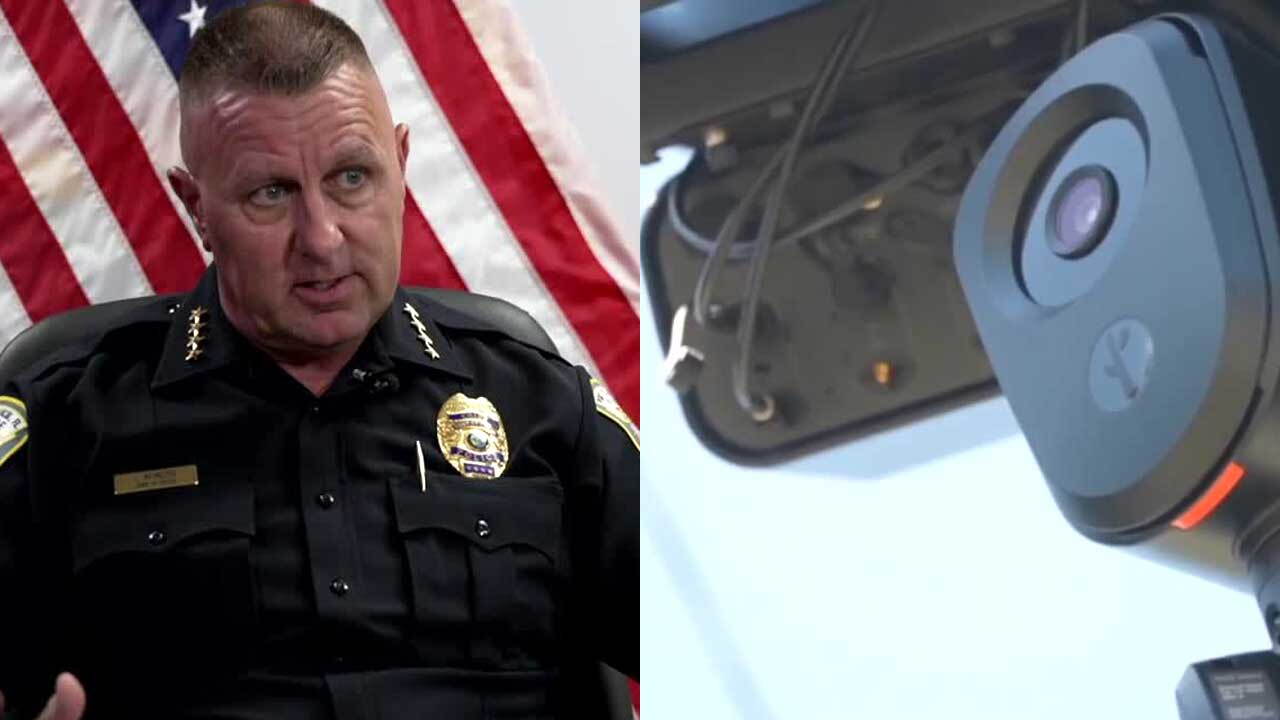


PORT ST. LUCIE, Fla. — Port St. Lucie police have announced an operational pause on license plate readers in the city, saying the pause will limit the technology to circumstances where there is an immediate threat to human life.
There are currently 126 license plate readers throughout the city. Residents are divided on the technology.
WATCH BELOW: Port St. Lucie police pause usage of license plate readers
"I think they're great. I really do," neighbor Joseph Hamm said.
However, neighbor Peter Schmitt sees it differently.
"I think they should be illegal," Schmitt said. "It's a privacy invasion."
WPTV reporter Tyler Hatfield sat down with Port St Lucie Police Chief Leo Niemczyk, who said the pause is about responding to community concerns.
"My position from the beginning has been very simple. You need to respond when the community expresses concern. You need to approach it with an open mind," Niemczyk said.
He said the goal of the pause is to find a path forward that preserves public trust.
"The whole idea of our pause is to figure out how we can re-establish regular use while maintaining the trust of the community," Niemczyk said.
Niemczyk also moved to address misconceptions about how the technology works. He said the readers are not using biometrics or facial recognition, but instead take pictures of the rear of vehicles.
He also said the technology is not used for any traffic enforcement.
"There's no red light enforcement there. There's no speeding enforcement. That's not what they're used for," Niemczyk said.
Niemczyk said the technology has delivered measurable results, including a 17% reduction in auto burglaries and a reduction in traveling crime.
"I've got an extremely valuable tool that not only is reducing crime, but saving lives," Niemczyk said.
Niemczyk said he wants lawmakers in Tallahassee to get answers from manufacturers like Flock about data retention and work with legislators to provide usage guidelines that protect both the community and officers, and establish consequences for misuse.
"It's made us more effective. It's been an incredible tool, but at what cost?" said Niemczyk. "If it costs me the trust of the community, I've got to figure out how to balance that. And I think that's what we're up against right now."
This story was reported on-air by a journalist and has been converted to this platform with the assistance of AI. Our editorial team verifies all reporting on all platforms for fairness and accuracy.

