



A cruise ship with nearly 150 people remains stranded off Cape Verde after three passengers died in a suspected hantavirus outbreak. The Dutch vessel was on a polar cruise from Argentina to Antarctica when the rare rodent-borne illness struck.
Cape Verde authorities are refusing to allow the ship to dock due to public health concerns.
Two crew members with respiratory symptoms need urgent medical care, and plans are underway for medical evacuations. Another infected passenger, previously evacuated to South Africa, remains in critical condition.
RELATED STORY | A suspected outbreak of the rare hantavirus on a cruise ship in the Atlantic kills 3 people
The World Health Organization is investigating how the outbreak began.
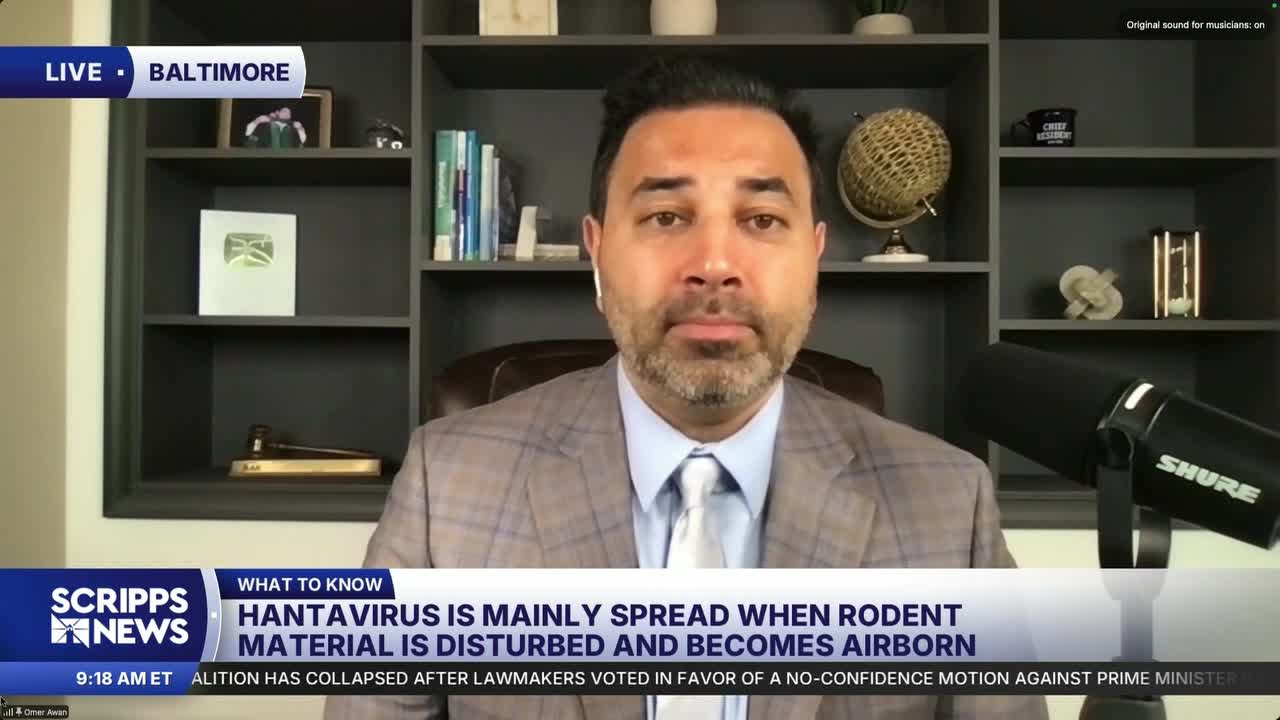
Dr. Omer Awan, Scripps News medical contributor, said the risk to the public is low.
“This is not the next coronavirus,” he said. “The risk to the public is very low. This is not the next pandemic, but definitely something to watch for because infectious diseases do not respect international borders, and this is actually a great example of that.”
Awan noted that about 20 to 40 cases occur annually in the United States and that, except for a rare strain, human-to-human spread is unusual.
“Usually, people get this virus when they have direct contact with the saliva, urine or feces of rodents,” he said.
RELATED STORY | Viral video highlights healthcare costs as Americans cut back on essentials
For the handful of cases reported each year, Awan stressed the importance of immediate medical care.
“It can be very mild to very severe,” Awan said. “Patients usually have flu-like illness — fevers, chills, muscle aches, body cramps — and sometimes abdominal pain, nausea or vomiting. But after a week or so, some patients develop lung symptoms, which can include coughing, shortness of breath and difficulty breathing. Very rarely, fluid can build in the lungs, and that’s when it can become deadly. Nearly one in three patients who develop lung symptoms will end up dying.”
