

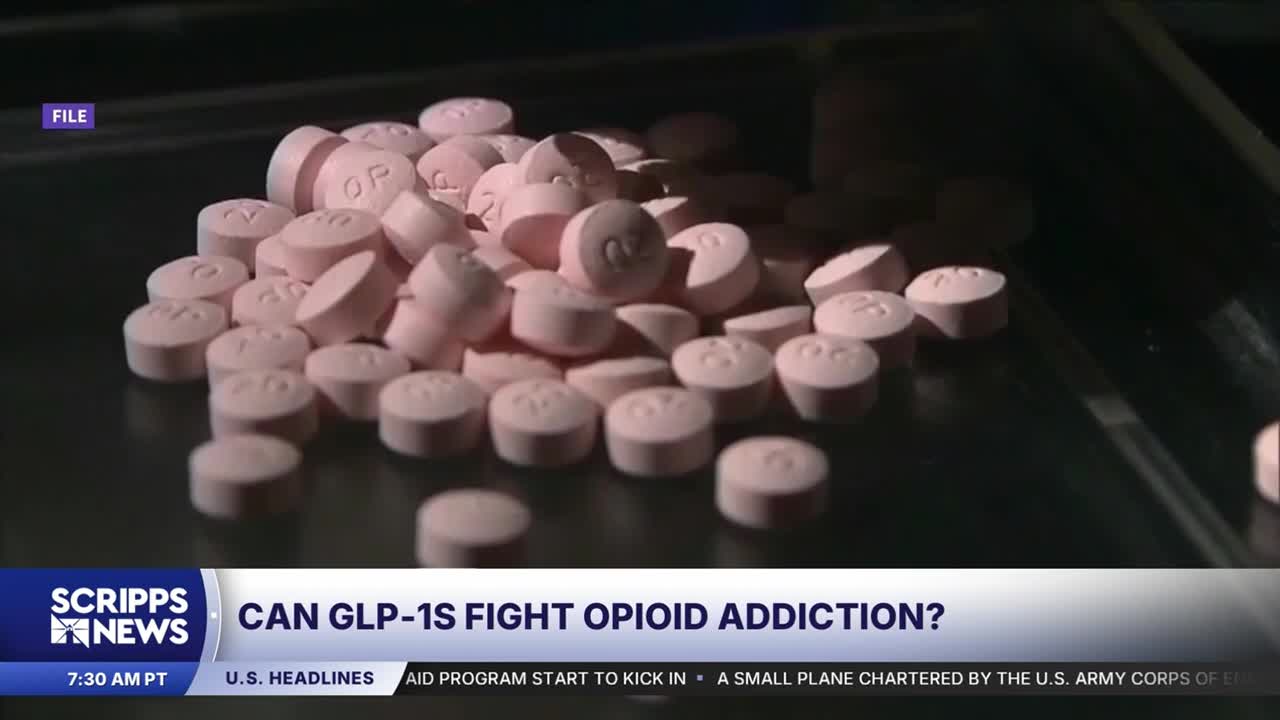


GLP-1 receptor agonist drugs have long been used to treat diabetes and, more recently, obesity. Now, researchers are studying whether the medications could also help prevent opioid addiction relapse.
Researchers at Vanderbilt University are launching a double-blind, randomized, placebo-controlled trial to determine whether GLP-1 medications can help treat opioid use disorder. Limited evidence has suggested the drugs may reduce opioid cravings.
Research on GLP-1 medications’ effect on opioid addiction has so far been limited in scope. But if the Vanderbilt study provides additional evidence that the drugs can help treat opioid use disorder, it could affect millions of people.
RELATED STORY | GLP-1 drugs are booming in 2026 — here's how to find a safe telehealth provider
“There is a critical need to address treatment options for all individuals with opioid use disorder,” said Jessica Young, who will lead the Vanderbilt study. “Opioid use disorder is a chronic disease where relapse is common. Finding ways to prevent relapse for both men and women is lifesaving.”
The study will enroll 31 participants who are at least 18 years old, have been diagnosed with opioid use disorder and began buprenorphine treatment within the past 80 days.
Researchers will meet with participants weekly for six months.
“We hope to find that adding a GLP-1 to treatment plans will help people stabilize on buprenorphine therapies and prevent relapse,” Young said. “This could change the standard of care if it improves outcomes and decreases relapse.”
RELATED STORY | Study finds insurance denials for brand-name drugs jumped 67 percent
